




 6 Min Read
Living with chronic watery diarrhoea can be debilitating, frustrating, and, often, a mystery. Many patients endure countless tests for common digestive issues only to find no clear answers. This can lead to significant distress and a reduced quality of life. However, there's a condition that often goes undetected without a specific diagnostic step: microscopic colitis. At Manipal Hospitals, our gastroenterologists in Delhi-NCR are highly experienced in diagnosing and managing this often-overlooked cause of persistent diarrhoea, offering a pathway to relief for many.
Microscopic colitis is an inflammatory condition of the large intestine that, unlike other forms of colitis, doesn't show visible signs of inflammation during a standard colonoscopy. Its name comes from the fact that inflammation can only be seen when tissue samples (biopsies) are examined under a microscope. This makes it a crucial diagnosis to consider for anyone experiencing unexplained chronic watery diarrhoea.
Synopsis
Understanding Microscopic Colitis
Microscopic colitis encompasses two main subtypes: collagenous colitis and lymphocytic colitis. Both share similar symptoms and treatment approaches but differ in their microscopic appearance. While not life-threatening, the persistent diarrhoea can severely impact daily life, leading to dehydration, fatigue, and nutritional deficiencies if left unmanaged.
The prevalence of microscopic colitis is significant, affecting approximately 10-15 out of every 100,000 people annually, with an increasing incidence observed globally. It predominantly affects middle-aged and older adults, particularly women, highlighting the importance of specialised care.
Microscopic Colitis Symptoms: What to Look For
The primary symptom of microscopic colitis is chronic, non-bloody, watery diarrhoea. This can range from several loose stools a day to more than ten episodes, often disrupting sleep and daily activities. Recognising these microscopic colitis symptoms early is key to effective management.
-
Chronic Watery Diarrhoea: The hallmark symptom is often persistent for weeks or months.
-
Abdominal Pain or Cramping: Mild to moderate discomfort in the abdomen.
-
Faecal incontinence: Difficulty controlling bowel movements due to the urgency and watery nature of stools.
-
Dehydration: A common complication due to excessive fluid loss.
-
Weight Loss: Can occur due to malabsorption or reduced food intake in an attempt to control symptoms.
-
Fatigue: Often a result of chronic inflammation, dehydration, and interrupted sleep.
-
Nausea: Less common but can occur in some individuals.
If you or a loved one is experiencing these symptoms, especially if they have been ongoing for several weeks, it's essential to consult a specialist.
Microscopic Colitis Causes: Unravelling the Triggers
The exact microscopic colitis causes are not fully understood, but it's believed to be a multifactorial condition involving genetic predisposition, environmental factors, and an altered immune response. Many experts also ask: Is microscopic colitis an autoimmune disease? While not exclusively classified as a classical autoimmune disease, there is a strong autoimmune component, as it's often associated with other autoimmune conditions like coeliac disease, thyroid disorders, and rheumatoid arthritis.
-
Medications: Several medications are strongly linked to microscopic colitis. These include NSAIDs (non-steroidal anti-inflammatory drugs), proton pump inhibitors (PPIs) used for acid reflux, SSRIs (selective serotonin reuptake inhibitors), and certain cholesterol-lowering drugs. Discontinuing the causative medication often leads to symptom improvement in a significant number of cases.
-
Autoimmune Factors: A higher incidence of other autoimmune diseases in patients with microscopic colitis suggests an underlying immune system dysregulation.
-
Infections: Some research indicates that prior bacterial or viral infections of the gut might trigger the condition in susceptible individuals.
-
Bile Acid Malabsorption: An imbalance in bile acids can sometimes contribute to the symptoms.
-
Genetic Predisposition: There may be a genetic component that increases an individual's susceptibility.
Understanding these potential triggers helps our team at Manipal Hospitals Delhi-NCR develop a targeted diagnostic and treatment plan.
Microscopic Colitis Diagnosis: The Biopsy is Key
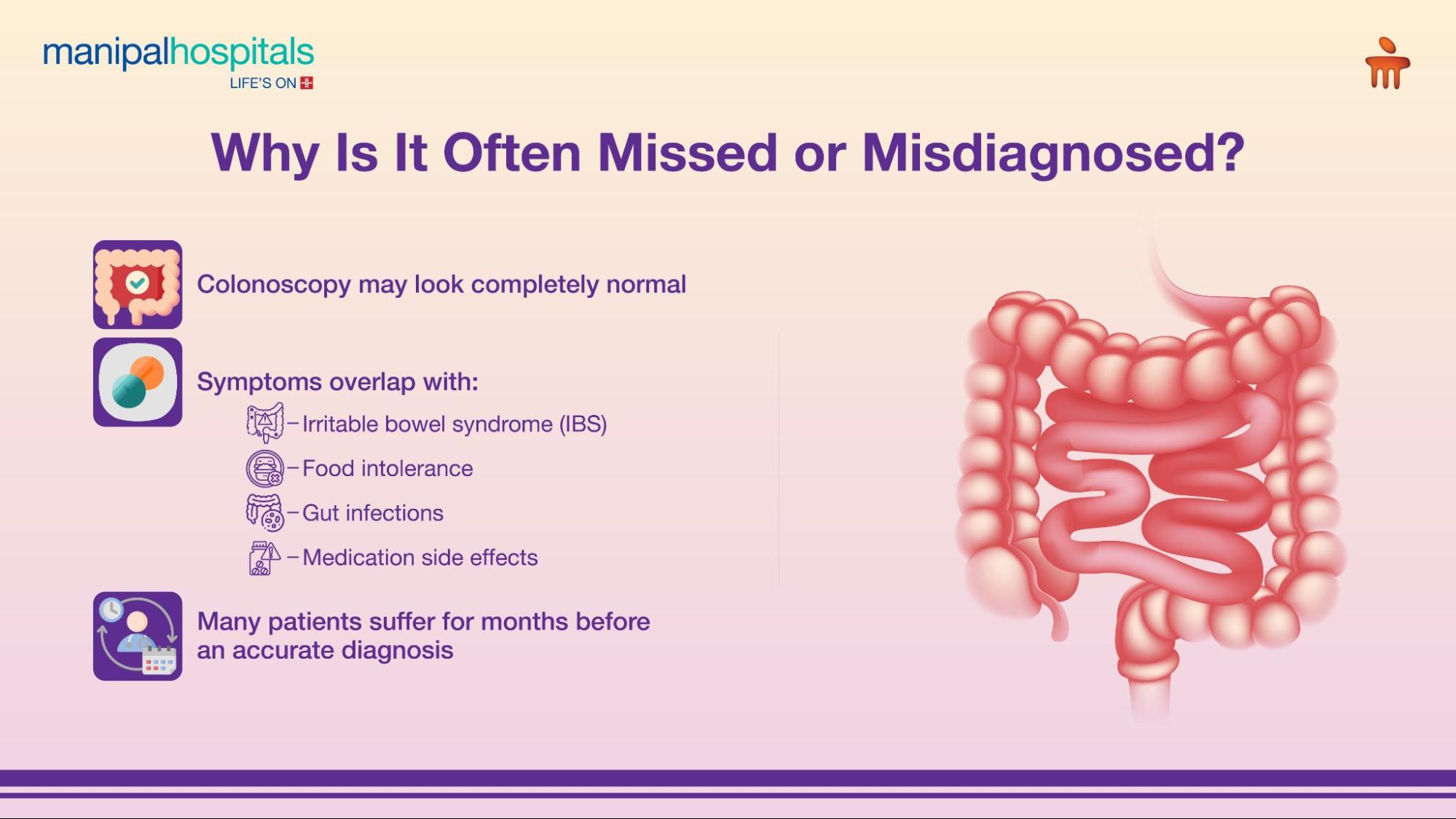
The microscopic colitis diagnosis is primarily made through a colonoscopy with biopsies. During a colonoscopy, our expert gastroenterologists will examine the lining of your colon. Even if the colon appears normal, multiple tissue samples are taken from different sections of the large intestine. These samples are then sent to a pathologist for microscopic examination.
-
Colonoscopy: Unlike other forms of colitis, the colon's appearance during colonoscopy is typically normal or shows only very subtle signs of inflammation.
-
Biopsy Analysis: This is the definitive step. A pathologist will look for specific microscopic changes:
-
Lymphocytic Colitis: Characterised by an increased number of lymphocytes (a type of white blood cell) in the lining of the colon.
-
Collagenous Colitis: Characterised by a thickened layer of collagen beneath the surface cells of the colon, in addition to increased lymphocytes.
-
Exclusion of Other Conditions: Before confirming microscopic colitis, our doctors will rule out other causes of chronic diarrhoea, such as inflammatory bowel disease (Crohn's disease and ulcerative colitis), coeliac disease, infections, and irritable bowel syndrome (IBS).
It's estimated that biopsies diagnose microscopic colitis in up to 90% of cases where it's suspected, underscoring the critical role of this diagnostic procedure. Our gastroenterologists in Delhi-NCR ensure thorough diagnostic evaluations to provide accurate and timely care.
If you are experiencing chronic watery diarrhoea and have not found a clear diagnosis, it's crucial to seek timely medical advice. Book an appointment with our expert gastroenterologists at Manipal Hospitals today, where we are committed to unravelling complex digestive conditions like microscopic colitis and guiding you towards lasting relief.
FAQ's
While microscopic colitis is not considered life-threatening and does not increase the risk of colon cancer, its chronic symptoms can significantly impact your quality of life. With proper diagnosis and management, symptoms can often be well-controlled.
In some cases, especially if triggered by medication, symptoms may improve after discontinuing the offending drug. However, for many, the condition requires ongoing management. About 20-30% of patients may experience spontaneous remission without treatment, but the majority require intervention.
No, they are distinct conditions. Irritable Bowel Syndrome (IBS) is a functional gastrointestinal disorder without visible inflammation or microscopic changes. Microscopic colitis, on the other hand, involves actual inflammation visible under the microscope. Their symptoms can overlap, making an accurate diagnosis crucial.
Treatment often begins with identifying and discontinuing causative medications. Medications like budesonide (a steroid with localised action in the gut) are often highly effective. Anti-diarrheal agents, bile acid binders, and immunomodulators may also be used in some cases.
While diet plays a supportive role in managing symptoms and overall gut health, it typically cannot "cure" microscopic colitis on its own. Some patients find relief by avoiding gluten, dairy, or following a low-FODMAP diet, but medical treatment is usually necessary for sustained symptom control.
Share this article on:





