




 8 Min Read
Abdominal pain is a common complaint, especially in children, often leading to concerns about serious conditions like appendicitis. However, another condition frequently encountered is mesenteric lymphadenitis, an inflammation of the lymph nodes in the mesentery – the fold of tissue that attaches the intestine to the abdominal wall. While often benign and self-limiting, understanding mesenteric lymphadenitis is crucial for accurate diagnosis and appropriate management. Our expert paediatric gastroenterologists in Delhi-NCR are equipped with advanced diagnostic tools and extensive experience to provide comprehensive care for such conditions, ensuring patient comfort and recovery. This condition, though common, affecting up to 15% of children presenting with acute abdominal pain, can be a source of significant worry for families. Our approach focuses on patient-centric care, offering clarity and reassurance throughout the diagnostic and treatment process.
Synopsis
Causes of Mesenteric Lymphadenitis
Understanding the mesenteric lymphadenitis causes is key to prevention and management. This condition typically arises when an infection in the gastrointestinal tract, such as a viral or bacterial infection, causes the nearby mesenteric lymph nodes to swell as they fight off the pathogens. Viral infections are the most common culprits, accounting for approximately 80-90% of cases, particularly in children. These swollen lymph nodes can mimic other conditions, making an accurate diagnosis by experienced paediatric gastroenterologists in Delhi-NCR vital.
-
Viral Infections: The most frequent cause of mesenteric lymphadenitis. Common viruses include rotavirus, adenovirus, and enteroviruses, which are often responsible for gastroenteritis (stomach flu). The body's immune response to these viruses leads to inflammation of the mesenteric lymph nodes.
-
Bacterial Infections: Less common but can be more severe. Bacteria such as Yersinia enterocolitica, Salmonella, Campylobacter, and Escherichia coli are known mesenteric lymphadenitis causes. These infections often present with more pronounced symptoms and may require specific treatment.
-
Inflammatory Bowel Disease (IBD): In rare instances, conditions like Crohn's disease can be associated with inflamed mesenteric lymph nodes, though this is usually part of a broader inflammatory process.
-
Other Infections: Parasitic infections or less common bacterial strains can also trigger the condition, though these are infrequent mesenteric lymphadenitis causes.
-
Autoimmune Conditions: Very rarely, autoimmune disorders might present with mesenteric lymphadenitis as a symptom, requiring a thorough diagnostic workup.
Recognising Mesenteric Lymphadenitis Symptoms
The mesenteric lymphadenitis symptoms often resemble those of appendicitis, making differential diagnosis crucial. Recognising these symptoms, especially when dealing with mesenteric lymphadenitis in child patients, is important for seeking timely medical advice. Symptoms typically last for a few days to a few weeks, and in over 90% of cases, resolve completely with conservative management.
-
Abdominal Pain: This is the hallmark symptom. The pain can vary in intensity and location, but it's often felt in the lower right side of the abdomen, mimicking appendicitis. However, unlike appendicitis, the pain from mesenteric lymphadenitis may shift or be more diffuse.
-
Fever: A common accompanying symptom, especially when the cause is an infection. Fever can range from mild to high, often peaking during the initial phase of the illness.
-
Nausea and Vomiting: Many individuals, particularly those with mesenteric lymphadenitis in child patients, experience nausea, with some instances of vomiting. This is often related to the underlying gastrointestinal infection.
-
Diarrhoea: Loose stools are frequently reported, another indication of an underlying gut infection. The severity can vary.
-
Loss of Appetite: Due to discomfort and general malaise, a decrease in appetite is common.
-
General Malaise: A feeling of being unwell, tired, or lethargic.
-
Upper Respiratory Symptoms: In cases caused by viral infections, children might also exhibit symptoms like a runny nose, cough, or sore throat, indicating a broader viral illness. This is particularly relevant for understanding mesenteric lymphadenitis in child presentations.
Diagnosing Mesenteric Lymphadenitis Accurately
Accurate diagnosis of mesenteric lymphadenitis is paramount to rule out more serious conditions like appendicitis. The diagnostic process at Manipal Hospitals involves a thorough clinical evaluation, patient history, and often, imaging studies.
Our paediatric gastroenterologists in Delhi-NCR utilise state-of-the-art diagnostic tools to ensure precision, with ultrasound having an accuracy rate of over 85% in identifying enlarged mesenteric lymph nodes and differentiating them from other causes of abdominal pain.
-
Clinical Examination: The doctor will perform a physical examination of the abdomen, checking for tenderness, swelling, and other signs. They will also ask about the nature of the pain, its duration, and associated symptoms.
-
Medical History: A detailed history of recent illnesses, particularly viral or bacterial infections, is crucial. Information regarding any recent travel, diet changes, or contact with sick individuals helps in identifying potential mesenteric lymphadenitis causes.
-
Blood Tests:
-
Complete Blood Count (CBC): May show an elevated white blood cell count, indicating an infection.
-
C-reactive protein (CRP) or Erythrocyte Sedimentation Rate (ESR): These markers can indicate inflammation in the body.
-
-
Imaging Studies:
-
Abdominal Ultrasound: This is often the preferred initial imaging test, especially for children. It is non-invasive and can effectively visualise enlarged mesenteric lymph nodes, usually measuring 5 mm or more in their shortest diameter, and distinguish them from an inflamed appendix. Studies show ultrasound correctly identifies mesenteric lymphadenitis in a high percentage of cases, preventing unnecessary surgeries.
-
Computed Tomography (CT) Scan: A CT scan may be used if the diagnosis remains uncertain or if other conditions need to be ruled out definitively. It provides detailed images of abdominal structures and can clearly show enlarged lymph nodes.
-
Effective Treatment for Mesenteric Lymphadenitis
The good news is that mesenteric lymphadenitis is typically a self-limiting condition, meaning it often resolves on its own within days to a few weeks without specific medical intervention. Treatment primarily focuses on managing symptoms and ensuring the patient's comfort. Only a small fraction, less than 1%, require surgical intervention, which is usually to rule out other conditions. Over 95% of patients recover fully with conservative management.
-
Rest: Adequate rest helps the body to recover from the underlying infection.
-
Hydration: Maintaining good hydration is crucial, especially if there has been fever, vomiting, or diarrhoea. Oral rehydration solutions can be beneficial.
-
Pain Management: Over-the-counter pain relievers can help alleviate abdominal pain and reduce fever. These should be used as directed by a healthcare professional, especially when treating mesenteric lymphadenitis in child patients.
-
Antibiotics: If bacterial infection is identified or strongly suspected as one of the mesenteric lymphadenitis causes, antibiotics may be prescribed. This decision is made by the treating physician based on diagnostic findings.
-
Dietary Management: A bland, easy-to-digest diet may be recommended, avoiding foods that could irritate the gastrointestinal tract.
-
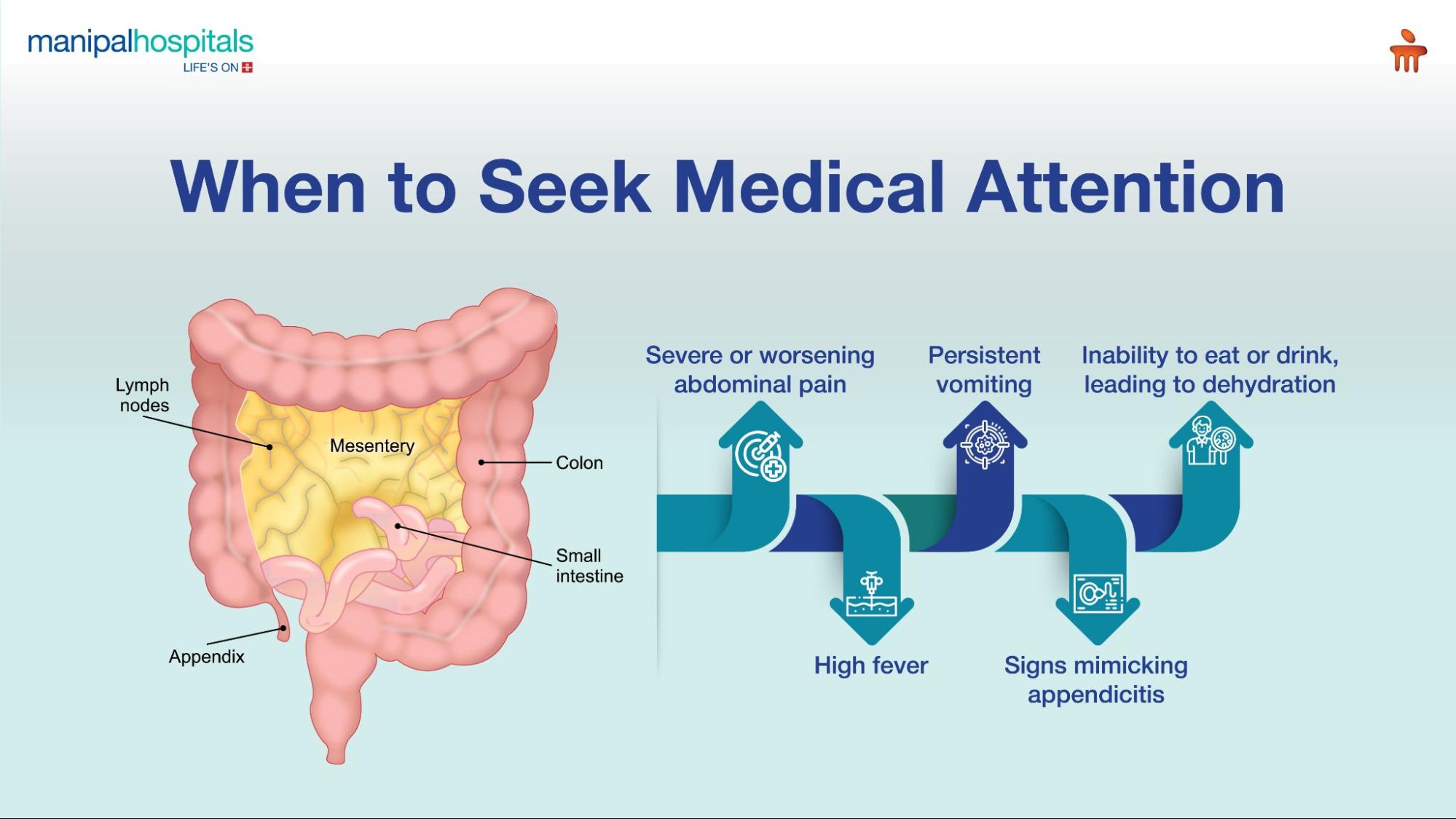
Monitoring: Close monitoring for worsening symptoms or the development of new symptoms is important. If symptoms intensify or persist beyond a few weeks, further medical evaluation is necessary.
If you are experiencing abdominal pain or symptoms suggestive of mesenteric lymphadenitis, it's crucial to seek timely medical advice. Our team of expert paediatric gastroenterologists at Manipal Hospitals is dedicated to providing accurate diagnosis and compassionate care, ensuring your journey to recovery is smooth and well-supported. Book an appointment with our specialists today.
FAQ's
Mesenteric lymphadenitis is an inflammation of the lymph nodes located in the mesentery, a fold of tissue that attaches the intestines to the abdominal wall. It's usually caused by an infection, often viral, in the gut.
Generally, mesenteric lymphadenitis is not serious and is a self-limiting condition that resolves on its own. However, it's important to rule out more serious causes of abdominal pain, such as appendicitis.
Symptoms typically last for a few days to a few weeks. In most cases, patients recover fully within a few weeks with conservative management.
As it's often caused by infections, practising good hygiene, such as frequent hand washing, can help reduce the risk of gastrointestinal infections that lead to mesenteric lymphadenitis.
Yes, mesenteric lymphadenitis in child patients is quite common, often following a viral illness. It's a frequent cause of abdominal pain that mimics appendicitis in younger individuals.
Share this article on:





