7 Min Read
Changes such as balance problems, delayed development, or, in the case of babies, an increasing head size can sometimes point to an underlying neurological condition. One term that families may hear during evaluation is ‘water on the brain’, a term commonly used for a condition called hydrocephalus.
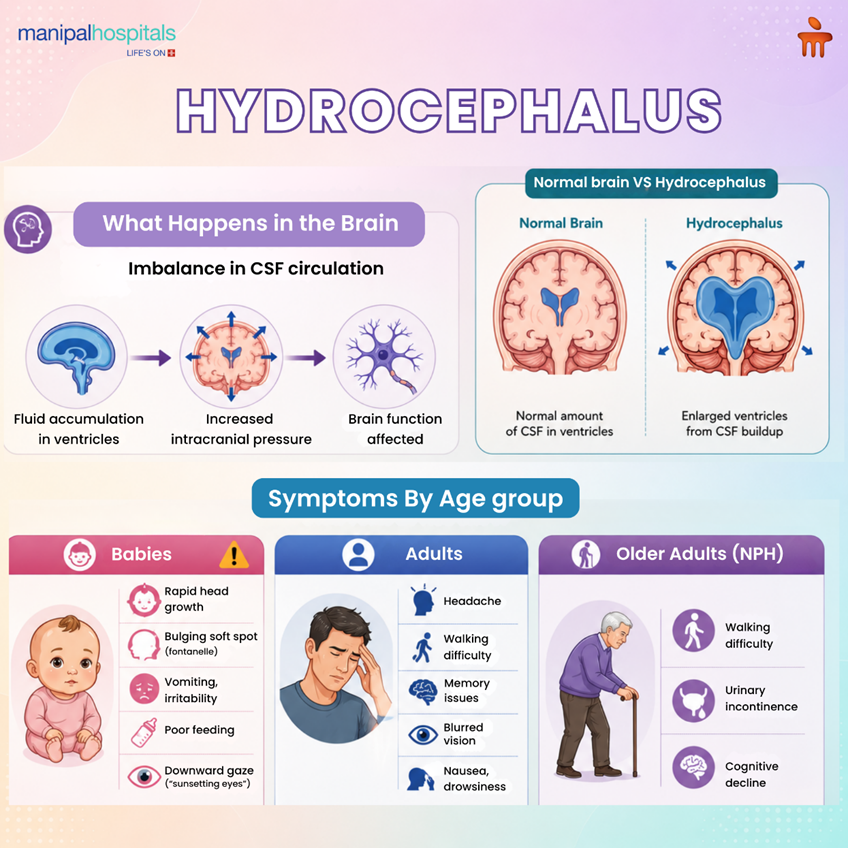
So, what is hydrocephalus? In simple terms, hydrocephalus is a condition where cerebrospinal fluid (CSF) builds up in the brain’s ventricles. As the fluid accumulates, it can increase pressure inside the skull and affect brain function. Although this may sound concerning, early diagnosis and treatment can help manage the condition effectively.
This blog will help you understand what is hydrocephalus, along with its causes and symptoms. It also looks at the modern ways to treat hydrocephalus, including expert care available locally.
Synopsis
An Overview: What is Hydrocephalus?
Hydrocephalus is a medical condition in which cerebrospinal fluid accumulates within the ventricles of the brain. Cerebrospinal fluid (CSF) is the fluid found around the brain, and its functions include acting as a cushion, facilitating waste removal, and circulating continuously throughout the brain. While the presence of this fluid is normal, the condition known as hydrocephalus occurs when the normal balance of this fluid is disturbed. The imbalance can occur in the form of:
-
Excess production: A rare condition that is usually caused by tumours in the tissue that makes cerebrospinal fluid.
-
Blocked flow: By an obstruction in the brain’s ventricles, which often happens in people born with the condition.
-
Poor absorption: The body fails to reabsorb CSF, often after infections, bleeding, or inflammation.
Prompt diagnosis helps avoid problems associated with pressure buildup.
Types of Hydrocephalus
The condition is classified depending on the pattern of onset and the movement of cerebrospinal fluid within the brain tissue. The category may vary according to the individual's age, and therapy will be designed depending on the type.
-
Congenital hydrocephalus: Present since birth and is normally caused by issues within brain formation.
-
Acquired hydrocephalus: Develops in later stages of life and can result from head injuries, infections, or blood clotting within the brain.
-
Communicating hydrocephalus: Occurs when cerebrospinal fluid travels freely through the ventricles but cannot be reabsorbed effectively.
-
Non-communicating (obstructive) hydrocephalus: Occurs when there is a blockage that hinders the regular flow of CSF.
Recognising these types will assist the physician in choosing the right treatment for the patient, depending on the type and cause of hydrocephalus.
What Causes Hydrocephalus?
So why does this condition develop? Identifying the underlying cause is important because it helps doctors decide the most suitable treatment approach and understand how the condition may progress over time. Some of the common causes include:
-
Congenital/developmental problems: There are problems with brain development from birth.
-
Brain infection: Meningitis is an example that impacts fluid absorption.
-
Head trauma: This affects the circulation of cerebrospinal fluid.
-
Brain tumour: The cerebrospinal fluid can’t move properly due to a brain tumour.
-
Brain haemorrhage: Mostly in infants and brain injury.
-
Age-related changes: Seen in conditions like normal pressure hydrocephalus (NPH).
Treatment will depend on the cause of the condition, particularly how it impacts blood flow to the brain.
Signs and Symptoms of Hydrocephalus
The symptoms of hydrocephalus can look very different depending on a person’s age and how quickly fluid builds up in the brain.
In Babies:
-
Rapid head growth is more than expected
-
Bulging soft spot (fontanelle), irritability, vomiting
-
Poor feeding
-
Eyes that appear fixed downward
Symptoms in adults may include:
In Older Adults (NPH):
-
Difficulty walking
-
Bladder control problems
-
Cognitive impairment
The signs and symptoms of hydrocephalus tend to develop gradually, particularly in adults, and may be misdiagnosed as other conditions.
Diagnosing Hydrocephalus
Hydrocephalus can share symptoms with several other neurological conditions. Doctors usually rely on a combination of imaging tests and clinical evaluations to confirm the diagnosis. Doctors use the following tests:
-
CT Scan: Finds enlarged ventricles
-
MRI: Detailed brain scans
-
Neurological exam: Assesses function
-
CSF pressure tests: Studies how fluid flows in the brain
-
Lumbar puncture: Especially for NPH diagnosis
-
Gait assessment: Important in NPH
It is crucial to have a correct diagnosis in order for the patient to be treated immediately and prevent any complications.
Hydrocephalus Treatment
Treatment for hydrocephalus focuses on reducing pressure inside the brain and helping cerebrospinal fluid flow normally again. The approach can vary depending on the person’s age, symptoms, and the underlying cause of the condition. The following are some of the common treatment approaches:
|
Treatment |
Best For |
Advantages |
Limitations |
|
Shunt surgery |
Most hydrocephalus types |
Reliable, widely used |
Lifelong device, risk of malfunction |
|
ETV |
Obstructive hydrocephalus |
No implanted device |
Not suitable for all patients |
|
ETV+CPC |
Infants, congenital cases |
Reduces CSF production |
Limited to specific cases |
|
Tumour removal |
Tumour-related hydrocephalus |
Addresses root cause |
Depends on tumour type/location |
|
Infection management |
Infection-related hydrocephalus |
Treats the underlying issue |
May still need surgery |
Treatment for hydrocephalus has improved a lot over time, especially when it is started early. The good part is that many people show noticeable improvement once the right treatment is given and followed properly.
What Happens After Treatment?
Treatment recovery depends on the age of patients, the duration of symptoms, and the cause. Many patients improve well, especially when treatment starts early. In conditions like NPH, treatment often helps walking and memory, and these changes get more noticeable over time.
When Should You See a Doctor?
You should see a top neurosurgery doctor in Bhubaneswar if you notice:
-
Ongoing or frequent headaches
-
Difficulty walking or maintaining balance
-
Memory problems or confusion
-
Atypical head growth in children
Early detection of the symptoms can forestall catastrophic complications.
Conclusion
Hydrocephalus is a condition that needs attention because of the pressure it creates inside the brain, but it is not without treatment options. What makes the most difference is recognising the signs early and getting medical advice at the right time. Treatment varies from person to person, depending on the cause and severity of the condition, with access to specialised neurosurgery care at Manipal Hospital Bhubaneswar supporting timely diagnosis and treatment.
With regular follow-up and proper support, many people are able to adjust well and continue their daily activities with fewer difficulties over time. For those seeking specialised care, hydrocephalus treatment in Bhubaneswar at Manipal Hospitals is available with a focus on individualised care and access to experienced neurosurgeons near Bhubaneswar for expert evaluation and treatment.
FAQ's
Hydrocephalus can be acute (comes on suddenly), such as after a head injury, an infection, or bleeding in the brain. Symptoms of acute hydrocephalus require urgent medical treatment.
Hydrocephalus can become a serious condition if untreated, since it causes pressure on the brain, but those who receive timely treatment usually live normally and do well with timely diagnosis and treatment.
A shunt usually lasts a long time, yet it should be checked frequently because infections or blockages can occur.
Hydrocephalus cannot always be prevented, although some prevention methods include treatment for infections, prevention of head injury, and prenatal care, which helps reduce risk factors for acquired hydrocephalus.
Yes, hydrocephalus affects children and adults differently. In children, hydrocephalus causes an enlarged head, while in adults, there are problems with walking and memory.
Share this article on:


.webp "ଅଙ୍ଗ ଦାନର ଗୁରୁତ୍ୱ: ମୃତ୍ୟୁ ପରେ କେଉଁ ଅଙ୍ଗ ଦାନ କରାଯାଇପାରିବ?")