7 Min Read
Feeling a dull, heavy ache or a sharp sensation in your upper abdomen is a very uncomfortable and concerning experience. You might find that the discomfort persists regardless of how you sit or lie down, and at times, it can be difficult to pinpoint exactly where the sensation is coming from.
This type of discomfort is often linked to the liver, an organ responsible for hundreds of vital functions, including processing nutrients and clearing toxins from your blood. Although it can feel very worrying, the presence of discomfort is not a diagnosis of a permanent condition. It is frequently a sign that your body requires a change in lifestyle or medical intervention to address an underlying issue. In many situations, once the specific cause is found and treated, the pain subsides, and the organ begins to function normally again.
This blog explores the most common causes of discomfort, how liver pain symptoms typically present themselves, and the steps medical professionals recommend for long-term health.
Synopsis
Locating the Discomfort: Where Exactly Is the Liver?
One of the first steps in identifying the source of your ache is understanding the physical location of the organ. The liver is the largest internal organ in your body and is situated in the upper right part of your abdomen. It sits just below your diaphragm and is mostly tucked under the protective cage of your lower ribs on the right side.
The liver pain area is generally described as the upper right quadrant of the stomach, just below the rib cage. However, because of the way the nervous system is connected, the pain can sometimes be felt in other places. For example, some people report a referred pain in the right shoulder or even in the back.
If you press gently on the upper right side of your stomach and feel a localised soreness or a feeling of fullness, you are likely identifying the correct liver pain location. It is important to differentiate liver pain from a stomach ache, which is usually felt more toward the centre or left side of the abdomen.
Identifying the Warning Signs
While the ache itself is a primary indicator, it rarely happens in isolation. The liver is involved in so many bodily processes that when it is struggling, it often sends out several other signals. Recognising these liver pain symptoms early can help you seek medical advice before the situation becomes more serious:
|
Symptom pattern |
What it may feel like |
Why it matters |
|
Dull ache below the right ribs |
Ongoing discomfort or heaviness |
Can occur with liver inflammation or pressure in the upper abdomen |
|
Tenderness in the upper right abdomen |
Pain when pressing or moving |
May suggest irritation in the nearby area |
|
Feeling full too early, reduced interest in food |
Sometimes seen with liver or gallbladder problems |
|
|
Yellowing of eyes or skin |
Jaundice |
A more serious sign that needs medical attention |
|
Dark urine or pale stools |
Change in colour of urine or stool |
May point to bile flow problems |
|
Itching, fatigue, or weakness |
General body discomfort |
Can happen in several liver conditions |
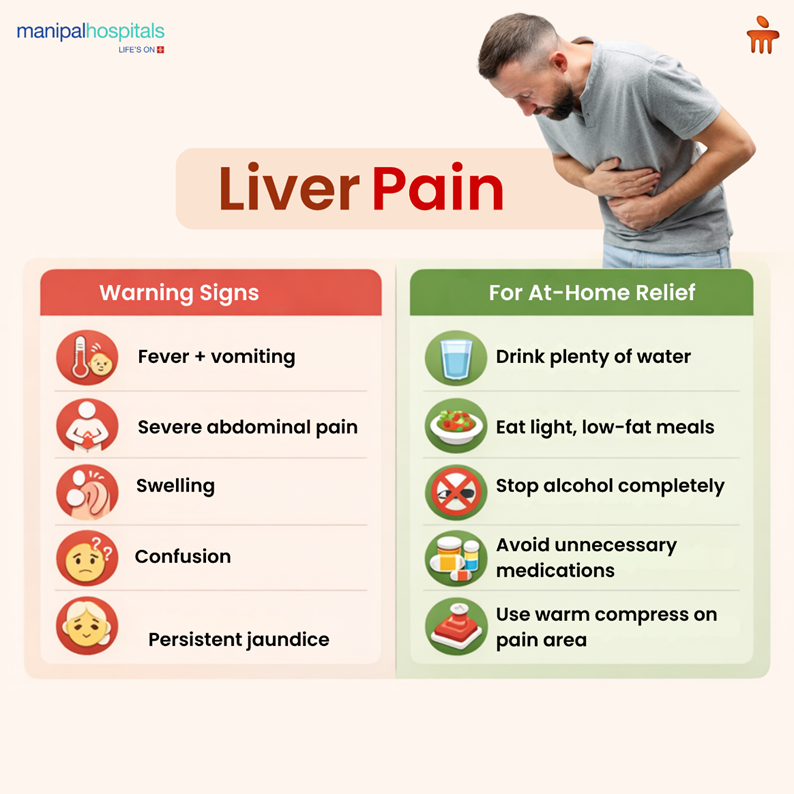
If liver pain is joined by fever, vomiting, jaundice, confusion, or swelling, it should not be managed as simple indigestion.
Common Causes of Liver Inflammation and Discomfort
The liver is a resilient organ, but it can be affected by several biological and environmental factors. Understanding the cause is the only way to determine how to cure liver pain effectively.
-
Non-Alcoholic Fatty Liver Disease (NAFLD): This occurs when too much fat is stored in the liver cells. It is increasingly common in individuals who are overweight or have diabetes.
-
Hepatitis: This is an inflammation of the liver caused by viral infections (such as Hepatitis A, B, or C) or by the immune system attacking the organ.
-
Excessive Alcohol Consumption: Frequent intake of alcohol can lead to inflammation and, eventually, permanent scarring known as cirrhosis.
-
Toxin Exposure: Consuming certain chemicals, environmental pollutants, or even an overdose of common medications like paracetamol can cause acute damage.
-
Gallstones: While these form in the gallbladder, they can block the ducts that lead from the liver, causing significant pressure and pain in the liver area.
Immediate Steps: Managing Discomfort at Home
If you are experiencing a mild ache and are wondering how to stop liver pain immediately, there are a few practical steps you can take to reduce the strain on the organ. However, these are management strategies and not a replacement for a formal medical diagnosis.
|
Hydrate with Plain Water |
Drinking plenty of water helps the organs process waste more efficiently. Avoid sugary drinks or sodas that force the liver to process excess fructose. |
|
Rest Your Digestive System |
Eating small, light meals that are low in fat can reduce the workload on the liver. Avoid fried foods, heavy creams, and red meats for a few days. |
|
Stop All Alcohol Intake |
If you have discomfort, the most important step is to stop consuming alcohol, as it is a direct toxin to liver cells. |
|
Check Your Medications |
Be very careful with over-the-counter pain relievers. Some medications, such as NSAIDs (Ibuprofen or Aspirin) and paracetamol (Acetaminophen), can be harmful if the liver is already inflamed. |
|
Apply a Warm Compress |
Placing a warm (not hot) compress over the liver pain area can sometimes help relax the abdominal muscles and provide temporary relief from the sensation of pressure. |
Get advanced liver transplantation care at Manipal Hospitals Bangalore with expert hepatologists, state-of-the-art technology, and comprehensive pre- and post-transplant support.
Lifestyle Habits That Support a Healthy Liver
Looking after the liver is mostly about small, steady habits repeated over time. You may not notice the benefits day to day, but these choices can help reduce strain on the liver and lower the chance of future problems.
-
Maintain a balanced diet: Choose meals that include plenty of fibre, fruits, vegetables, and whole grains. These foods support digestion and help the body manage waste more efficiently, which eases the liver’s workload.
-
Exercise regularly: Staying active helps the body use energy better and can reduce the build-up of fat in the liver. Even simple habits like walking, cycling, or light exercise on most days can make a meaningful difference.
-
Use medications carefully: Always follow the dose written on the label or prescribed by your doctor. Avoid taking unnecessary medicines, and never combine medication with alcohol unless a doctor has clearly said it is safe.
-
Practice safe hygiene: Some liver infections spread through contaminated needles, unsafe medical practices, or unprotected exposure. Vaccination against Hepatitis A and B is also an important preventive step.
-
Get regular screenings: If you have diabetes, high cholesterol, obesity, or a family history of liver disease, routine blood tests can help detect problems early, often before symptoms become noticeable.
Conclusion
Experiencing discomfort in your abdomen is a signal that your body needs attention. While it can be an alarming experience, understanding the liver pain symptoms allows you to take the right steps toward recovery. If you are concerned about your symptoms, do not wait for the pain to worsen.
Consult the specialists at Manipal Hospitals to get the best liver pain treatment in Bangalore, including ultrasounds and FibroScans (Transient Elastography) to check the health of your organ without needing an invasive biopsy.
FAQ's
You should be very cautious. Many common painkillers are processed by the liver. Specifically, paracetamol can be toxic in high doses or if the liver is already damaged. If you need to know how to stop liver pain immediately, speak to a doctor before taking any medication.
Yes, the liver pain area is primarily the upper right side of the abdomen. If you feel pain on the left side, it is more likely related to the stomach, spleen, or colon.
In its early stages, yes. By making changes to your diet and increasing your physical activity, you can remove the excess fat from the cells. This is a primary focus of how to cure liver pain for many patients.
Some studies suggest that moderate coffee consumption (without excess sugar or cream) may have a protective effect on the liver and could reduce the risk of liver cancer and cirrhosis.
The liver is a fast-healing organ, but it depends on the severity of the damage. For mild inflammation, you may feel better in a few weeks. For more serious conditions, it can take months of dedicated care to see improvement.
Share this article on: