6 Min Read
Oral health plays a far greater role in your overall well-being than many people realise. Changes inside the mouth are often dismissed as minor ulcers or dental issues, but in some cases, they can indicate a serious condition such as mouth cancer, also known as oral cancer. At Manipal Hospitals Pune, our specialists emphasise that early awareness and timely diagnosis are the most powerful tools in successfully treating mouth cancer.
While the word “cancer” can feel overwhelming, it is important to understand that mouth cancer is highly treatable, especially when detected in its early stages. With advanced diagnostics and personalised treatment plans available at Manipal Hospitals Pune, many patients go on to make a full recovery with an excellent quality of life.
This guide explains everything you need to know about mouth cancer, early symptoms, causes, diagnosis, and modern treatment options, so you can take informed steps towards prevention and care.
Synopsis
What Is Mouth Cancer?
Mouth cancer is a type of head and neck cancer that develops in the tissues of the oral cavity. It may affect the:
-
Lips
-
Tongue
-
Inner cheeks
-
Gums
-
Floor or roof of the mouth
-
Tonsils and the back of the throat
Most mouth cancers begin in squamous cells, which line the mouth and throat. When detected early, treatment outcomes are significantly better.
Early Symptoms of Mouth Cancer You Should Not Ignore
Recognising the early symptoms of mouth cancer can be lifesaving. Studies show that the 5-year survival rate exceeds 85% when mouth cancer is diagnosed at a localised stage. Unfortunately, early symptoms are often painless and easily overlooked.
Common Mouth Cancer Symptoms Include:
-
A mouth sore that doesn’t heal within two weeks
-
White or red patches inside the mouth (leukoplakia or erythroplakia)
-
Lumps, thickening, or rough spots in the mouth or on the lips
-
Unexplained pain, bleeding, or numbness in the mouth or jaw
-
Difficulty chewing, swallowing, or moving the tongue or jaw
-
Persistent sore throat or sensation of something stuck in the throat
-
Hoarseness or voice changes lasting more than two weeks
-
Loose teeth or dentures suddenly fitting poorly
Regular self-examination and routine dental check-ups can help detect these changes early. Any symptom that persists should be evaluated by a specialist.
Mouth Cancer Causes and Risk Factors
Understanding mouth cancer causes allows you to reduce risk through lifestyle changes. While not all cases have a clear cause, several factors significantly increase the likelihood of developing oral cancer.
Major Risk Factors Include:
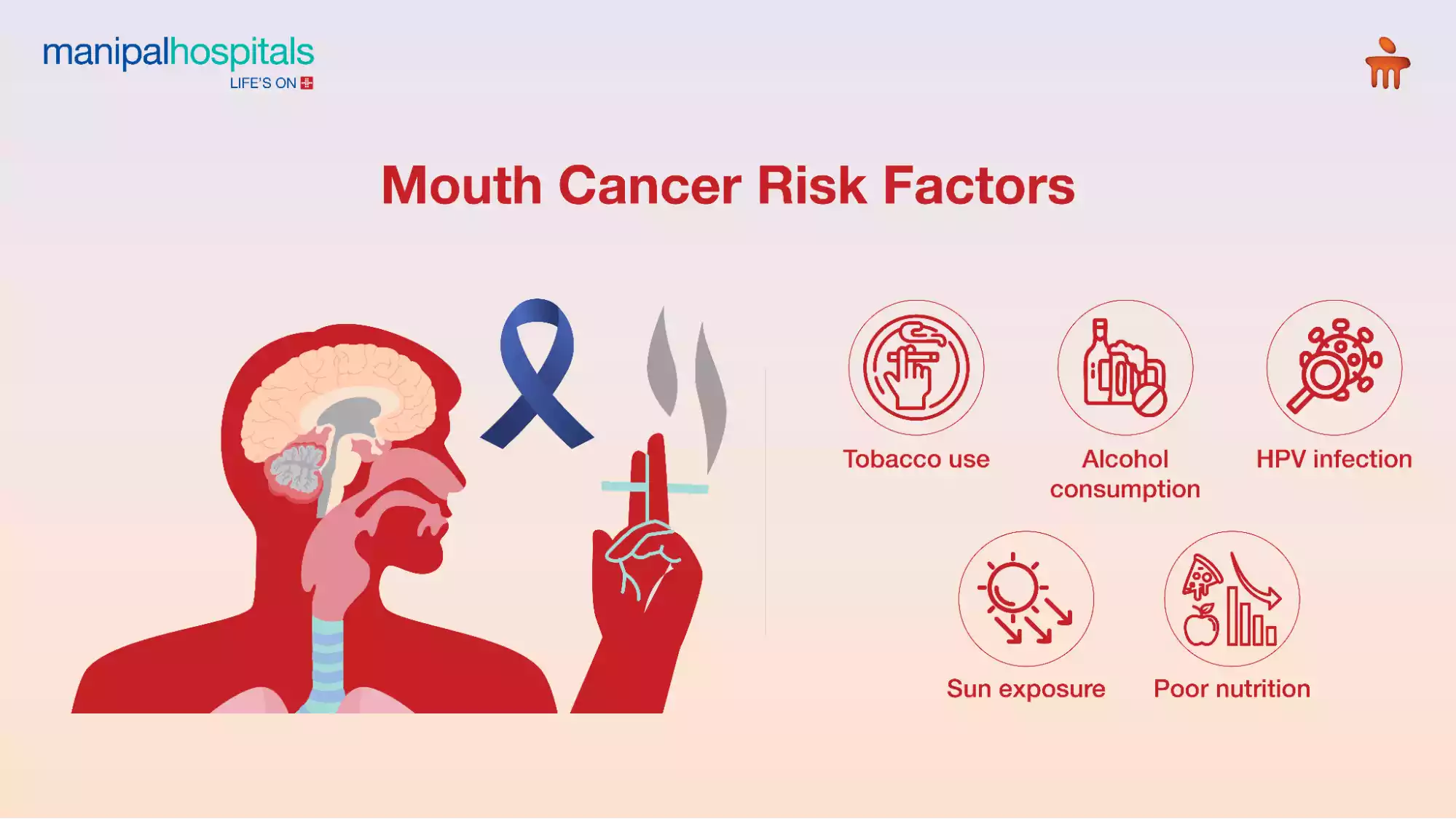
Tobacco Use
Smoking cigarettes, bidis, cigars, or using smokeless tobacco is the leading cause of mouth cancer. Tobacco is linked to nearly 85% of oral and head-neck cancers.
Alcohol Consumption
Heavy alcohol intake damages oral tissues and increases cancer risk, especially when combined with smoking.
Human Papillomavirus (HPV)
Certain strains of HPV are associated with cancers of the tonsils and base of the tongue.
Excessive Sun Exposure
Prolonged sun exposure increases the risk of lip cancer.
Poor Nutrition
Diets low in fruits and vegetables reduce the body’s natural protective antioxidants.
Weakened Immunity
People with compromised immune systems have a higher risk of developing cancer
Diagnosis and Staging at Manipal Hospitals, Baner, Pune
At Manipal Hospitals, diagnosis begins with a detailed oral examination by experienced ENT specialists or oncologists in Baner, Pune. If an abnormal area is found, a biopsy is performed to confirm the presence of cancer.
Once diagnosed, imaging tests such as CT scans, MRI, or PET scans help determine the stage of cancer and whether it has spread to lymph nodes or nearby tissues. Accurate staging is essential for planning the most effective mouth cancer treatment.
Advanced Mouth Cancer Treatment Options
So, is mouth cancer curable?
Yes. especially when detected early and treated at a specialised centre like Manipal Hospital Baner.
Treatment is planned by a multidisciplinary team to ensure the best outcomes while preserving speech, swallowing, and appearance.
Mouth Cancer Treatment Options Include:
Surgery
Surgery is the most common treatment for early-stage mouth cancer. The tumour and a small margin of healthy tissue are removed. Early-stage surgical treatment can achieve over 90% cure rates.
Radiation Therapy
High-energy radiation destroys cancer cells. It may be used alone, after surgery, or alongside chemotherapy in advanced cases.
Chemotherapy
Chemotherapy uses powerful medicines to kill cancer cells and is often used when cancer has spread to the lymph nodes.
Targeted Therapy
These advanced treatments focus on specific cancer cell proteins, helping control tumour growth with fewer side effects.
Post-treatment rehabilitation, including speech therapy and reconstructive procedures, is an integral part of care at Manipal Hospitals Pune.
Do’s and Don’ts for Mouth Cancer Prevention
Do’s:
-
Perform monthly mouth self-examinations
-
Maintain good oral hygiene
-
Eat a diet rich in fruits and vegetables
-
Use SPF lip balm outdoors
-
Seek medical advice for persistent mouth changes
Don’ts:
-
Don’t ignore painless sores or patches
-
Don’t use tobacco in any form
-
Don’t consume excessive alcohol
-
Don’t skip regular dental check-ups
Conclusion
Take the First Step Towards Early Detection
Your oral health should never be ignored. If you notice any persistent changes or have concerns about mouth cancer, consult the experts at Manipal Hospitals Baner. Early diagnosis saves lives and ensures better treatment outcomes.
FAQ's
A non-healing mouth ulcer lasting more than two weeks is often the earliest sign.
Not always. Many early lesions are painless, which is why routine checks are important.
Yes. HPV infection, poor diet, and genetic factors can also cause mouth cancer.
A biopsy is the only definitive method to diagnose mouth cancer.
When detected early, survival rates exceed 85%. Outcomes decrease if diagnosis is delayed.
Growth rates vary. Some cancers spread slowly, while others are aggressive, making early evaluation essential.
Share this article on: