6 Min Read
In today’s fast-paced lifestyle, meals often become rushed, distracted, and mindless. Many of us eat while scrolling through our phones, replying to emails, or watching television, barely noticing what or how much we are consuming. Over time, this disconnected way of eating can lead to digestive discomfort, unwanted weight gain, emotional eating, and an unhealthy relationship with food.
At Manipal Hospital Baner, Pune, we believe that good health begins with simple, sustainable habits. One such powerful yet often overlooked practice is mindful eating. Understanding what mindful eating is and how to practise it can transform not only your eating habits but also your overall physical and mental well-being.
Synopsis
What Is Mindful Eating?
Mindful eating is the practice of paying full attention to the experience of eating without distractions or judgment. It involves being present in the moment and tuning in to your body’s natural hunger and fullness signals. Rather than focusing on calories or restrictions, mindful eating encourages awareness of the taste, texture, aroma, and appearance of food, as well as how your body responds to it.
Unlike traditional diets that dictate what you should or should not eat, mindful eating focuses on how you eat. It allows you to recognise the difference between physical hunger and emotional cravings, helping you make more conscious and nourishing food choices.
At Manipal Hospital Baner, Pune, our nutrition experts often recommend mindful eating as part of a holistic approach to long-term health, weight management, and digestive wellness.
Why Mindful Eating Is Important in Modern Life
Busy work schedules, irregular meal timings, and constant digital distractions have significantly changed the way we eat. Mindless eating can cause us to ignore hunger cues, overeat, or rely on processed foods for convenience. Over time, this can affect digestion, metabolism, and mental health.
Mindful eating helps slow down this cycle. It brings awareness back to your meals, allowing your body and mind to work together. By eating consciously, you give your digestive system the time it needs to function efficiently and allow your brain to recognise when you are satisfied.
Key Mindful Eating Benefits
Practising mindful eating consistently can lead to noticeable improvements in both physical and emotional health.
-
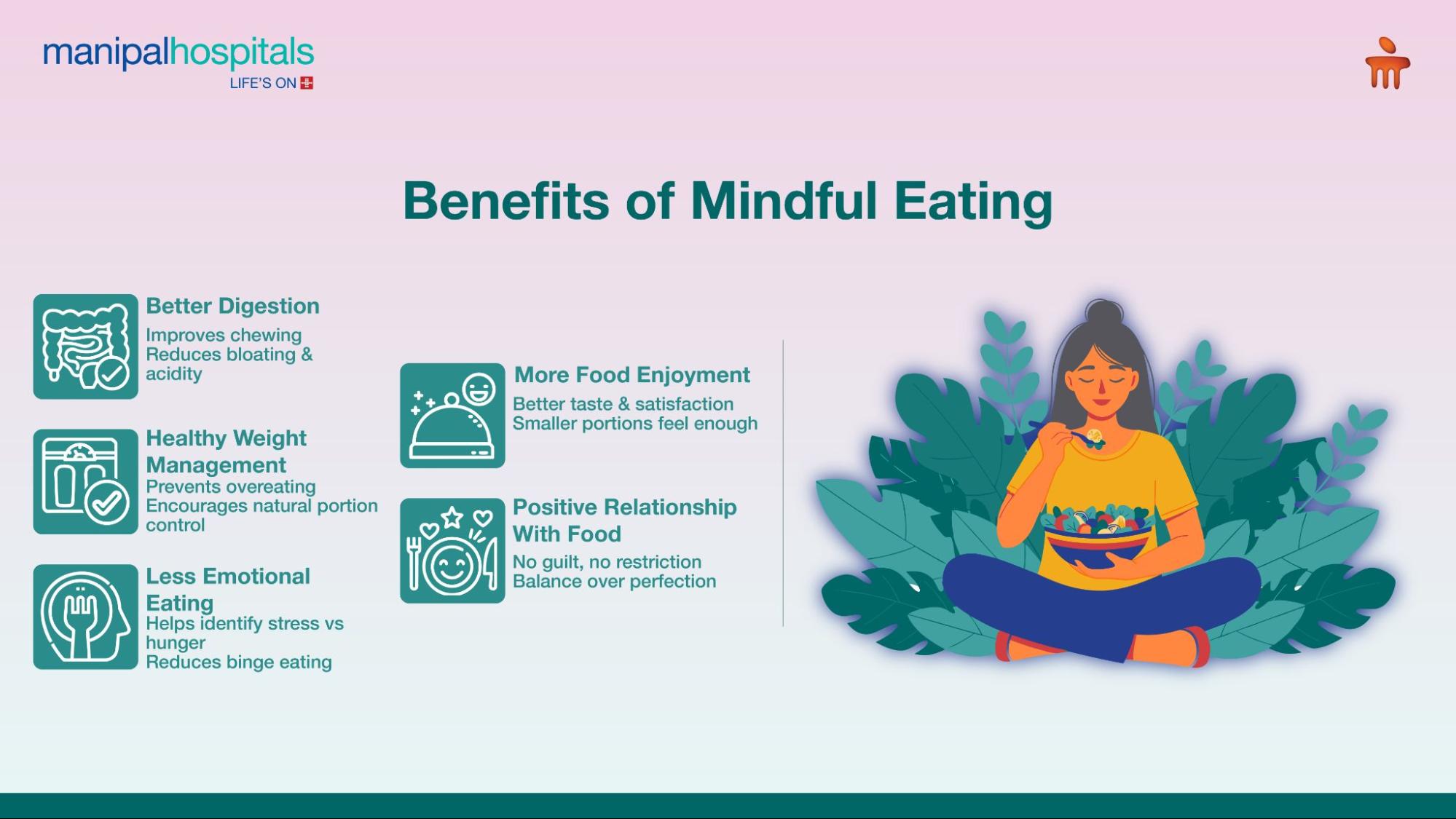
Improved Digestion and Gut Health - Eating slowly and chewing food thoroughly reduces strain on the digestive system. Mindful eaters often experience less bloating, acidity, and discomfort. Many patients report better gut health within a few weeks of adopting mindful eating habits.
-
Natural and Sustainable Weight Management - Mindful eating for weight loss works by helping you stop eating when you feel comfortably full rather than overeating out of habit. This leads to gradual, sustainable weight changes without extreme dieting or food restrictions.
-
Reduced Emotional and Stress Eating - Stress, boredom, and anxiety are common triggers for overeating. Mindful eating helps you pause and identify whether you are truly hungry or responding to an emotion, reducing emotional eating behaviours significantly.
-
Enhanced Enjoyment of Food - When you pay attention to each bite, food tastes better. You feel more satisfied with smaller portions and develop a deeper appreciation for your meals.
-
Healthier Relationship With Food - Mindful eating removes guilt from eating. There are no “good” or “bad” foods — only awareness and balance. This positive mindset is essential for long-term healthy eating habits.
Simple Mindful Eating Practices You Can Follow Daily
Incorporating mindful eating into your routine does not require drastic changes. Small, consistent steps can make a big difference.
-
Eat Slowly: Allow at least 20 minutes for each meal. Put your spoon or fork down between bites and avoid rushing.
-
Eliminate Distractions: Turn off the TV, put away your phone, and avoid working while eating. Create a calm eating environment.
-
Engage All Your Senses: Notice the colours, textures, smells, and flavours of your food. Eating becomes more satisfying when all senses are involved.
-
Listen to Hunger and Fullness Cues: Before eating, check how hungry you feel. During the meal, pause occasionally and stop eating when you feel comfortably full.
-
Chew Thoroughly: Chewing each bite well improves digestion and allows your body to absorb nutrients efficiently.
-
Practise Gratitude: Take a moment to appreciate your meal — where it came from and the effort behind it. This simple act encourages mindfulness and contentment.
Practical Tips for Busy Lifestyles
Even with a hectic schedule, mindful eating is achievable.
-
Start with one mindful meal per day, such as breakfast
-
Practise mindfulness during snacks, not just main meals
-
Plan meals in advance to avoid rushed eating
-
Avoid skipping meals, which often leads to overeating later
Our dietitians at Manipal Hospital Baner often advise patients to focus on consistency rather than perfection. Even a few minutes of mindful eating daily can have lasting benefits.
Do’s and Don’ts of Mindful Eating
Do:
-
Eat slowly and with intention
-
Focus on taste, texture, and aroma
-
Stay hydrated throughout the day
-
Honour your body’s hunger signals
Don’t:
-
Eat while distracted by screens
-
Rush through meals
-
Eat purely out of stress or boredom
-
Feel guilty about enjoying occasional treats
-
Mindful eating is about balance, not restriction.
When Should You Seek Professional Guidance?
If you experience ongoing digestive issues, struggle with emotional eating, or find weight management challenging, it is important to seek expert advice. At Manipal Hospital Baner, Pune, our experienced dietitians and gastroenterologists offer personalised nutritional guidance tailored to your health needs.
Early consultation can help address underlying concerns and support long-term well-being through evidence-based dietary strategies.
Mindful eating is a journey, not a destination. Some days will feel easier than others, and that’s perfectly normal. With regular practice, mindful eating can help you reconnect with your body, enjoy food without guilt, and support long-term health.
For expert nutritional care and guidance, book an appointment with the specialists at Manipal Hospital Baner and take the first step towards healthier eating habits and improved well-being.
FAQ's
Mindful eating involves eating with full awareness of your food and your body’s hunger and fullness cues, without distractions or judgment.
Yes. Mindful eating for weight loss promotes portion control and prevents overeating, leading to sustainable and healthy weight management.
Digestive improvements may be noticed within days or weeks, while weight and emotional eating changes typically develop over a few months.
No. Mindful eating is a lifestyle practice, not a diet. It focuses on awareness rather than restriction.
Absolutely. Even 5–10 minutes of mindful eating per meal can make a meaningful difference.
Share this article on: