4 Min Read
IBS is classified as a functional gastrointestinal disorder, meaning there is no visible structural damage in the digestive tract, but the functioning of the gut is altered. It primarily affects the large intestine (colon) and is driven by disturbances in the gut–brain axis, where communication between the brain and digestive system becomes dysregulated.
Globally, IBS affects around 10–15% of the population, making it one of the most commonly diagnosed digestive disorders worldwide.
Synopsis
- What Are the Common Irritable Bowel Syndrome Symptoms?
- What Causes IBS? Exploring IBS Causes
- Effective IBS Treatment at Manipal Hospitals, Baner
- Lifestyle and Dietary Management
- Medical & Advanced Therapies
- IBS Care Essentials – Do’s and Don’ts
- Why Choose Manipal Hospitals, Baner, Pune for IBS Care?
What Are the Common Irritable Bowel Syndrome Symptoms?
IBS symptoms can vary significantly from person to person and may fluctuate over time, with periods of flare-ups followed by symptom-free phases.
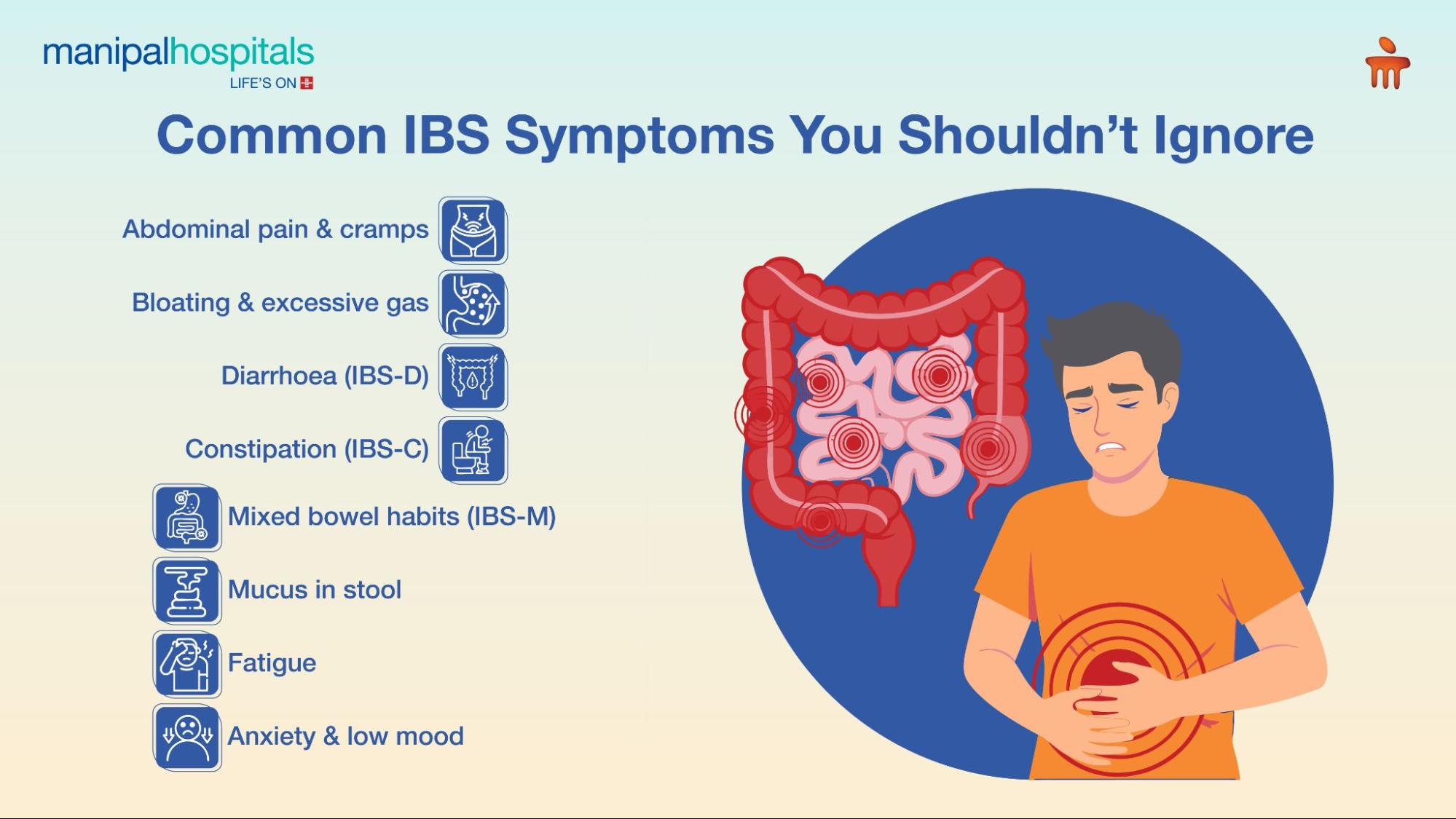
Core IBS Symptoms
-
Abdominal pain or cramping - often relieved after bowel movements
-
Bloating and gas - persistent feeling of fullness or abdominal distension
-
Altered bowel habits, including:
-
IBS-D (Diarrhoea-predominant) - frequent loose stools, urgency
-
IBS-C (Constipation-predominant) - hard stools, infrequent bowel movements
-
IBS-M (Mixed type) - alternating diarrhoea and constipation
-
-
Mucus in stool
Associated Symptoms
-
Chronic fatigue
-
Anxiety and depression
-
Heartburn and indigestion
-
Sleep disturbances
-
Reduced concentration and productivity
What Causes IBS? Exploring IBS Causes
The exact cause of IBS is complex and multifactorial. It is best understood as a disorder of gut–brain interaction.
Key Contributing Factors:
-
Brain–gut dysregulation
-
Gut microbiome imbalance (dysbiosis)
-
Abnormal gut motility
-
Visceral hypersensitivity (over-sensitive intestines)
-
Genetic predisposition
-
Chronic stress and anxiety
-
Post-infectious IBS after severe stomach infections
Effective IBS Treatment at Manipal Hospitals, Baner
At Manipal Hospitals Baner, IBS care is built around personalised treatment pathways, not one-size-fits-all solutions. Our gastroenterology specialists design integrated care plans based on:
-
Symptom patterns
-
Lifestyle factors
-
Mental health screening
-
Dietary triggers
-
Gut sensitivity profiles
-
Individual health history
Clinical outcomes show that 75–80% of patients experience substantial symptom relief within the first year of structured care.
Lifestyle and Dietary Management
-
Low-FODMAP Diet - A professionally guided low-FODMAP diet helps identify trigger foods. Success rate: 50–75% symptom reduction
-
Fibre Regulation - Balanced soluble fibre intake improves bowel regularity.
-
Hydration - Essential for gut motility and stool consistency.
-
Regular Eating Patterns - Smaller, regular meals reduce gut stress.
-
Stress & Mind–Gut Therapy - Because IBS is deeply connected to mental health:
-
Mindfulness & breathing therapy
-
Yoga and structured physical activity
-
Cognitive Behavioural Therapy (CBT)
-
Sleep regulation programs
-
Stress resilience training
Medical & Advanced Therapies
Depending on symptom patterns, treatment may include:
-
Gut motility regulators
-
Pain-modulating therapies
-
Microbiome modulation strategies
-
Gut sensitivity management
-
Advanced therapeutic interventions for refractory IBS
All treatments are clinically supervised by experienced gastroenterologists at Manipal Hospitals, Pune.
IBS Care Essentials – Do’s and Don’ts
Do’s
-
Maintain a food & symptom diary
-
Stay hydrated
-
Exercise regularly
-
Practise stress management
-
Seek professional care early
Don’ts
-
Ignore chronic digestive symptoms
-
Self-diagnose
-
Overuse of laxatives or anti-diarrhoeals
-
Consume known trigger foods
-
Let anxiety control your routine
Why Choose Manipal Hospitals, Baner, Pune for IBS Care?
-
Expert Gastroenterology Department
-
Personalised IBS treatment plans
-
Integrated diet–mind–gut care
-
Advanced diagnostics
-
Evidence-based therapies
-
Holistic long-term management
-
Patient-centric healing approach
If you’re experiencing persistent digestive symptoms, bloating, abdominal pain, or altered bowel habits, don’t ignore them. Early diagnosis and personalised treatment can transform your quality of life.
Book an appointment with our expert gastroenterologists at Manipal Hospitals, Baner, today and begin your journey towards long-term IBS relief.
Disclaimer: This article is for informational purposes only and does not constitute medical advice. Always consult a qualified healthcare professional for diagnosis and treatment.
FAQ's
IBS is not life-threatening and does not cause cancer or inflammatory bowel disease, but it can significantly affect quality of life if untreated.
There is no permanent cure, but IBS can be very effectively managed with personalised care and treatment.
High-FODMAP foods, caffeine, alcohol, spicy foods, fatty foods, and certain dairy products commonly trigger symptoms.
Stress does not cause IBS, but it strongly worsens symptoms due to the gut–brain connection.
Diagnosis is based on symptom patterns (Rome IV criteria), medical history, and ruling out other conditions.
Yes, IBS can affect children and adolescents and requires gentle, supportive management.
Share this article on: