5 Min Read
Crush injuries are among the most critical and time-sensitive medical emergencies. Commonly seen during road traffic accidents, construction mishaps, industrial incidents, or building collapses, these injuries occur when a body part is subjected to intense and prolonged pressure. While the external damage may look manageable at first glance, the internal consequences can be severe and even life-threatening if not treated immediately.
At Manipal Hospitals Pune, our 24/7 Emergency and Trauma Care Unit is equipped with advanced diagnostic tools, experienced trauma surgeons, and critical care specialists who handle complex crush injuries every day. Knowing how to respond in the first few minutes can make a vital difference, sometimes saving a limb and often saving a life.
This guide explains what crush injuries are, how to recognise them, what first aid steps to take, and how expert emergency care at Manipal Hospitals Baner ensures the best possible outcomes.
Synopsis
What Is a Crush Injury and Why Is It Dangerous?
A crush injury occurs when a body part, most commonly an arm, leg, or torso, is compressed between heavy objects for a prolonged period. Unlike a simple fracture or bruise, crush injuries cause extensive damage to:
-
Muscles
-
Blood vessels
-
Nerves
-
Skin and soft tissues
The most serious complication associated with crush injuries is Crush Syndrome. When muscles are crushed, they break down and release toxic substances such as myoglobin, potassium, and enzymes into the bloodstream. Once the pressure is suddenly released, these toxins flood the body, potentially leading to:
-
Acute kidney failure
-
Dangerous heart rhythm disturbances
-
Severe shock
-
Multi-organ failure
Timely medical intervention can significantly reduce complications. Studies show that early, expert treatment can lower the risk of kidney failure from crush syndrome by up to 70–75%.
Common Causes of Crush Injuries
Crush injuries can occur in various everyday and disaster situations, including:
-
Road traffic accidents involving cars, buses, or trucks
-
Industrial or factory accidents with heavy machinery
-
Construction site collapses
-
Earthquakes or structural failures
-
Prolonged entrapment under heavy objects
Recognising the Symptoms of a Crush Injury
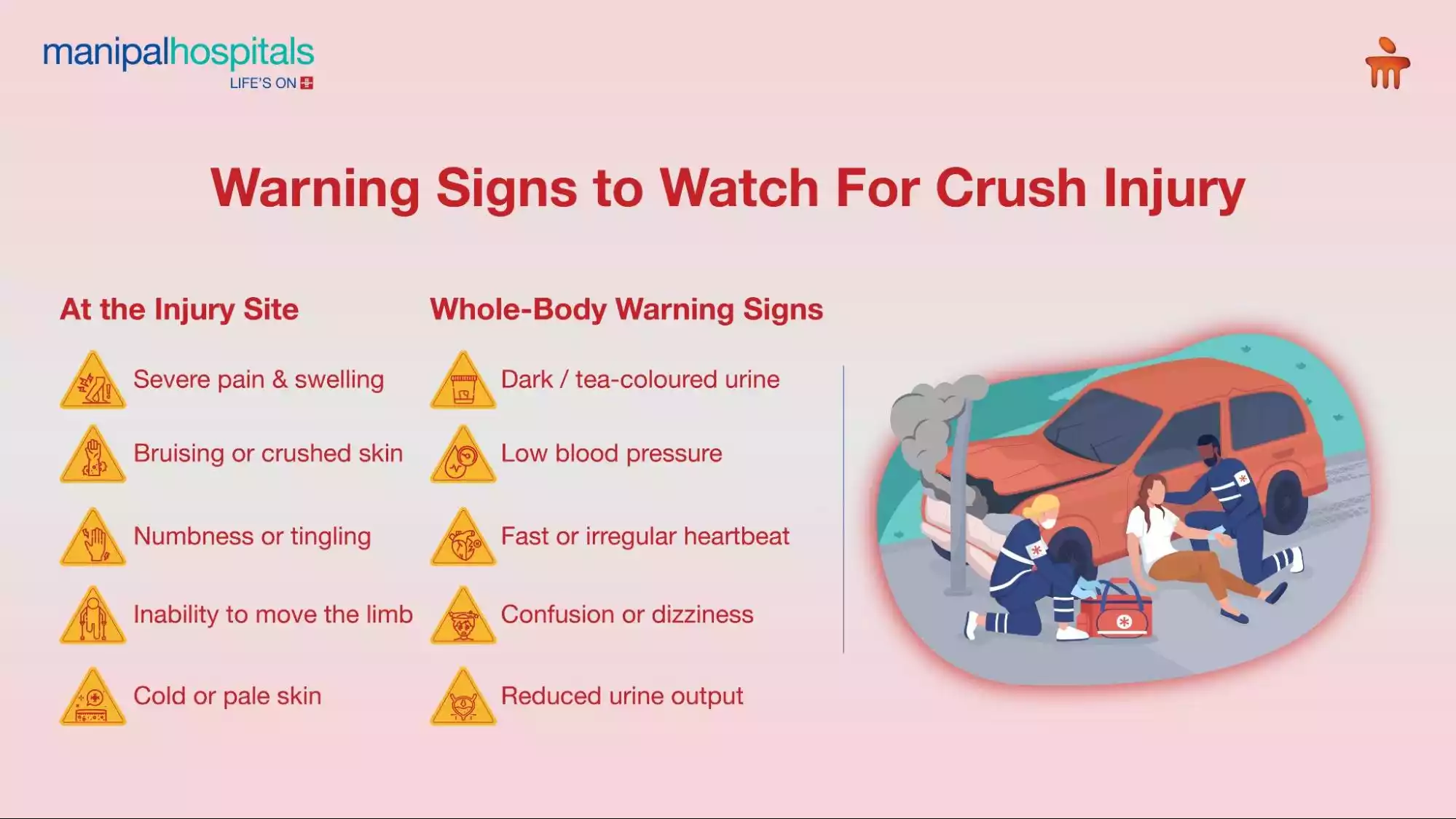
Local Signs at the Injury Site
-
Severe, persistent pain
-
Swelling and bruising
-
Numbness or “pins and needles” sensation
-
Inability to move the affected limb
-
Pale, cold skin compared to the opposite limb
-
Open wounds, blisters, or crushed skin
Warning Signs of Crush Syndrome
-
Dark, tea-coloured urine (a critical red flag)
-
Low blood pressure
-
Rapid or irregular heartbeat
-
Confusion or drowsiness
-
Reduced urine output
These systemic symptoms indicate that the injury is affecting the entire body and requires immediate emergency care.
First Aid for Crush Injuries: What to Do Before Medical Help Arrives
Crush injury scenes are often unsafe. Your priority is personal safety, followed by getting professional help as quickly as possible.
What You SHOULD Do
-
Ensure Scene Safety
Approach only if it is safe. Avoid unstable structures, live electrical wires, or heavy machinery.
-
Call Emergency Services Immediately
Dial 108 and clearly state:
-
There is a crush injury
-
Whether the person is trapped
-
The location and number of injured individual
• Control External Bleeding
Apply firm pressure using a clean cloth or bandage if there is active bleeding.
-
Keep the Person Calm and Warm
Cover them with a blanket or jacket. Reassurance helps reduce shock.
-
Monitor Breathing and Consciousness
Stay with the injured person, talk to them, and watch for changes in alertness.
What You MUST NOT Do
-
Do NOT Remove the Crushing Object (if trapped for more than 15 minutes)
This is crucial. Sudden release can cause a fatal surge of toxins into the bloodstream. Trained paramedics must manage this process using IV fluids and medications before extraction.
-
Do NOT Give Food or Water
The patient may need emergency surgery, and a full stomach increases anaesthesia risks.
-
Do NOT Move the Person Unnecessarily
Movement can worsen internal injuries or spinal damage unless there is immediate danger (fire, collapse).
Emergency Treatment at Manipal Hospitals, Baner, Pune
Once the patient reaches Manipal Hospital Baner, our trauma team initiates rapid, protocol-driven care. Over the past two decades, advances in trauma systems have improved survival rates for severe crush injuries by more than 60%.
Key Steps in Hospital Management
1. Immediate Stabilisation
-
Airway, Breathing, Circulation (ABCs)
-
Oxygen support
-
Aggressive IV fluid therapy to protect kidney function
2. Advanced Diagnostics
-
X-rays and CT scans to detect fractures and internal damage
-
Blood tests to assess muscle breakdown (CK levels), electrolytes, and kidney function
-
Urine analysis to detect myoglobin
3. Pain Management
Severe pain is managed carefully to reduce stress on the heart and body.
4. Surgical Care
-
Fasciotomy to relieve pressure in compartment syndrome
-
Debridement to remove dead tissue and prevent infection
-
Fracture fixation or reconstructive surgery, when required
5. Critical and Supportive Care
-
Continuous cardiac monitoring
-
Dialysis if kidney function is compromised
-
Intensive care support for severe cases
Conclusion
Crush injuries demand immediate, expert intervention. The Emergency and Trauma Care Unit at Manipal Hospitals Baner, Pune, is fully equipped to deliver life-saving treatment, advanced surgery, and comprehensive rehabilitation all under one roof.
In case of severe trauma or suspected crush injury, head straight to the Emergency Department at Manipal Hospitals Baner, Pune.
FAQ's
A fracture affects the bone, while a crush injury damages muscles, nerves, and blood vessels, often causing systemic complications like crush syndrome.
It is a life-threatening condition caused by toxins released from damaged muscles into the bloodstream, leading to kidney failure, heart problems, and shock.
It indicates myoglobinuria—a sign that muscle breakdown products are damaging the kidneys.
Only trained medical professionals should manage release after prolonged entrapment, as they prepare the body beforehand with IV treatment.
Yes, many do. Recovery depends on injury severity and speed of treatment. With expert care, surgery, and rehabilitation, many patients regain good function and quality of life.
Share this article on: