8 Min Read
A sudden slip in the bathroom, a sports injury, or a road accident bone fractures can occur when you least expect them. Commonly referred to as broken bones, fractures are among the most frequently treated orthopaedic conditions across all age groups. While the pain and uncertainty can be distressing, the good news is that with timely diagnosis and expert care, most fractures heal completely.
At Manipal Hospital Pune, our orthopaedic specialists manage a wide range of fractures every day, helping patients regain mobility, strength, and confidence. This comprehensive guide explains the different types of bone fractures, the natural healing process, and the expert treatment options available, so you know what to expect at every stage of recovery.
Synopsis
What Is a Bone Fracture?
A bone fracture occurs when a bone is subjected to a force greater than it can withstand. This force may come from a fall, impact, twisting injury, or repetitive stress over time. Fractures can affect people of all ages, from children with sports injuries to older adults with fragile bones due to osteoporosis.
Early assessment by an orthopaedic doctor is essential, as untreated or improperly healed fractures can lead to long-term pain, deformity, or loss of function.
Types of Bone Fractures
Not all fractures are the same. At Manipal Hospital Pune, orthopaedic doctors classify fractures based on whether the skin is involved and the pattern of the break. Understanding the fracture type helps guide the most appropriate treatment plan.
Broad Categories of Fractures
Closed (Simple) Fracture
The bone breaks but does not pierce the skin. These fractures are common and usually heal well with immobilisation.
Open (Compound) Fracture
The broken bone penetrates the skin, creating an open wound. These fractures require immediate medical attention to reduce the risk of infection and complications.
Common Fracture Patterns
-
Transverse Fracture: A straight break across the bone
-
Oblique Fracture: A diagonal break, often caused by angled force
-
Spiral Fracture: A twisting injury causing a spiral-shaped break
-
Comminuted Fracture: The bone breaks into three or more pieces and often requires surgery
-
Greenstick Fracture: An incomplete fracture where the bone bends and cracks, commonly seen in children
-
Stress (Hairline) Fracture: A small crack caused by repetitive stress or overuse, often seen in athletes and runners
The Bone Healing Process: What Happens Inside Your Body?
The human body has a remarkable ability to repair broken bones. However, healing takes time and progresses through several well-defined stages. On average, most fractures show significant healing within 6 to 8 weeks, although full strength may take several months.
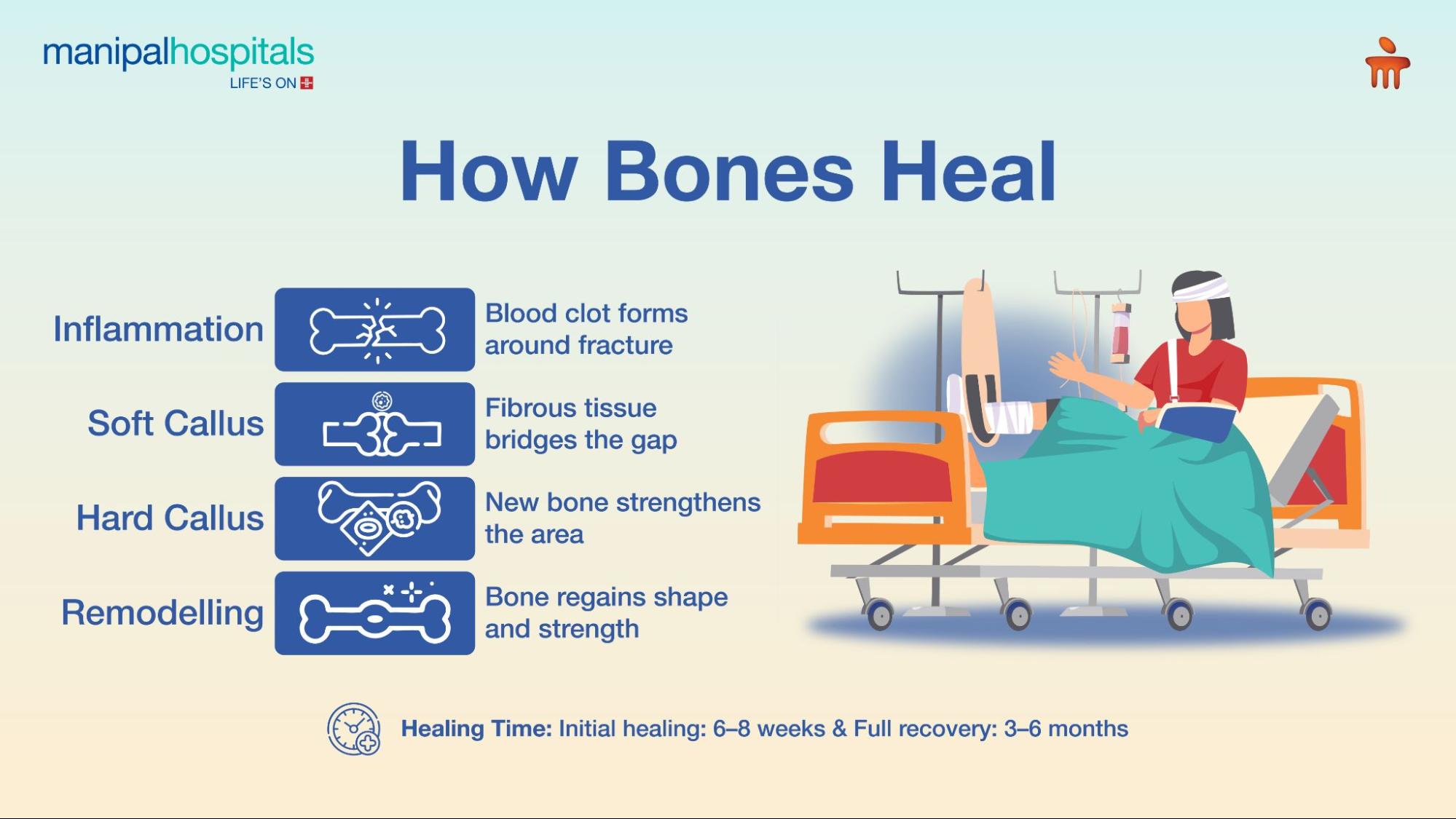
Stages of Bone Healing
1. Inflammation Phase
Immediately after the fracture, blood vessels rupture and a clot forms around the broken bone ends. This clot protects the area and initiates healing.
2. Soft Callus Formation
Within the next few weeks, fibrous tissue and cartilage form a soft callus, bridging the gap between the broken bone fragments.
3. Hard Callus Formation
The soft callus gradually hardens as new bone forms, making the fracture more stable.
4. Bone Remodelling
Over months, the newly formed bone reshapes itself, restoring the bone’s original structure and strength.
With expert monitoring at Manipal Hospital Pune, over 95% of fractures unite successfully, allowing patients to return to their daily routines.
Diagnosis of Bone Fractures
Accurate diagnosis is key to effective treatment. Orthopaedic specialists at Manipal Hospital Baner use advanced imaging techniques such as:
-
X-rays – the most common diagnostic tool
-
CT scans – for complex or joint-related fractures
-
MRI scans – useful for stress fractures and soft tissue injuries
Treatment Options for Bone Fractures
Treatment depends on the type, location, and severity of the fracture, as well as the patient’s age and activity level.
Common Fracture Treatments at Manipal Hospital Pune, Baner
Immobilisation
Most fractures are treated with plaster or fibreglass casts that keep the bone aligned during healing. Splints or braces may be used for minor or stable fractures.
Surgical Treatment
Complex, displaced, or open fractures may require surgery. Orthopaedic surgeons use advanced fixation methods such as plates, screws, rods, or nails to stabilise the bone. Surgical fixation has a success rate of over 90%, ensuring better alignment and faster functional recovery.
Physiotherapy and Rehabilitation
Once the bone has healed sufficiently, physiotherapy plays a crucial role. A structured rehabilitation programme helps restore strength, flexibility, balance, and range of motion. More than 95% of patients regain near-normal function with proper rehabilitation.
Do’s and Don’ts During Fracture Recovery
Do’s
-
Keep the injured limb elevated, especially in the first few days
-
Follow weight-bearing and activity instructions strictly
-
Eat a nutritious diet rich in calcium, vitamin D, and protein
-
Attend all follow-up appointments
Don’ts
-
Do not ignore increasing pain, swelling, or numbness
-
Never remove or adjust your cast without medical advice
-
Avoid smoking, as it significantly delays bone healing
-
Do not rush your recovery—allow your body the time it needs
Expert Orthopaedic Care at Manipal Hospital Baner
A bone fracture can temporarily disrupt your life, but with the right care, it does not have to limit your future. At Manipal Hospital, our experienced orthopaedic specialists in baner, Pune, combine advanced medical technology with compassionate, patient-centred care to ensure safe healing and long-term recovery.
From emergency fracture management to surgical fixation and rehabilitation, our team supports you at every step of your healing journey.
If you have suffered an injury or suspect a fracture, book an appointment with the orthopaedic experts at Manipal Hospital Pune, Baner, today.
Disclaimer: This article is for informational purposes only and does not replace professional medical advice. Please consult a qualified healthcare professional for diagnosis and treatment.
FAQ's
Symptoms include severe pain, swelling, bruising, deformity, and difficulty moving or bearing weight. An X-ray confirms the diagnosis.
Some minor fractures may heal with rest and support, but most need immobilisation to heal correctly.
Calcium-rich foods, vitamin D, and adequate protein support bone repair.
No. “Fracture” is the medical term for a broken bone.
Immediately, especially if there is severe pain, deformity, or an open wound.
Share this article on: