5 Min Read
Finding out that you or a loved one has a tumour can be frightening. For many people, the word tumour immediately brings thoughts of cancer. However, not all tumours are cancerous. In medical terms, tumours are mainly classified into benign and malignant tumors, and understanding the difference between them can reduce anxiety and help people make informed health decisions.
In this article, we explain benign vs malignant tumor, their symptoms, tumour types, diagnosis, and treatment options in clear, easy-to-understand language.
Synopsis
- What Is a Tumour?
- What Is a Benign Tumor?
- What Is a Malignant Tumour?
- Benign vs Malignant Tumour: Key Differences Explained
- Tumour Types Based on Location
- How Are Benign and Malignant Tumours Diagnosed?
- Treatment Options for Benign and Malignant Tumours
- Can a Benign Tumor Become Malignant?
- Conclusion
What Is a Tumour?
A tumour is an abnormal growth of cells that occurs when cells divide uncontrollably. Tumours can develop in almost any part of the body, including the brain, breast, lungs, skin, bones, and internal organs.
Tumours are broadly divided into two main tumor types:
-
Benign tumors (non-cancerous)
-
Malignant tumors (cancerous)
What Is a Benign Tumor?
A benign tumor is a non-cancerous growth. These tumours usually grow slowly and do not spread to other parts of the body.
Key Features of Benign Tumors:
-
Slow-growing
-
Do not invade nearby tissues
-
Do not spread to distant organs
-
Usually well-defined and smooth
-
Often painless
-
Rarely life-threatening
Common Benign Tumor Symptoms:
Many benign tumours cause no symptoms and are found during routine check-ups. When symptoms do occur, they may include:
-
A painless lump or swelling
-
Mild pressure on nearby organs
-
Headache (if located in the brain)
-
Cosmetic changes due to visible swelling
Examples of Benign Tumour Types:
-
Lipoma (fat tissue tumour)
-
Fibroid (uterine tumour)
-
Adenoma (gland-related tumour)
-
Meningioma (benign brain tumour)
At Manipal Hospital Baner, Pune, benign tumours are often managed with careful monitoring or minimally invasive procedures when required.
What Is a Malignant Tumour?
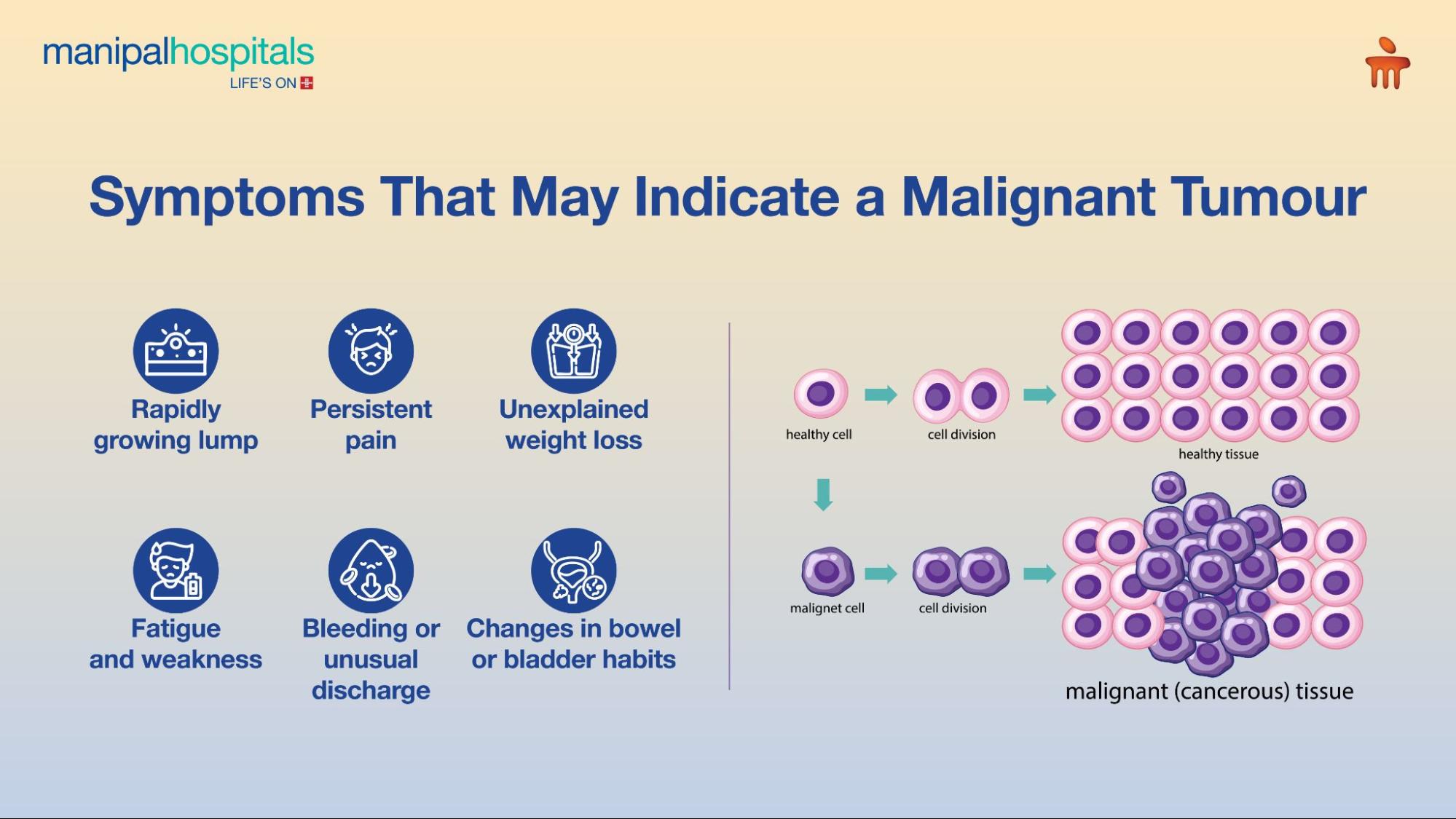
A malignant tumour is cancerous and more aggressive in nature. These tumours grow faster and have the ability to spread to nearby tissues or distant organs, a process called metastasis.
Key Features of Malignant Tumours:
-
Rapid and uncontrolled growth
-
Can invade surrounding tissues
-
Can spread through the blood or lymph nodes
-
Irregular shape and poorly defined borders
-
Can be life-threatening if untreated
Common Symptoms of Malignant Tumours:
-
Rapidly enlarging lump
-
Persistent pain
-
Unexplained weight loss
-
Fatigue and weakness
-
Bleeding or discharge
-
Changes in bowel or bladder habits
-
Persistent cough or hoarseness
Early diagnosis at a trusted healthcare centre like Manipal Hospital Baner, Pune plays a vital role in improving cancer outcomes.
Benign vs Malignant Tumour: Key Differences Explained
Understanding the difference between benign and malignant tumours is essential. Here is a simple comparison:
|
Feature |
Benign Tumor |
Malignant Tumor |
|
Nature |
Non-cancerous |
Cancerous |
|
Growth speed |
Slow |
Fast |
|
Spread |
Does not spread |
Can spread to other organs |
|
Cell structure |
Looks similar to normal cells |
Abnormal-looking cells |
|
Boundaries |
Well-definedIrregular |
Irregular |
|
Risk to life |
Low |
High if untreated |
|
Recurrence |
Rare after removal |
May recur |
Tumour Types Based on Location
Tumours can also be classified based on where they develop:
-
Brain tumours – benign or malignant
-
Breast tumours – cysts, fibroadenomas, breast cancer
-
Bone tumours – osteoma (benign), osteosarcoma (malignant)
-
Skin tumours – moles, melanoma
-
Organ tumours – liver, kidney, lung, or colon tumours
Not all tumours in vital organs are malignant, which is why proper evaluation is essential.
How Are Benign and Malignant Tumours Diagnosed?
Doctors use several methods to diagnose tumour types accurately:
-
Physical examination
-
Imaging tests (X-ray, ultrasound, CT scan, MRI)
-
Blood tests
-
Biopsy (gold standard for diagnosis)
A biopsy helps determine whether the tumour is benign or malignant by examining the cells under a microscope.
At Manipal Hospital Baner, advanced diagnostic facilities ensure accurate and timely tumour evaluation.
Treatment Options for Benign and Malignant Tumours
Treatment for Benign Tumors:
-
Regular observation and follow-up
-
Surgical removal (if symptomatic or growing)
-
Medications in select cases
Treatment for Malignant Tumors:
-
Surgery
-
Chemotherapy
-
Radiation therapy
-
Targeted therapy
The treatment plan depends on the tumour type, stage, location, and overall health of the patient.
Can a Benign Tumor Become Malignant?
In most cases, benign tumours do not turn cancerous. However, certain tumour types—such as colon polyps or specific breast lesions may carry a small risk of becoming malignant. This makes regular monitoring and follow-ups extremely important.
You should seek medical attention if you notice:
-
A new lump or swelling
-
Rapid growth of an existing lump
-
Persistent pain or discomfort
-
Any symptom lasting more than two weeks
Early consultation at Manipal Hospital Baner can help detect serious conditions at an early, treatable stage.
Conclusion
Understanding benign and malignant tumors helps remove fear and confusion surrounding tumour diagnosis. While benign tumours are usually harmless, malignant tumours require prompt medical attention. Early diagnosis, expert care, and timely treatment can make a significant difference.
For accurate diagnosis and comprehensive care, Manipal Hospital Baner offers advanced facilities and expert specialists to guide patients every step of the way.
FAQ's
No. Many tumours are benign and not cancerous.
Not always. Treatment depends on size, location, and symptoms.
No. Early diagnosis and modern treatments have significantly improved survival rates.
No. A biopsy is usually required to confirm whether a tumour is malignant.
Healthy lifestyle habits, avoiding tobacco, regular health check-ups, and early screening help reduce risk.
Share this article on: