5 Min Read
Uterine cancer is one of those conditions that rarely announces itself loudly in the beginning. Instead, it often whispers through small changes in the body changes many women brush aside as hormonal shifts, stress, or simple exhaustion. But recognising uterine cancer symptoms early can make a life-changing difference. When treated in time, the chances of a full recovery are much higher.
Many women who share their diagnosis journey often say, “Looking back, this is how I knew I had uterine cancer.” The signs were there, just hidden beneath their everyday routines. This article helps you understand those early clues, along with the causes, treatment options, and the deeper question many women ask: Is uterine cancer curable?
Synopsis
What Exactly Is Uterine Cancer?
Uterine cancer develops when abnormal cells begin growing in the uterus (womb). The most common type is endometrial cancer, which starts in the inner lining. The less common but more aggressive type, uterine sarcoma, develops in the muscles of the uterus.
Women above 45, those with obesity or PCOS, or women who have had long-term hormonal imbalance are at higher risk. Although the condition can feel intimidating, exploring your symptoms honestly is the first step towards clarity and care.
7 Alarming Uterine Cancer Symptoms You Shouldn’t Ignore
These symptoms do not automatically mean cancer, but your body deserves attention not assumptions.
1. Abnormal Uterine Bleeding
This is by far the most common early warning sign. Abnormal bleeding can look like:
-
Periods that suddenly become heavier
-
Spotting between cycles
-
Bleeding after sex
-
Periods becoming unpredictable
-
Bleeding after menopause, even a tiny amount
For many women, this was the moment they realised something wasn’t right. It’s also one of the most commonly mentioned experiences in stories about how I knew I had uterine cancer.
If you are postmenopausal, any bleeding must be taken seriously.
2. Pelvic Pain or a Heavy Feeling
This pain is different from period cramps. Many describe it as:
-
A lingering heaviness
-
A dull ache
-
A sense of pressure in the lower belly
This happens when a tumour presses against surrounding organs. If the discomfort continues for weeks, your body is asking for attention.
3. Pain During Intercourse
Painful intercourse is another sign that something may be wrong with the uterine lining. While embarrassment or hesitation stops many women from reporting this symptom, it’s important to understand that this is a legitimate physical change not something to dismiss.
4. Unusual Vaginal Discharge
A shift in discharge may include:
-
Watery or thin discharge
-
Foul-smelling discharge
-
Brownish or blood-tinged fluid
This change can happen early in uterine cancer, often before any pain appears. If the discharge does not feel “normal” for your body, it’s worth investigating.
5. Sudden, Unexplained Weight Loss
Weight loss without trying is always a red flag. Tumours can alter metabolism and appetite, leading to rapid changes in body weight. If you are losing weight without any lifestyle changes, it’s important not to ignore it.
6. Frequent Urination or Bladder Pressure
A growing tumour can press against the bladder, causing:
-
Frequent urination
-
Urgency
-
Difficulty holding urine
-
A constant “full” feeling
Many women initially assume this is a urinary infection, but if tests are normal and symptoms persist, further evaluation becomes essential.
7. Persistent Fatigue
Cancer-related fatigue feels different from being tired after a long day. Women often describe it as a deep, unshakeable exhaustion. It lingers even after rest. When fatigue appears alongside bleeding or pelvic discomfort, it becomes more concerning.
Uterine Cancer Causes
There isn’t a single cause, but several factors can increase the risk:
-
High oestrogen levels
-
Obesity, which raises hormone levels
-
PCOS and irregular ovulation
-
Diabetes
-
Family history or genetic conditions, such as Lynch syndrome
-
Long-term use of oestrogen without progesterone
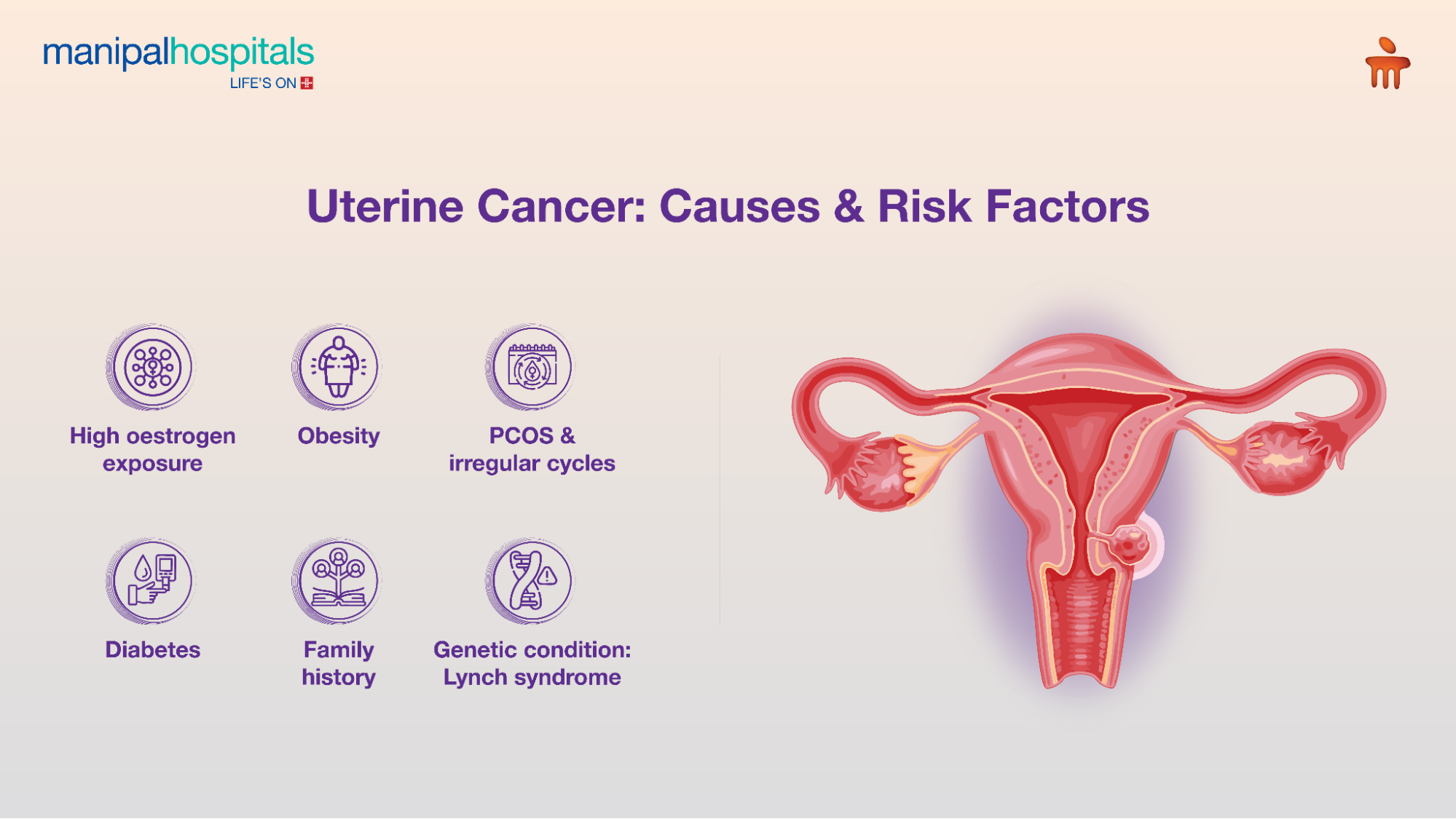
Understanding these uterine cancer causes helps women recognise when they may need earlier screening or specialist guidance.
How I Knew I Had Uterine Cancer – Real-Life Indicators
For most women, the realisation comes gradually. A strange pattern begins to form:
-
A little spotting after menopause
-
Pelvic pressure lasting longer than expected
-
Feeling tired for no obvious reason
-
A discharge that felt “different”
In many stories shared by patients and survivors, these small signals were the earliest hints. The final push to see a doctor often comes from a moment of clarity, a friend’s advice, or simply listening to one’s own intuition.
Is Uterine Cancer Curable?
Yes. uterine cancer is curable, particularly in its early stages. Most cases diagnosed early respond very well to treatment, with survival rates rising significantly when the disease is still confined to the uterus.
The keys to better outcomes are:
-
Early awareness
-
Timely diagnostic tests
-
Access to experienced specialists
Hospitals like Manipal Hospital Baner offer advanced diagnostic tools and a team of specialists who help women get clarity quickly and start treatment without delay.
Uterine Cancer Treatment Options
Treatment depends on the stage and type of uterine cancer. Common approaches include:
1. Surgery (Hysterectomy)
The most effective treatment, where the uterus is removed. Sometimes the ovaries and fallopian tubes are removed as well.
2. Radiation Therapy
Used after surgery or in advanced cases to destroy remaining cancer cells.
3. Chemotherapy
Recommended for aggressive or advanced cancers.
4. Hormone Therapy
Useful when cancer cells grow in response to hormones.
5. Targeted Therapy & Immunotherapy
Newer treatments that work on specific cancer pathways.
A personalised treatment plan is essential, and centres like Manipal Hospital Baner offer multidisciplinary care tailored to each patient’s condition.
When Should You See a Specialist?
You should see a gynaecologist immediately if you notice:
-
Any abnormal bleeding
-
Persistent pelvic pain
-
Unusual discharge
-
Ongoing fatigue
-
Symptoms that last for more than two weeks
A simple ultrasound, pelvic exam, or biopsy can provide clarity and peace of mind.
Your body speaks to you in its own way. Whether through persistent fatigue, unexpected bleeding, or a subtle change in discharge, these signals deserve your attention. Recognising uterine cancer symptoms early can save your life. Trust your instincts, listen to your body, and seek help when something doesn’t feel right. Early awareness is not fear, it is empowerment.
FAQ's
Abnormal bleeding, pelvic pain, and unusual discharge are the most common early signs.
Yes. Early-stage uterine cancer has a high cure rate.
Hormonal imbalance, obesity, genetics, and certain health conditions increase the risk.
It typically affects women aged 45 and above.
Through physical examination, ultrasound, biopsy, and imaging tests.
Share this article on: