7 Min Read
A satisfying meal should leave you feeling nourished and comfortable. So when eating is regularly followed by pain, bloating, or a troubling sense of unease, it can turn a simple daily pleasure into a source of anxiety. You may find yourself wondering which foods are safe or whether the discomfort is a sign of something more serious.
While the term “abdominal pain after eating” can sound alarming, many causes are manageable with the right guidance. The location of your pain, upper, middle, or lower, often provides important clues that help your doctor understand what is happening inside your digestive system. Seeking evaluation at a top gastroenterology hospital in Yeshwanthpur, Bangalore, can help identify the underlying cause and ensure timely treatment.
In this blog, you will learn about the common reasons for post-meal discomfort, how to differentiate one type of pain from another, and the treatment options that can help you eat with confidence again.
Synopsis
Understanding Abdominal Pain After Eating
Abdominal pain that follows a meal can be felt in different areas of the belly, each pointing to different possible triggers. The pain may be sharp, cramping, burning, or simply a dull ache. For some, it begins immediately after eating; for others, it takes an hour or two to build.
When you experience upper abdominal pain after eating, the discomfort is usually felt just below the ribcage. Mid-abdominal pain after eating is typically centred around the navel, while lower abdominal pain after eating tends to sit below the belly button. Paying attention to where you feel the discomfort can help your doctor make a faster and more accurate diagnosis.
Common Causes Based on Pain Location
The location of abdominal pain after eating can provide valuable clues about which part of the digestive system may be affected. Understanding where the discomfort occurs, whether in the upper, middle, or lower abdomen, can help identify patterns and guide appropriate medical evaluation.
Upper Abdominal Pain After Eating
This is one of the most common forms of post-meal discomfort. Possible triggers include:
-
Gastritis and Peptic Ulcer Disease: The stomach lining can become inflamed due to infection with H. pylori, regular use of certain painkillers, or excess acid production. This often causes a gnawing or burning ache in the upper middle part of the belly that may either improve briefly with food (because food buffers acid) or worsen soon after a meal (because eating stimulates acid release).
-
Gastroesophageal Reflux Disease (GERD): When the valve between the oesophagus and stomach is weak, stomach contents wash back up, causing a burning discomfort behind the breastbone that often climbs towards the throat. A large meal, especially one high in fat, relaxes this valve further, and lying down too soon after eating can make symptoms much worse.
-
Gallstones: The gallbladder sits under your liver on the right side, and its job is to store bile that helps digest fats. When gallstones block the outlet, the gallbladder squeezes hard against the obstruction, causing a distinct right-sided or central upper abdominal pain that builds to a peak and then gradually fades over one to several hours. This pain almost always follows a fatty or heavy meal and can be accompanied by nausea or pain radiating to the right shoulder blade.
-
Pancreatitis: The pancreas lies deep behind the stomach, and when it becomes inflamed, often due to gallstones or heavy alcohol use, the result is a deep, boring upper abdominal pain that can spread straight through to the back. Eating frequently makes this pain worse, and it may be associated with vomiting and a general feeling of being very unwell.
Mid-Abdominal Pain After Eating
Discomfort around the navel often points to the small intestine or early large intestine. It can be linked to:
-
Irritable Bowel Syndrome (IBS): IBS is a disorder of gut-brain interaction that makes the bowel unusually sensitive. Eating triggers the gastrocolic reflex, a normal wave of movement that pushes food through the gut, but in IBS this reflex can become exaggerated and painful. Cramping around the navel is common, often accompanied by bloating that worsens as the day goes on and a change in bowel habit, either diarrhoea, constipation, or alternating between the two.
-
Food Intolerances: Lactose intolerance occurs when the body lacks enough of the enzyme lactase to break down milk sugar. The undigested sugar pulls water into the bowel and ferments, causing mid-abdominal cramps, gas, and watery diarrhoea within 30 minutes to a couple of hours of consuming dairy. Fructose malabsorption can produce a similar picture after eating fruits, honey, or high-fructose corn syrup.
-
Coeliac Disease: This is an autoimmune condition, not an allergy, in which gluten triggers the immune system to attack the lining of the small intestine. The result is persistent, often dull, mid-abdominal discomfort, along with bloating, fatigue, and loose stools that can be pale and foul-smelling. Over time, malabsorption of nutrients may lead to weight loss and deficiencies in iron, vitamin D, and B12.
-
Small Intestinal Bacterial Overgrowth (SIBO): When bacteria that normally belong in the large intestine start growing in the small intestine, they ferment food prematurely, producing gas and distension within minutes of eating. The result is bloating and diffuse mid-abdominal pain, often with diarrhoea and a sense of fullness that appears even after small meals.
Lower Abdominal Pain After Eating
Pain below the belly button that appears after eating can be confusing because it may seem far from the stomach. Common causes include:
-
Functional Bloating and IBS with Constipation: As the bowel prepares to make room for incoming food, trapped gas and stool create a sensation of lower abdominal pressure, aching, or sharp, shifting pains. Discomfort often improves after passing wind or having a bowel movement. For those with a sluggish bowel, the pain can be more constant and located on the left side.
-
Diverticulitis: Small pouches in the colon wall can become inflamed or infected, most commonly on the lower left side. While the condition itself is not caused by eating, the increased bowel contractions after a meal often intensify the steady, aching pain. Warning signs include fever, chills, and a change in bowel habits alongside localised tenderness.
-
Inflammatory Bowel Disease (IBD): Crohn’s disease and ulcerative colitis cause chronic inflammation of the digestive tract. Cramping lower abdominal pain after eating is common, especially in Crohn’s disease, where inflammation can thicken the bowel wall and narrow the passage. Urgent diarrhea, blood in the stool, persistent fatigue, and unintended weight loss are features that distinguish IBD from functional conditions.
When to Seek Medical Attention
Occasional mild bloating or a brief ache after a large meal is rarely a cause for concern. However, some symptoms should never be ignored. Speak to a doctor if you notice:
-
Severe pain that stops you in your tracks
-
Unintended weight loss
-
Difficulty swallowing or persistent vomiting
-
Blood in your stools or vomit
-
Jaundice (yellowing of the skin or eyes)
-
A lump or swelling in the abdomen
These signs do not always indicate something serious, but they do mean you need a thorough assessment without delay.
Simple Strategies for Dietary Relief
While waiting for a formal medical assessment, practising mindful eating habits can help minimise stress on your digestive tract:
-
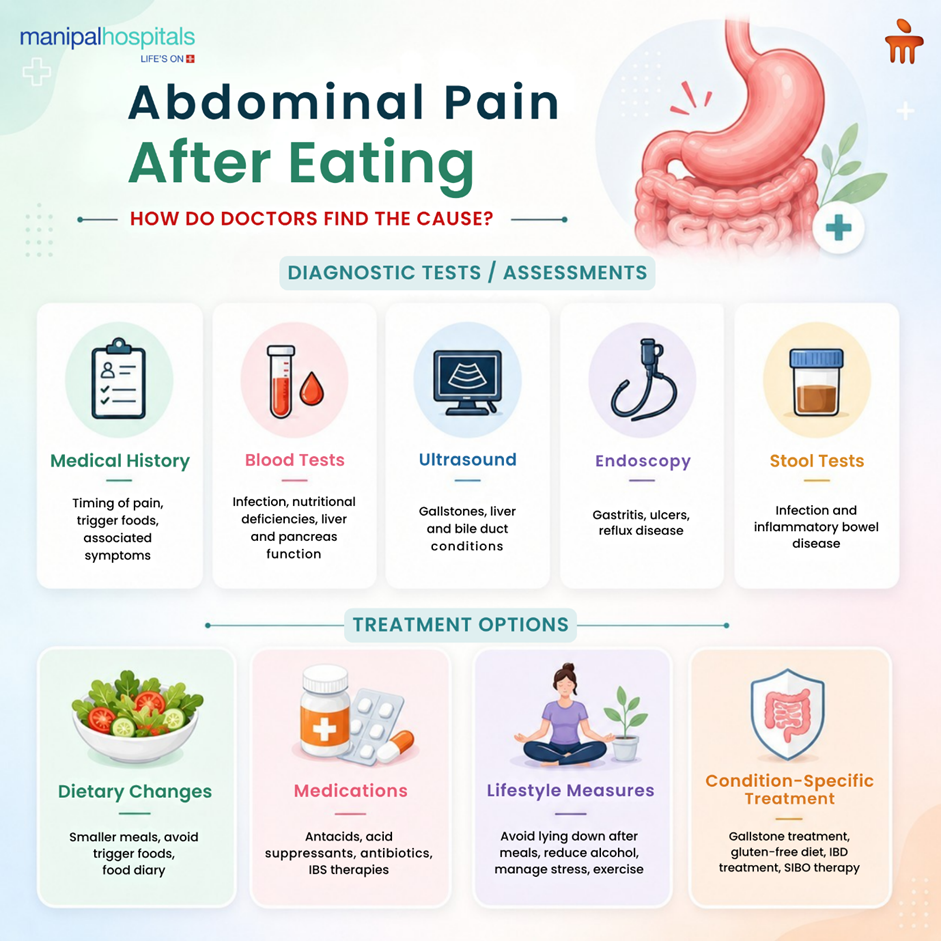
Dietary changes: Eating smaller, more frequent meals can reduce the workload on your digestive system. Keeping a symptom diary can help identify trigger foods. For IBS, a low-FODMAP diet supervised by a dietitian often provides significant relief.
-
Over-the-counter remedies: Antacids may ease mild acid-related discomfort, while simethicone can help with gas and bloating. These should be used only as directed and are not a long-term solution.
-
Lifestyle adjustments: Waiting at least two to three hours after a meal before lying down, reducing alcohol and caffeine, managing stress, and staying active all contribute to better digestive comfort.
-
Treating the root cause: When a specific condition is found, targeted treatment is key. This may include acid-suppressing medications for GORD or peptic ulcers, antibiotics for H. pylori infection, or specialised strategies for IBD and IBS.
Conclusion
Abdominal pain after eating is your body’s way of signalling that something in the digestive process needs attention. While many causes are benign and respond well to simple changes, ongoing discomfort should never be dismissed as something you simply have to live with. By understanding where the pain occurs and what it may represent, you are already taking the first step towards regaining comfort.
For persistent, severe, or unexplained symptoms, seeking expert care is essential. For abdominal pain treatment in Yeshwanthpur, consult our experienced medical gastroenterologists at Manipal Hospital Yeshwanthpur, Bangalore, a top gastroenterology hospital known for comprehensive digestive care.
FAQ's
Yes, stress can directly affect gut function. It changes how the bowel moves and how sensitive you are to normal digestion. This is why high-stress periods often make IBS symptoms worse. Relaxation techniques, regular exercise, and counselling can be important parts of treatment.
Immediate pain can sometimes happen with conditions affecting the oesophagus or stomach, such as reflux or inflammation. However, if the pain is sharp, persistent, or occurs every time you eat, it should be evaluated by a doctor to rule out ulcers or structural issues.
One of the most frequent causes is acid-related discomfort, including gastritis and GORD. The stomach produces more acid during meals, and if the lining is irritated, it can cause burning. Fatty or large meals can also trigger gallbladder-related pain.
It can be, though serious causes are less common. Warning signs include pain that wakes you from sleep, blood loss, unexplained weight loss, and persistent vomiting. If you experience these, seeking prompt medical attention is important.
Diagnosis usually starts with a detailed conversation about your symptoms, diet, and lifestyle. Your doctor may then recommend tests such as blood work, stool analysis, an ultrasound, or an upper endoscopy. The goal is to match the pattern of your pain with the right investigation, ensuring that treatment addresses the true problem.
Share this article on:


.webp "Neurological disorders symptoms and treatment")