7 Min Read
The human body is made up of around 70% water. It is necessary to manage temperature, be a medium for the movement of nutrients, support muscles, and keep all the organs working properly. Dehydration happens when your body loses more fluids than it takes in. When fluid levels drop, even simple body functions start getting affected as the fluid and electrolyte balance starts to change.
Most people first notice dehydration symptoms like thirst, dry lips, tiredness, or dark urine. If ignored, the condition can get worse within a matter of hours. Children and older adults are the most vulnerable, and it’s crucial to look for the signs. People working outdoors in hot weather also face a higher risk.
In this blog, a top physician in Yeshwanthpur, Bangalore, discusses what dehydration is, the symptoms, what to do, and when to seek medical help.
Synopsis
What Happens to the Body During Dehydration?
When the body starts losing water in the form of sweating, urination, or diarrhoea but doesn’t get it replenished at the same rate, it can lead to dehydration. Electrolytes like sodium and potassium are needed for muscles, nerves, and organs to function properly. Water is an important medium that controls the concentration and movement of all these nutrients. Once fluid levels drop, the body finds it harder to maintain normal electrolyte balance.
Less water reduces blood volume, which then impairs the body’s ability to regulate temperature. As circulation becomes less efficient, tissues get less oxygen and nutrients, so people often feel weak, dizzy or unusually tired once dehydration sets in. Older adults may not feel thirst strongly even when the body needs fluids. Young children may also not communicate thirst properly, which makes dehydration harder to recognise early.
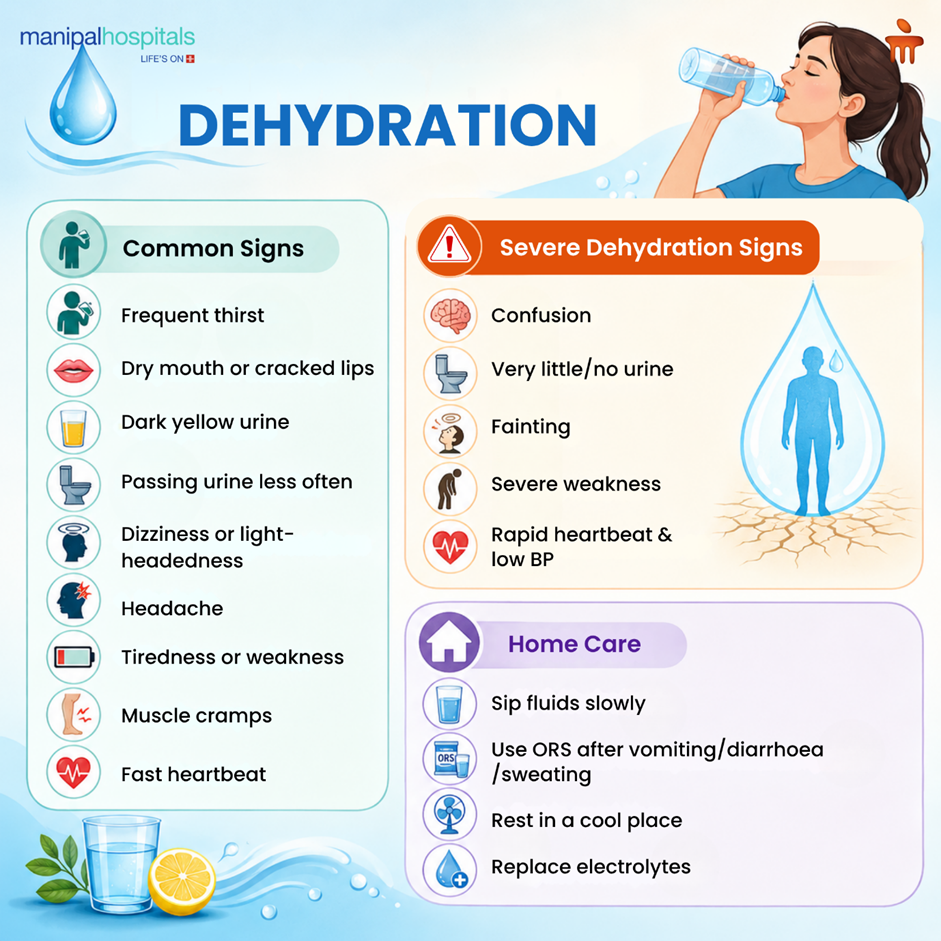
Common Signs and Symptoms of Dehydration
The body starts showing several warning signs of dehydration when it is not getting enough fluids. Common signs and symptoms include:
-
Feeling thirsty frequently, even after intermittently drinking small amounts of water
-
Dry mouth with a sticky feeling inside the cheeks and tongue
-
Dry or cracked lips
-
Dark yellow urine instead of pale yellow or clear urine
-
Passing urine less often than usual during the day
-
Feeling dizzy or unsteady
-
Tiredness or low energy even without much physical activity
-
Headaches that feel throbbing
-
Muscle cramps after sweating or prolonged heat exposure
-
Feeling light-headed or weak while walking or doing routine work
-
Dry skin with reduced elasticity in some people
-
A faster heartbeat as the body tries to maintain blood circulation
Children may show different dehydration symptoms compared to adults, including:
-
Crying without tears
-
Dry tongue and dry mouth
-
Restlessness, irritability, or unusual sleepiness
-
Fewer wet diapers than normal
Comparison of mild and severe dehydration:
|
Mild to Moderate Signs |
Severe Signs |
|
Increased thirst and dry mouth |
Confusion or difficulty staying alert |
|
Dark yellow urine |
Very little or no urination |
|
Tiredness and dizziness |
Extreme weakness or fainting |
|
Muscle cramps after sweating |
Rapid heartbeat and low blood pressure |
|
Headache and dry skin |
Severe lethargy and exhaustion |
What Causes Dehydration?
There are many causes of dehydration. In some people, dehydration develops slowly throughout the day. In others, especially during illness, it can happen very quickly.
Illness-Related Fluid Loss
Certain illnesses increase water loss from the body rapidly:
-
Diarrhoea can cause the body to lose many fluids and important salts in a short period of time.
-
In addition, vomiting can worsen the case of dehydration, as the body cannot retain sufficient fluids.
-
Stomach infections reduce appetite and fluid intake at the same time, which can quickly lead to dehydration.
Heat and Sweating
Hot environments and physical activity can increase fluid loss even in healthy individuals.
-
Excessive sweating during outdoor work or exercise reduces water levels in the body.
-
Hot and humid weather raises dehydration risk as the body sweats more to cool itself.
-
Exercise in hot and humid weather can lead to both water and electrolyte loss if fluids are not replaced with a sufficient intake.
Medication-Related Dehydration
Some medicines can increase urine output and reduce body fluid levels.
-
Diuretic medications cause the body to lose more water through urination
Dehydration Treatment and Recovery
Once the body starts getting enough fluids again, most mild dehydration improves gradually. Recovery depends on how much water and electrolytes the body has lost.
A few things usually help during dehydration treatment at home:
-
If you’re nauseous, drink water in small sips throughout the hour. Avoid gulping down large amounts at once.
-
Oral rehydration solutions or electrolyte drinks may help when fluids and salts have both been lost through vomiting, diarrhoea, or heavy sweating.
-
Rest somewhere cool, or in the shade, so you do not lose more fluids through sweating.
-
After heavy sweating or long periods of exercise, sports drinks can sometimes help replace the salts and minerals the body has lost.
-
It is also best to cut back on caffeine and alcohol while you recover, as both can make fluid loss worse in some people.
-
Children with diarrhoea should avoid certain sugary drinks because they may pull more water into the intestine and worsen dehydration.
Tips to Prevent Dehydration
A lot of people realise they are dehydrated only after tiredness, headache, or dizziness start showing up. Small habits throughout the day make a bigger difference. Here are some tips.
-
Do not wait until intense thirst develops before drinking water. Keep sipping fluids regularly throughout the day.
-
If you are outdoors for long hours, travelling, or working in the heat, carry water with you and drink it regularly during the day.
-
During fever, vomiting, diarrhoea, or heavy sweating, consume ORS solution made by mixing 1 packet of powder in 1 litre of water.
-
Check urine colour once in a while. Pale yellow urine often means hydration is adequate. Dark yellow urine when you’re sweating means the body needs more fluids.
-
After exercise or prolonged sweating, replace fluids with electrolyte drinks.
-
Older adults should drink fluids regularly, even if they do not feel thirsty, because the thirst sensation becomes weaker with age.
Conclusion
Not getting enough fluids can affect the body more quickly than many people realise. Feeling dizzy, having a dry mouth, passing dark urine, feeling weak, or urinating less often are some common signs of dehydration. These symptoms are more likely during fever, vomiting, diarrhoea, or very hot weather. Children and older adults can become dehydrated faster, so it is important to notice the signs early and take care before the condition gets worse.
In many cases, early fluid replacement helps recovery. But if weakness becomes severe, confusion develops, or fluids cannot be retained properly, medical attention may be needed. Patients with persistent or severe symptoms can seek dehydration treatment in Yeshwanthpur at Manipal Hospital Yeshwanthpur for timely assessment and care.
FAQ's
If the person starts looking unusually tired, confused, shaky, or feels close to fainting, dehydration may be getting serious. Passing very little urine for several hours is another sign that people should not ignore.
Yes, very often. Many people first notice dehydration as a headache along with dryness in the mouth, low energy, or feeling a bit dizzy throughout the day.
Start with water and drink it slowly. If there has been a lot of sweating, loose motions, or vomiting, drinks with electrolytes can help the body recover better. Too much coffee or alcohol can make things worse.
Yes. Children can lose fluids quickly when they are unwell. Look for dry lips, fewer wet diapers (in babies), crying without tears, or unusual sleepiness before the child even says they feel thirsty.
If the person has been suffering from infections that cause vomiting or diarrhoea and cannot drink properly, keeps vomiting, becomes very weak, or starts appearing confused, get medical help immediately. Severe cases need IV fluids.
Share this article on:


.webp "Neurological disorders symptoms and treatment")