8 Min Read
IVF represents a powerful opportunity to build a family for many couples facing infertility. After years of trying to conceive a baby, the start of fertility treatment can bring hope. But when IVF fails, it is extremely discouraging for couples. The IVF results are based on many biological factors. Even when all the steps in the IVF cycle are going well, the embryo may fail to implant in the uterus. However, understanding the causes of IVF failure can help guide the next steps, increasing the chances of its success.
This blog features clinical insights from the top IVF and Infertility experts in Yelahanka, Bangalore; the reasons why IVF fails, and the evidence-based treatment options available for improving the success rates and bringing hope.
Synopsis
Understanding IVF and How It Works
It is important to understand what reproductive technology is before one can understand why IVF does not work. Assisted reproductive technology (ART) includes fertility treatments that handle eggs, sperm, or embryos outside the body to help individuals conceive. While several types of assisted reproductive technology exist, IVF is one of the best-known and most used methods.
There are several steps involved in IVF:
|
Step |
Description |
|
Ovarian stimulation |
Medicines stimulate the ovaries to produce more eggs. |
|
Egg retrieval |
Mature eggs are retrieved procedurally from the ovaries. |
|
Fertilisation |
Sperm fertilise eggs in the laboratory. |
|
Embryo growth |
Eggs develop into embryos after fertilisation. |
|
Embryo transfer |
Healthy embryos are transferred to the uterus. |
How Often Does IVF Fail?
IVF success rates vary depending on several factors, including age, fertility health, embryo quality, and treatment protocols. In general, younger women tend to have higher success rates, while the chances gradually decline with age.
|
Age Group |
Average IVF Success Rate per Cycle |
|
Below 35 |
40–50% |
|
35–37 years |
30–40% |
|
38–40 years |
20–30% |
|
Over 40 years |
10–20% |
However, since the success rates are not assured, some patients may need more than one IVF procedure to attain pregnancy.
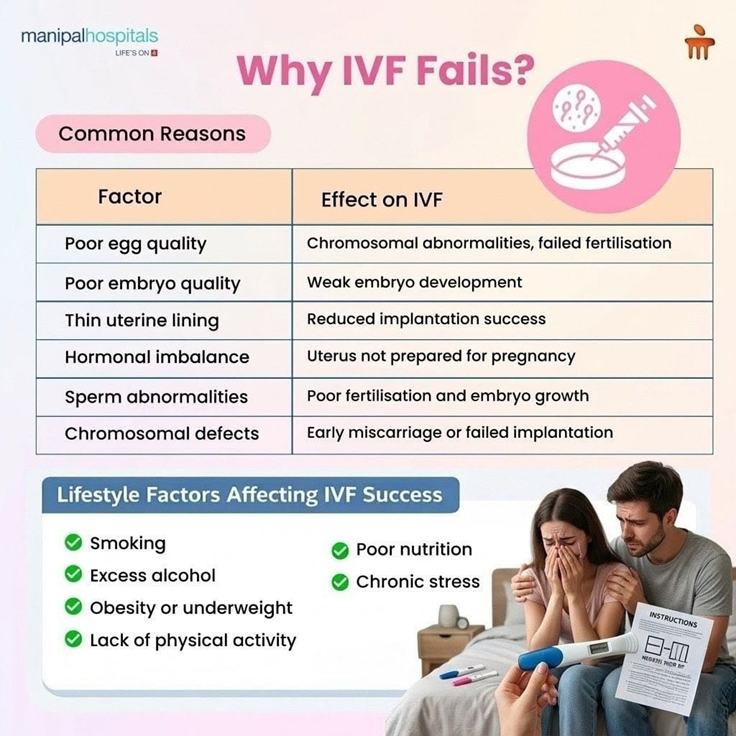
Why IVF Fails—Common Reasons
IVF is a complex medical procedure that involves many biological factors that must be met to attain pregnancy. Even when fertilisation and embryo transfer go smoothly, certain underlying conditions can prevent implantation or early embryo development. Understanding these reasons helps doctors tailor the best treatment plan.
1. Poor Egg Quality and IVF Failure
Poor egg quality is one of the most common reasons why IVF doesn't work, especially in the case of older women. Increasing age affects both the number of eggs remaining in the ovaries (ovarian reserve) and their genetic quality. Poor-quality eggs lead to:
-
Embryo with chromosomal abnormalities
-
Failed fertilisation
-
Increased risk of miscarriage
-
Implantation failure
The relationship between egg quality and IVF failure is particularly significant in women over 35 years of age.
2. Poor Embryo Quality
Even after fertilisation, not every embryo develops as hoped, which can be one of the hidden reasons why IVF is not always successful. Several factors may affect the quality of an embryo.
-
Poor egg quality
-
Sperm problems
-
Genetic problems
-
Insufficient lab conditions during fertilisation
Sometimes, doctors recommend preimplantation genetic testing (PGT) to identify healthy embryos before transferring them to the uterus. PGT, as such, does not guarantee pregnancy or a successful implantation.
3. Problems with the Uterine Lining
For pregnancy to occur, the embryo must attach to the endometrium, the inner lining of the uterus. If the uterine lining is too thin or inflamed, it can lead to implantation failure due to endometrial receptivity issues.
|
Uterine Condition |
Effect on IVF |
|
Thin uterine lining |
Lowers the success of implantation |
|
Uterine fibroids |
May interfere with embryo attachment |
|
Polyps |
Affect embryo implantation |
|
Endometriosis |
May alter the implantation environment or cause inflammation |
Additionally, in some patients, immune system responses in the uterus may interfere with implantation. Before transferring an embryo, doctors may prescribe medication or hormone therapy to improve the uterine lining thickness and receptivity.
4. Chromosomal Abnormalities
Chromosomal abnormalities in embryos are a leading cause of IVF failure, often resulting in failed implantation or early miscarriage. The likelihood of these abnormalities increases with maternal age, particularly after 35. Preimplantation genetic testing and other screening methods can identify embryos with normal chromosomes, improving the chances of successful implantation.
5. Hormonal Imbalances
Hormones play a key role in preparing the uterus for implantation and supporting early pregnancy. Hormonal problems that may affect the success of IVF include:
-
Thyroid disorders
-
Polycystic ovary syndrome (PCOS)
-
Lack of progesterone
-
High levels of prolactin
Monitoring hormones and modifying medications can increase success in IVF.
6. Sperm Health Issues
While IVF often focuses on eggs and embryos, sperm health is equally important. Poor sperm quality can make fertilisation and embryo development more difficult.
|
Sperm Factor |
Possible Effects |
|
Low sperm count |
Reduced chances of pregnancy |
|
Poor motility |
Difficulty moving and fertilising eggs |
|
Abnormal sperm shape |
Reduced embryo growth |
7. Stress and IVF Failure
While emotional stress is common during fertility treatment, studies have not conclusively shown that stress alone causes IVF failure. However, stress during fertility treatment can result in disturbed sleep patterns, hormonal imbalance, and reduced emotional resilience. Counselling, relaxation techniques, and emotional support can help manage stress, making the IVF process smoother and supporting overall health.
8. Lifestyle Factors
Some lifestyle habits can influence both fertility and how well IVF works. These include:
-
stop smoking
-
Avoid excessive alcohol
-
achieve/maintain a healthy weight (both underweight and obesity matter)
-
Eat a balanced diet with adequate nutrients
-
Stay active, but avoid extreme exercise regimens around stimulation and transfer
-
manage chronic medical conditions (diabetes, hypertension, thyroid disease)
Adopting healthy lifestyle habits can support fertility and may improve IVF outcomes.
Signs That an IVF Cycle May Not Have Worked
Many patients look for physical signs after embryo transfer, but IVF failure usually cannot be confirmed based on symptoms alone. Most of the time, the symptoms are mild and may feel like normal premenstrual changes. Some common symptoms include:
-
Mild cramping or abdominal discomfort
-
Spotting or bleeding similar to menstruation
-
Negative pregnancy test 10–14 days post-embryo transfer
-
Absence of common pregnancy symptoms
However, these symptoms are not reliable indicators of success or failure. The most accurate way to confirm pregnancy is through a blood test that measures beta-hCG levels around 10–14 days after embryo transfer.
Medical Ways to Improve IVF Success
When an IVF cycle does not result in pregnancy, fertility specialists often adjust treatment strategies for future attempts. Some common ways include:
1. Improving Egg Quality
Doctors may suggest:
-
Hormonal stimulation protocols
-
Nutritional supplements
-
Lifestyle changes
-
Fertility medications
These steps may improve egg production in some patients.
2. Improving Uterine Receptivity
Some treatments that may help the lining of the uterus are:
|
Treatment Method |
Purpose |
|
Hormonal therapy |
Improve endometrial thickness |
|
Hysteroscopy |
Detect and treat uterine abnormalities |
|
Treatment of infections |
Improve the uterine environment |
3. Genetic Testing of Embryos
Before transferring embryos, doctors can use preimplantation genetic testing to find those with normal chromosomes.
Benefits include:
-
Higher chances of implantation
-
Lowered risk of miscarriage
-
Selecting better embryos
4. Personalised IVF Protocols
Based on the patient's age, hormonal status, and medical history, IVF protocol can be tailored to improve success rates.
5. Emotional and Psychological Support
When IVF does not succeed, or fertility problems arise, it can be emotionally difficult and may lead to stress and anxiety. Getting help from psychologists or joining support groups can make it easier to cope during treatment.
When Should You Consult a Fertility Specialist?
Consulting a fertility specialist can assist in determining the cause of the failure and the chances of conception in the next cycle of treatment. You should consider consulting a fertility specialist if you have experienced:
-
Repeated failures in IVF treatment
-
Known fertility issues, such as PCOS or endometriosis
-
Difficulty in conception and are 35 or older
-
History of recurrent pregnancy loss
An evaluation can assist in establishing the reasons for the failure of IVF and assist in planning the next course of action in the process.
Conclusion
IVF is one of the most advanced fertility treatments available today, but it doesn't always work. When patients and doctors understand why IVF sometimes fails, they can make informed decisions and adjust treatments for better results. With the right medical care, personalised treatment, and emotional support, many couples can overcome these challenges and improve their chances of IVF success.
Book an appointment with the best IVF and infertility speciality at Manipal Hospitals Yelahanka and witness a journey towards successful parenthood.
FAQ's
There is no specific number of IVF attempts that can be said to be applicable in every case, but most fertility experts recommend assessing the plan after one or two failed attempts to identify what may have contributed to the failure.
Yes, the implantation may fail even when the embryos are healthy under the microscope, as it depends on other factors as well, such as the lining of the uterus and hormone levels.
If IVF has failed several times, other tests may be recommended to find out the cause of the failure. This could include genetic tests on the embryos, tests on the uterus through a procedure known as hysteroscopy, hormone tests, and sperm DNA tests.
Yes. To improve IVF success, doctors may modify stimulation protocols, examine the uterine lining, perform genetic testing, or recommend lifestyle changes.
In certain cases, fertility experts can change the type and amount of fertility drugs taken during the cycle, the time at which the embryo transfer is done, and other procedures, depending on the patient's health factors.
Share this article on: