8 Min Read
Newborn jaundice is one of the most common health issues that affects babies in the first week of life. Many parents get worried when their newborn baby is placed in front of bright blue lights in the hospital. It can look unfamiliar and raise questions about whether the treatment is safe. But, in reality, the process of phototherapy in newborns is one of the most medically accepted treatments for newborn jaundice.
Many doctors worldwide use this process to reduce bilirubin levels in newborns, thereby preventing jaundice. In this blog, we will learn about what jaundice is in newborn babies, what the possible causes are, the effectiveness of using phototherapy in newborns, and what the possible side effects are, so parents can be better prepared and confident in handling their newborn baby’s condition.
In this blog, we will learn about what jaundice is in newborn babies, its possible causes, the effectiveness of phototherapy in newborns, and potential side effects, with insights from the best paediatric and child care experts in Yelahanka, Bangalore, so parents can feel more informed and confident in managing their newborn’s condition.
Synopsis
- What Is Jaundice in Newborns?
- Why Do Babies Get Jaundice?
- What Is Phototherapy in Newborns?
- Is It Safe for Babies to Get Phototherapy?
- Common Side Effects of Phototherapy in Newborns
- Rare Complications of Phototherapy
- How Long Do Babies Need Phototherapy?
- Tips for Parents During Phototherapy
- When Should Parents Be Concerned?
- How Doctors Monitor Babies During Phototherapy
- Conclusion
What Is Jaundice in Newborns?
Newborn jaundice is common and causes a yellow tint to a baby's skin and eyes. This happens because of bilirubin, a yellow pigment produced when red blood cells break down. In adults, the liver removes bilirubin easily. In newborns, the liver is still developing and may not process bilirubin well during the first days of life.
Why Do Babies Get Jaundice?
Some common reasons are:
-
Liver function that isn't fully developed
-
Newborns naturally have a higher breakdown of red blood cells after birth.
-
Premature birth
-
Mother and baby have different blood types
-
Poor feeding in the first few days can reduce bilirubin elimination
Mild jaundice usually gets better on its own. If bilirubin levels get too high, doctors may recommend phototherapy in newborns to lower them safely.
What Is Phototherapy in Newborns?
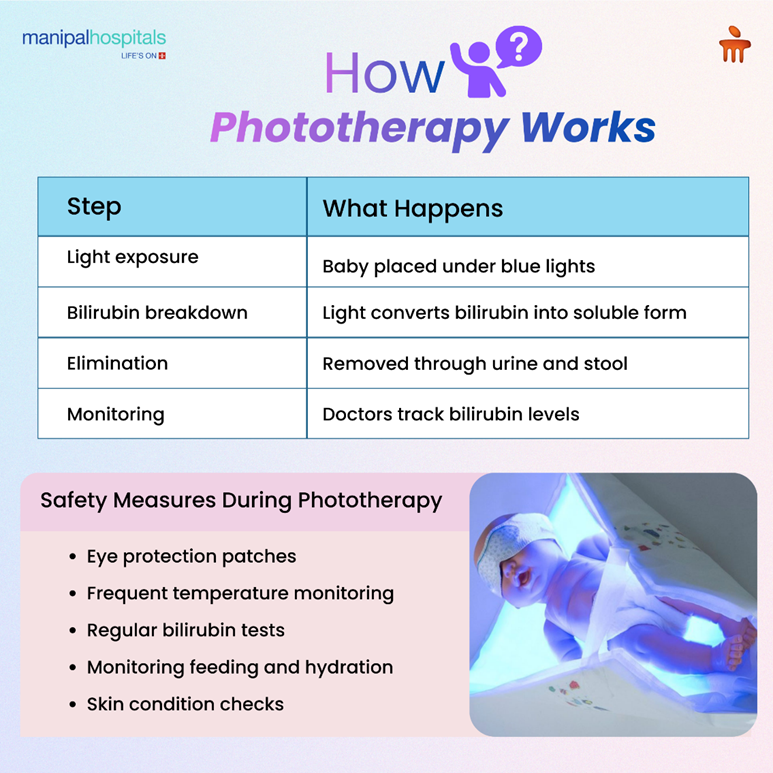
Phototherapy uses special blue light to change the structure of bilirubin in the baby's skin. This change makes bilirubin easier for the body to remove through urine and stool. Through light-induced reactions, phototherapy for jaundice changes the structure of bilirubin into a form that dissolves in water easily. The baby's body can then get rid of it in urine and stool, which helps clear away the bilirubin faster. Here is a step-by-step explanation of what happens in this treatment:
|
Step |
What Happens |
|
Exposure to Light |
The baby is put under blue phototherapy lights |
|
Bilirubin breakdown |
Light converts bilirubin into water-soluble forms |
|
Removal |
Modified bilirubin is excreted through urine and stool |
|
Recovery |
Bilirubin levels gradually go down |
While the treatment is going on:
-
The baby usually sleeps in a cot or incubator
-
Just a nappy is worn to let more skin get light
-
Soft eye patches keep eyes safe
-
Nurses keep an eye on temperature, hydration, and bilirubin levels
Phototherapy is the standard first-line treatment for significant neonatal jaundice.
Is It Safe for Babies to Get Phototherapy?
Most babies tolerate phototherapy well and experience only mild, temporary side effects. Parents can be reassured by knowing that the side effects are mild and go away after the treatment is over. When babies get phototherapy, doctors keep a close eye on them by checking the:
-
Levels of bilirubin
-
Temperature of the body
-
Status of hydration
-
Patterns of feeding
-
Condition of the skin
The benefits of phototherapy in newborns in preventing serious jaundice problems are much greater than the risks.
Common Side Effects of Phototherapy in Newborns
Phototherapy for jaundice is generally safe for babies. However, some babies may have mild side effects that usually disappear soon after treatment ends.
1. Loose Stools
Phototherapy lowers bilirubin and also causes babies to pass more stool. As the light breaks down bilirubin into a form that can be excreted, babies may have more frequent bowel movements. These stools can sometimes be loose or watery. Parents often notice extra diaper changes during this time, which is actually a positive sign that treatment is working. This side effect is temporary and disappears once phototherapy ends.
2. Redness or Rash on The Skin
Some babies may have mild changes in their skin while they are being treated.
Common signs include:
-
A little bit of redness
-
A temporary mild rash
-
A little bit of dry skin
These skin reactions are usually harmless and clear up once phototherapy ends.
3. Changes in Body Temperature
The lights used to treat jaundice in newborns may make the baby's body temperature go up a little bit.
Doctors look for:
-
Mild overheating
-
More sweating
-
Being irritable
Nurses keep a record of the baby's temperature to ensure it stays in a safe range.
4. Dehydration
Some babies may become a little dehydrated because phototherapy makes them lose more fluids through their skin and stool. Signs doctors look for:
|
Symptom |
What It Means |
|
Dry mouth |
Possible loss of fluids |
|
Reduced urine |
Possible dehydration |
|
Weight changes |
Unbalanced fluids |
Doctors recommend feeding babies often or giving IV fluids if needed to prevent dehydration.
5. Temporary Bronze Skin Colour
During phototherapy, babies may very rarely develop a bronze-coloured skin tone. This is a condition known as Bronze Baby Syndrome. This syndrome is associated with underlying liver or bile flow problems and may require further evaluation by doctors.
6. Worries About Protecting the Eyes
While undergoing phototherapy, the baby’s eyes might be damaged by the strong lights used to reduce the level of bilirubin if they are not protected. Doctors thus use soft, comfortable eye shields to keep the baby’s eyes safe. Care teams ensure the patches are placed correctly and remove them during feeding.
Rare Complications of Phototherapy
Phototherapy rarely causes serious problems, as it is considered a sufficiently safe procedure. However, some babies may develop temporary side effects after the treatment. Some such rare side effects include:
-
More sensitive skin
-
Temporary skin darkening
-
Mild changes in heart rate
-
Temporary changes in calcium levels
-
Disrupted or broken sleep patterns
The specialists and doctors keep a close eye on babies to find and deal with any problems as soon as they occur.
How Long Do Babies Need Phototherapy?
The duration for phototherapy depends on the bilirubin levels and the overall health of a baby. Most babies need light therapy for 24-48 hours, but some may need it longer. During treatment, nurses and doctors check the baby's skin and eye colour, watch feeding habits, and keep track of bowel movements and urine. Doctors also do regular blood tests to measure bilirubin. They use these results to decide when to stop therapy.
Tips for Parents During Phototherapy
Seeing your newborn under medical lights can be scary, but parents can still support their baby during treatment. Some helpful tips include:
-
Feed and hydrate the baby to avoid dehydration
-
Follow the instructions of the medical team
-
Let the baby sleep between feedings
-
Keep track of when you change diapers
When Should Parents Be Concerned?
While phototherapy is safe, parents should tell their doctors if they notice any unusual or strange symptoms. Reach out to the doctor when you see symptoms such as:
-
Excessive throwing up
-
Abnormal sleepiness or difficulty waking up
-
Poor feeding
-
Fever
-
Less urination
-
Redness of severe rash
During phototherapy for newborns, healthcare teams keep a close eye on these symptoms.
How Doctors Monitor Babies During Phototherapy
Hospitals follow strict guidelines to monitor newborns during treatment and keep them safe. Monitoring usually includes:
|
Monitoring Method |
Purpose |
|
Bilirubin blood tests |
Measure treatment effectiveness |
|
Temperature checks |
Prevent overheating |
|
Hydration check |
Ensure adequate fluid intake |
|
Eye protection checks |
Prevent eye exposure |
|
Feeding observation |
Ensure proper nutrition |
Conclusion
Parents may worry about their newborn’s jaundice, especially when treatment involves bright lights and medical equipment. However, phototherapy is a well-known, safe, and effective way to lower bilirubin levels in newborns. Phototherapy in babies has mild and temporary side effects that generally go away after treatment. Treating jaundice early is important to prevent serious problems. With proper medical care and support, most babies recover quickly and stay healthy. If you're worried about your baby's jaundice or treatment, consult our top paediatric and child care specialists at Manipal Hospital Yelahanka to ensure your child gets the right care.
FAQ's
In some cases, doctors may recommend home phototherapy using a special phototherapy blanket or device. The baby still needs regular check-ups and blood tests to monitor bilirubin levels.
No. Phototherapy has been used safely for decades, and long-term side effects are extremely rare. Most side effects are mild and temporary.
No. Babies can continue breastfeeding during treatment. Frequent feeding is encouraged because it helps remove bilirubin through stool.
Yes. Premature babies have immature liver function, so bilirubin can build up more easily in their bodies.
Doctors may increase the intensity of phototherapy or use additional light sources. In rare cases, an exchange transfusion may be required.
Share this article on: