8 Min Read
An unexpected twist of the foot can instantly turn an ordinary step into a painful experience. A sprained ankle is a highly common injury, one that can occur from an injury sustained during sports, from uneven terrain, or from simply stepping on the stairs and missing a step. The pain, swelling, and inability to put weight on the ankle can cause an individual to wonder just how serious the injury might be and when the ankle might return to normal. Most individuals think that an ankle injury from twisting the ankle will mend itself if the individual simply takes some rest. Although some injuries do mend quite well, there are some injuries that are quite serious and require treatment.
This blog walks you through the complete picture: how a sprained ankle happens, the sprained ankle symptoms to watch for, the available sprained ankle treatment approaches, and the realistic sprained ankle recovery time depending on severity. By the end, you will have a clearer understanding of what your body is experiencing and how to support proper healing.
Synopsis
What Actually Happens During a Sprained Ankle?
The ankle joint is held together by strong bands of tissue called ligaments. The ligaments join the bones and hold the joint in place when you are walking, running, or changing direction. A sprained ankle occurs when these ligaments are stretched beyond their normal range or partially torn.
It usually occurs when the foot suddenly rolls inward or outward. This can happen during sports, while running on uneven surfaces, or during everyday movements like missing a step.
Several factors make someone more likely to experience this injury:
-
Walking or running on uneven ground
-
Wearing unstable footwear or high heels
-
Weak ankle muscles or previous ankle injuries
-
Sudden directional changes during sports
-
Fatigue that affects balance and coordination
Ligaments are designed to provide stability, not extreme flexibility. When they are forced beyond their limit, the tiny fibres within them tear. The body reacts instantaneously with inflammation, swelling, and pain, all part of the healing process.
Recognising the Symptoms of a Sprained Ankle
A sprained ankle can cause several noticeable symptoms. Some appear immediately after the injury, while others develop over the next few hours as swelling increases.
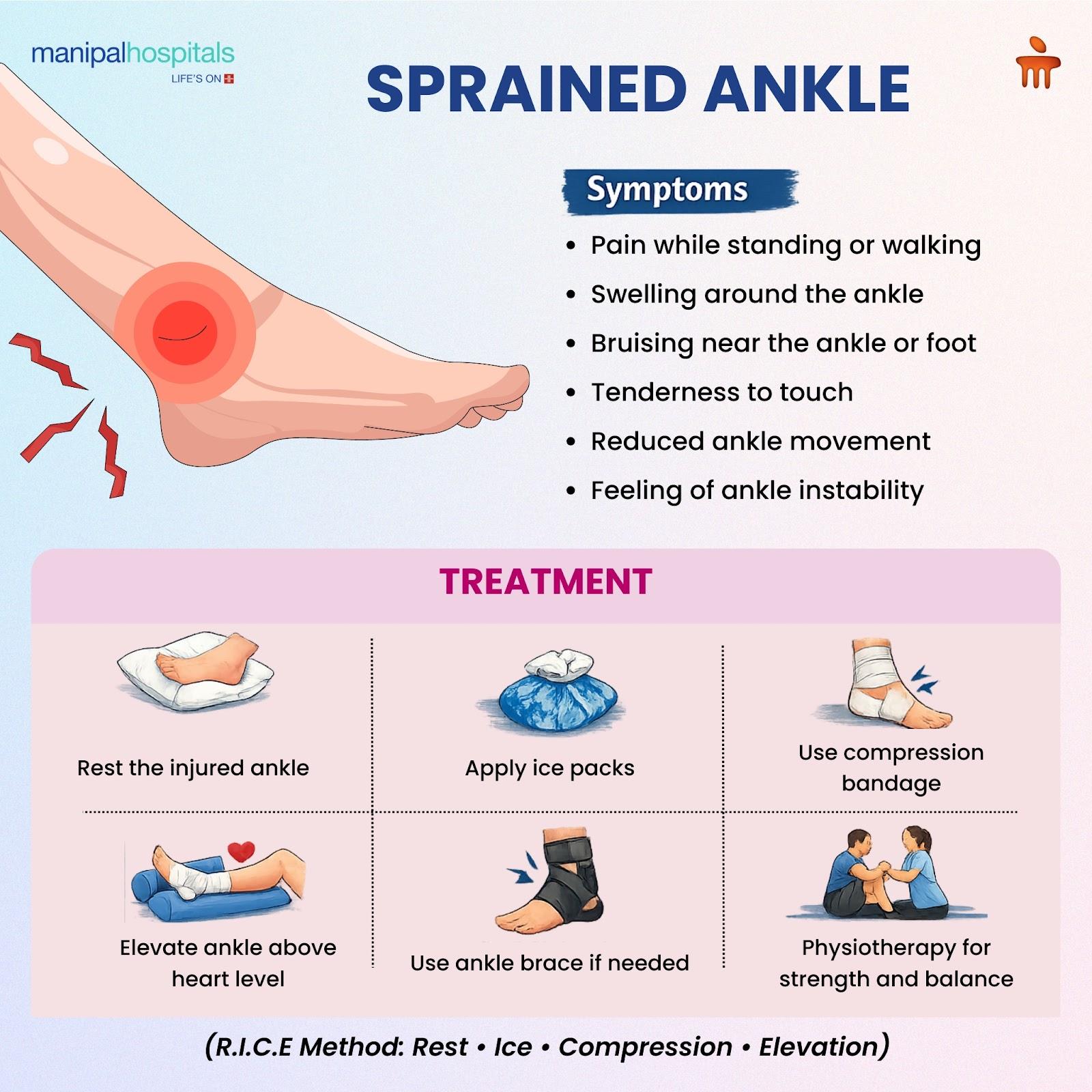
Common symptoms of a sprained ankle include:
-
Pain in the ankle, especially when you are standing or walking
-
A swollen ankle that develops within minutes or hours
-
Bruising that develops around the ankle or foot
-
Tenderness when you touch the ankle
-
Difficulty moving the ankle normally
-
Feeling that the ankle is unstable or weak
Some people may feel or hear a small pop at the time of injury. This does not always indicate a severe tear, but the ankle should be monitored carefully. If swelling develops quickly or walking becomes very difficult, medical evaluation is important, as fractures or severe ligament injuries can sometimes resemble a sprain.
Understanding the Severity: Grades of Ankle Sprains
It is not to be expected that all sprains of the ankle are of equal severity. The severity of the sprain is graded by doctors in accordance with the degree of damage to ligaments. The grade of the sprain also indicates the time it takes to heal.
|
Sprain Grade |
Ligament Condition |
Typical Functional Impact |
Stability of the Joint |
Usual Activity Restrictions |
|
Grade I |
Ligaments stretched with microscopic fibre damage |
Mild discomfort and slight swelling |
Joint remains stable |
Light activity is usually possible with caution |
|
Grade II |
Partial ligament tear |
Moderate pain, visible swelling, and bruising |
Mild to moderate instability |
Walking may be painful; a supportive brace is often needed |
|
Grade III |
Complete ligament tear |
Severe pain initially followed by significant swelling |
Marked instability of the ankle joint |
Weight-bearing is often impossible without assistance |
This classification does more than label the injury. It guides treatment decisions, physiotherapy planning, and the anticipated recovery timeline.
Sprained Ankle Treatment: What Helps the Ligaments Heal
Proper sprained ankle treatment focuses on protecting the damaged ligaments while encouraging gradual healing. The initial management typically begins within the first few hours after injury.
Most doctors recommend the widely used R.I.C.E approach:
-
Rest: Avoid activities that place stress on the injured ankle.
-
Ice: Apply a cold pack for 15-20 minutes several times a day to reduce swelling.
-
Compression: An elastic bandage helps limit swelling and supports the joint.
-
Elevation: Keeping the ankle raised above heart level helps fluid drain from the injured area.
Beyond early care, additional treatments may be recommended depending on severity:
-
Ankle braces or supports for stability
-
Pain-relieving medicines to reduce inflammation
-
Physiotherapy exercises to restore strength and balance
-
Temporary immobilisation with a boot or splint in more severe cases
Movement is usually reintroduced gradually once pain and swelling begin to improve, and rehabilitation helps restore ankle strength and stability.
How Long Does Recovery Usually Take?
Healing does not follow a strict calendar. The sprained ankle recovery time varies depending on the severity of the ligament injury, overall health, and how consistently rehabilitation is followed.
Minor sprains often improve within one to two weeks, though mild stiffness may last a little longer. Moderate injuries may require several weeks before full comfort returns, especially during sports or long walks. Severe sprains can take months to heal and usually progress through three stages:
-
Inflammation phase: The inflammation phase is dominated by swelling and pain in the initial days after the sprain.
-
Repair phase: The repair phase is when the ligaments rebuild themselves, usually in a matter of weeks.
-
Remodelling phase: The remodelling phase is when ligaments acquire strength and flexibility, usually after a matter of months. It is advisable not to indulge in strenuous activity, as it may take time for the ankle to acquire strength as well as balance.
When to Seek Medical Help
Many mild ankle sprains improve with rest and basic care. However, a medical evaluation is important if symptoms suggest a more serious injury. You should consult a doctor if:
-
You are unable to bear weight on the ankle
-
Severe pain or swelling develops soon after the injury
-
Significant bruising appears around the ankle or foot
-
The ankle feels unstable or gives way while walking
-
Pain and swelling do not improve after a few days of home care
Doctors may perform a physical examination and, if needed, recommend imaging tests to rule out fractures or more severe ligament injuries. Early evaluation helps ensure proper treatment and recovery.
Conclusion
A sprained ankle may seem like a small injury, yet it deserves careful attention. Understanding the warning signs, recognising the sprained ankle symptoms, and following the appropriate sprained ankle treatment approach can make a major difference in how smoothly healing progresses. With proper care and rehabilitation, most people regain full movement and return to their usual activities without lasting problems. Paying attention to recovery, especially during the first few weeks, helps the ligaments rebuild their strength and stability.
If pain, swelling, or difficulty walking persists longer than expected, seeking medical advice is important. Individuals looking for specialised care and guidance regarding sprained ankle recovery in Varthur Road, Bangalore, can benefit from an orthopaedic evaluation at Manipal Hospitals, Varthur Road to ensure that the injury heals correctly and safely.
FAQ's
Yes, especially in the early stage of injury. Walking too soon can strain damaged ligaments and increase swelling. Doctors often advise limiting movement first and gradually returning to activity as pain improves.
Bruising occurs when small blood vessels around a damaged ligament leak blood into nearby tissues. It may appear after several hours. As healing occurs, the colour gradually changes from purple to yellow or green.
Not always. Doctors decide based on examination findings. If there is severe tenderness over certain bones, inability to bear weight, or suspicion of fracture, imaging may be recommended. Many sprains can be diagnosed clinically.
Lingering instability may occur when ligaments heal slightly stretched or when surrounding muscles remain weak. Without proper rehabilitation to restore strength and balance, the ankle may feel unstable during sudden movements.
Yes, weather changes can affect an old ankle injury. Cold or damp conditions may increase stiffness or pain. Changes in atmospheric pressure might influence joint tissues and fluid, causing discomfort.
Share this article on: