7 Min Read
Being mentally slow, distracted, or unable to think clearly is an incredibly frustrating experience. You find that even simple things take longer to do, your concentration is easily disrupted, and at times, even your own words or thoughts seem just out of your grasp. This is what is commonly known as brain fog, and one of the most frustrating aspects of it is that it is an experience that is hard to describe to an outsider.
Although it can feel alarming, brain fog itself is not a disease. It is usually a sign that something in your body or lifestyle needs attention. In many cases, once the underlying cause is identified and addressed, clarity gradually returns. This blog explores the most common brain fog causes, how the symptoms typically appear, and the practical steps doctors recommend for brain fog treatment. You will also learn how to get rid of brain fog through lifestyle adjustments, medical care, and supportive strategies that help restore mental sharpness.
Synopsis
What Is Brain Fog?
Brain fog is a common term used to describe a feeling of mental cloudiness or slowed thinking. Although it is not a medical diagnosis, doctors recognise it as a group of symptoms that affect concentration, memory, and mental clarity. People experiencing brain fog may notice that focusing, remembering information, or organising thoughts becomes more difficult than usual.
Some of the common experiences of brain fog include:
-
Having difficulties concentrating on what to do
-
Forgetting certain things that one would normally be able to remember easily
-
Trouble finding the right words during conversations
-
Feeling mentally drained even after having slept well
-
Having difficulties following complex instructions or conversations
Brain fog can last for a few hours, days, or even longer, depending on what causes it.
Common Brain Fog Causes
Brain clarity comes from several functions that need to occur harmoniously. Some of the most recognised brain fog causes include:
-
Poor Sleep Quality: Insufficient or disrupted sleep prevents the brain from clearing metabolic waste. Over time, sleep deprivation can lead to slower thinking, irritability, and mental fatigue.
-
Chronic Stress: Long-term stress increases cortisol levels, which can affect brain areas responsible for memory and concentration.
-
Nutritional Deficiencies: Low levels of nutrients such as vitamin B12, iron, omega-3 fatty acids, and magnesium may affect nerve signalling and brain energy levels.
-
Hormonal Changes: Hormonal fluctuations during conditions like thyroid imbalance, menopause, or pregnancy can influence focus and mental clarity.
Recognising the Symptoms of Brain Fog
Brain fog rarely appears as a single symptom. It usually develops gradually with small changes in thinking, focus, and daily functioning. Many people mistake these signs for simple tiredness.
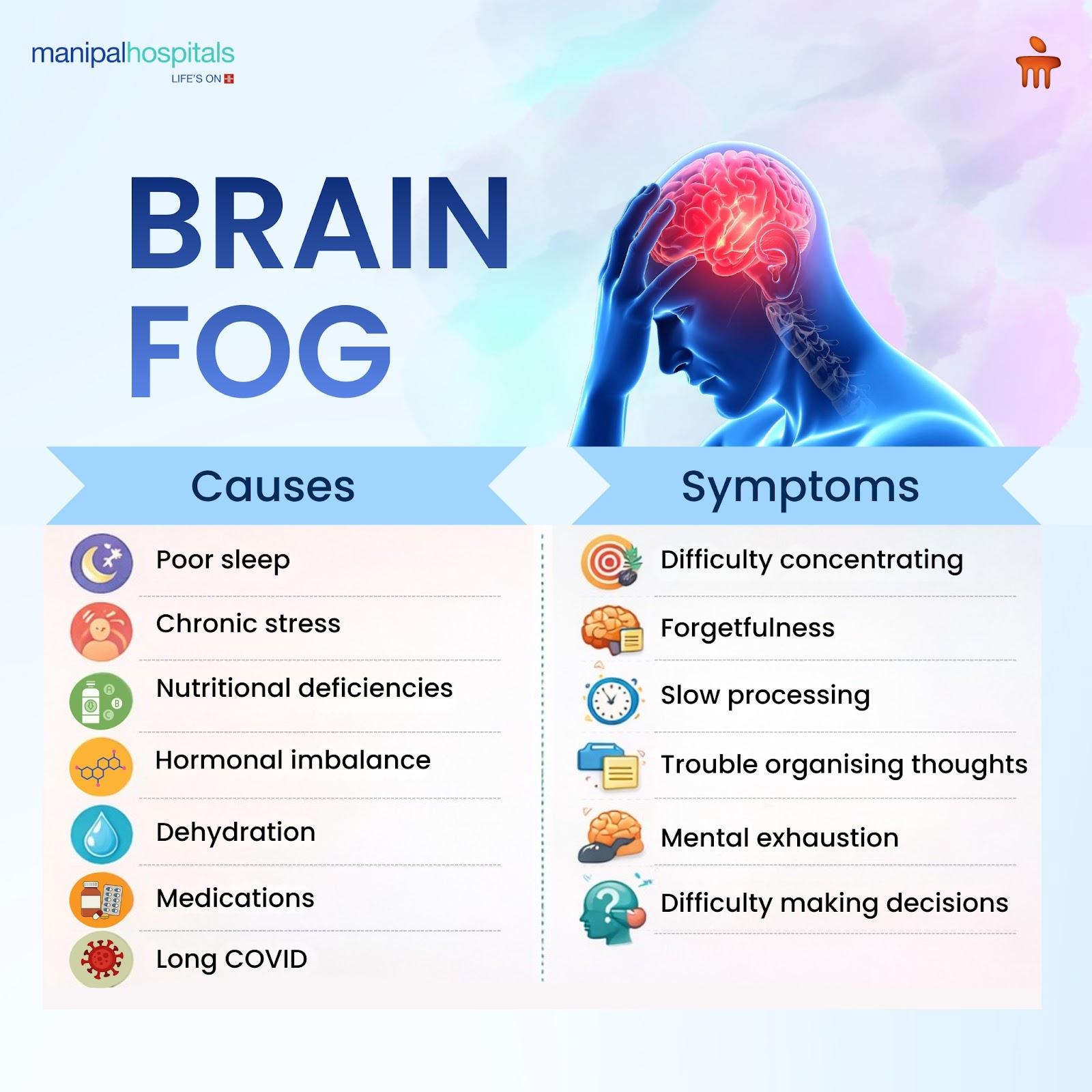
Common signs of brain fog include:
-
Reduced cognitive processing speed
-
Difficulty maintaining attention during reading or conversations
-
Persistent mental fatigue despite sufficient rest
-
Difficulty with decision-making or task organisation
-
Making small mistakes during routine tasks
Symptoms may fluctuate throughout the day. Some individuals experience sharper thinking in the morning, whereas others feel most awake and alert in the evening.
Nutrient Deficiencies That May Contribute to Brain Fog
Lifestyle choices matter, but biological factors can also play a role in mental clarity. Clinicians often check for nutritional shortfalls and other measurable contributors when assessing brain fog. The following shows a few important nutrients, why they matter, and where they come from:
|
Nutrient or Biological Factor |
Role in Brain Function |
Food Sources or Supporting Habits |
Signs of Possible Deficiency |
|
Vitamin B12 |
Supports nerve myelination and healthy neurotransmission |
Dairy, eggs, fish, fortified cereals |
Memory problems, fatigue, tingling or numbness |
|
Iron |
Carries oxygen to brain tissue and supports cellular energy production |
Spinach, legumes, lean red meat |
Weakness, dizziness, reduced concentration |
|
Adequate Hydration |
Maintains blood volume and brain metabolism |
Regular fluid intake throughout the day |
Headache, poor attention, dry mouth |
Addressing these biological needs often forms an important part of brain fog treatment when nutritional imbalance is involved.
Brain Fog Treatment: What Actually Helps
Effective brain fog treatment focuses on identifying and addressing the underlying cause. Doctors evaluate factors such as sleep, stress, medications, and nutrition before recommending appropriate care.
Several approaches may be used depending on what is contributing to the problem.
-
Addressing Underlying Medical Conditions: Treating health problems such as thyroid disorders, infections, or chronic inflammation can help improve mental clarity. Doctors may use blood tests and other evaluations to find the cause.
-
Improving Sleep Patterns: Restorative sleep strongly supports brain function. Maintaining a consistent bedtime, limiting late-day caffeine, and reducing screen time before sleep can help restore cognitive sharpness.
-
Managing Stress: Mind-body techniques, including breathing exercises, meditation, and moderate physical activity, help regulate cortisol levels. Reduced stress often leads to improved mental clarity.
-
Nutritional Support: Doctors may recommend dietary changes or supplements to correct deficiencies. Balanced nutrition provides the brain with essential fuel for memory and concentration.
Combined with healthy habits, these approaches form the foundation of effective brain fog treatment.
How to Get Rid of Brain Fog in Daily Life
Getting rid of brain fog usually takes steady habits, not instant solutions. Making small changes every day can slowly help you think more clearly.
Helpful strategies include:
-
Maintain a regular sleep routine with 7–8 hours of rest
-
Take short movement breaks during long work sessions
-
Drink water regularly throughout the day
-
Include protein and healthy fats in meals for steady energy
-
Reduce multitasking and focus on one task at a time
-
Spend time outdoors to support circadian rhythm balance
These simple actions may seem modest, yet they significantly improve mental clarity over time.
Understanding how to get rid of brain fog involves recognising that the brain responds best to steady routines rather than sudden, drastic changes.
When to Seek Medical Help
Occasional brain fog due to stress, bad sleeping habits, or dehydration can improve with some fairly easy modifications in one’s daily routine. However, you should see a neurologist doctor if your symptoms continue or get worse. You should go to see your doctor if you have brain fog that:
-
Has not improved at all after several weeks
-
Interferes with work and/or your daily life
-
Happened suddenly, and no apparent reason could be identified to explain that incident
-
Is accompanied by headache(s), dizziness, or problems with vision.
Doctors may run a variety of tests to determine whether or not there is an underlying cause for your symptoms, e.g., nutritional deficit, hormonal imbalance (thyroid problems), or neurological disorders or conditions.
Conclusion
Experiencing brain fog can feel unsettling, especially when it interferes with work, relationships, or everyday tasks. Yet in most situations, it signals an underlying imbalance rather than a permanent cognitive problem. Identifying the triggers, whether they involve sleep disruption, stress, nutrition, hormonal changes, or medical conditions, allows targeted care to restore mental clarity. With appropriate brain fog treatment, along with consistent lifestyle adjustments, many people regain focus and energy sooner than they expect.
If persistent symptoms continue despite healthy routines, consulting a specialist for brain fog treatment in Varthur Road, Bangalore, at Neuro Hospital Manipal Hospitals can help uncover the underlying cause and guide you toward personalised care that supports both brain health and overall wellbeing.
FAQ's
Yes, mild dehydration can affect brain performance even before thirst appears. Small fluid deficits may reduce brain blood flow and impair concentration, which is why regular water intake can improve alertness.
Many people recovering from COVID-19 report lingering cognitive issues such as attention problems and memory lapses. Researchers believe inflammation, immune responses, and microvascular changes may all play a role.
Yes. Certain medications, for example, some antihistamines, sedatives, antidepressants, and some blood-pressure drugs, can cloud thinking. If fog appears after starting a medicine, consult your doctor about alternatives or dose adjustments.
Emerging evidence links the gut–brain axis to cognition. Altered gut microbiota may promote inflammation and change neurotransmitter production, which can influence mood, memory, and mental focus.
Yes. While moderate caffeine can improve alertness, too much caffeine may disturb sleep and increase anxiety, which can worsen mental fatigue and brain fog over time.
Share this article on: