6 Min Read
Is surgery always the last choice for brain and spine problems? Many brain and spine conditions can be managed with medicines, physiotherapy, or minimally invasive treatments. However, in certain situations, surgery becomes essential to protect brain function, prevent permanent nerve damage, or treat life-threatening conditions. Understanding when neurosurgery is necessary helps patients and families make informed decisions. This article explains the situations that require neurosurgical care, the most common procedures performed, and how modern techniques improve safety and recovery outcomes.
Synopsis
- What is Neurosurgery and When is It Necessary?
- Most Common Reasons for Neurosurgery?
- When is Neurosurgery Needed Instead of Medical Treatment?
- Key Neurosurgery Procedures
- Role of Advanced Imaging and Planning
- Modern Approaches: Less Invasive, More Precision
- Living and Healing After Neurosurgery
- When Should You Seek Immediate Neurosurgical Care?
- Conclusion
What is Neurosurgery and When is It Necessary?
Patients with neurological symptoms often ask, ‘What is neurosurgery, and when is it necessary?’ Neurosurgery is a specialised field of medicine that deals with the surgical treatment of problems with the brain, spinal cord, nerves, and other structures that support them.
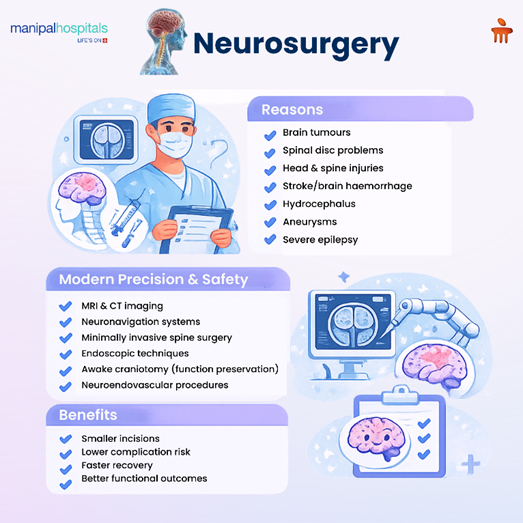
Neurosurgery may be recommended when conservative treatments are ineffective, when neurological symptoms worsen rapidly, or when imaging reveals conditions that threaten brain or spinal cord function. Conditions like brain tumours, spinal cord compression, head injuries, or brain bleeding may require immediate surgery.
Most Common Reasons for Neurosurgery?
Neurosurgery is performed for a wide range of neurological conditions. The table below summarises common situations where surgery may be required.
|
Condition |
How It Appears |
|
Brain Tumours |
Headaches, seizures, vision changes, and memory issues |
|
Spinal Problems |
Back pain, leg weakness, numbness, and difficulty walking |
|
Head & Spine Injuries |
Loss of consciousness, bleeding, fractures, paralysis |
|
Stroke & Brain Bleeding |
Sudden weakness, speech problems, and severe headache |
|
Hydrocephalus (Fluid Build‑up) |
Enlarged head (in children), headaches, and balance issues |
|
Aneurysms |
Sudden severe headache, vision problems, risk of rupture |
|
Epilepsy (Severe Cases) |
Frequent uncontrolled seizures |
When is Neurosurgery Needed Instead of Medical Treatment?
Doctors carefully consider when neurosurgery is needed. It depends on several factors:
-
How bad are the symptoms?
-
How fast does the disease get worse?
-
Risk of lasting nerve damage.
-
Failure of non-surgical therapies. For example:
-
Acute brain compression or bleeding: Rapid decompression can be lifesaving.
-
Structural space-occupying lesions (tumours, abscesses): Many require removal to relieve pressure or to obtain tissue for diagnosis.
-
Progressive spinal cord compression: If untreated, permanent paralysis can result; timely decompression is essential.
-
Certain vascular lesions: Endovascular or open surgery may be the only definitive treatment to prevent catastrophic haemorrhage.
-
In these cases, conservative measures may stabilise symptoms temporarily but do not remove the underlying threat, hence neurosurgery procedures become necessary. Neurosurgery may also be considered when severe pain or disability significantly affects quality of life despite adequate medical treatment.
Key Neurosurgery Procedures
Several well-known neurosurgery procedures are designed for certain conditions:
|
Procedure |
Typical Indications |
What It Does |
Recovery Snapshot |
|
Craniotomy for tumour resection |
Brain tumours causing mass effect or seizures |
Removes or debulks tumour; obtains tissue for diagnosis |
Hospital 3–7 days; gradual neurological recovery; possible adjuvant therapy |
|
Burr hole / Craniotomy and Evacuation |
Chronic Subdural / Acute subdural/epidural haemorrhage |
Drains blood to reduce pressure |
Urgent; ICU monitoring; recovery varies with injury |
|
Endoscopic Third Ventriculostomy / Shunt |
Hydrocephalus |
Restores CSF flow or diverts fluid |
Short hospital stay; shunt care education if used |
|
Spinal decompression (laminectomy/discectomy) |
Disc herniation, spinal stenosis |
Relieves nerve root or cord compression |
Outpatient to 3 days; physiotherapy recommended |
|
Spinal fusion / Instrumentation |
Instability, deformity |
Stabilises spinal segments with implants |
Several days in hospital; months of recovery |
|
Aneurysm clipping or coiling |
Intracranial aneurysm |
Prevents or treats rupture |
ICU monitoring; short to medium hospital stay |
|
Peripheral nerve repair / Decompression |
Carpal tunnel, traumatic nerve injury |
Restores nerve continuity or relieves compression |
Variable: physiotherapy and nerve regeneration time |
The choice of procedure depends on diagnosis, neurological status, and overall health condition.
Role of Advanced Imaging and Planning
Doctors use advanced imaging and careful planning to make neurosurgery as safe as possible.
-
MRI and CT scans: Provide detailed pictures of brain and spine structures.
-
Neuronavigation systems: Guide surgeons with real-time precision during complex procedures.
-
Accurate diagnosis: Confirms whether surgery is truly needed.
-
Detailed planning: Helps identify the safest surgical approach.
-
Risk reduction: Minimises complications and improves recovery outcomes.
-
Better results: Especially important for delicate brain and spinal surgeries requiring high accuracy.
Modern Approaches: Less Invasive, More Precision
Neurosurgery embraces minimally invasive and precision techniques to reduce collateral injury and speed recovery:
-
Endoscopic neurosurgery for intraventricular lesions and skull base tumours reduces brain retraction.
-
Minimally invasive spine surgery uses smaller incisions and tubular retractors.
-
Image-guided navigation allows exact targeting for tumour resection or electrode placement.
-
Awake craniotomy preserves speech and motor function when tumours lie near the eloquent cortex.
-
Neuroendovascular procedures treat vascular lesions without open surgery.
Living and Healing After Neurosurgery
The type of neurosurgery done and the patient's overall health will affect how long it takes to recover. After surgery, care may include:
-
Managing pain
-
Rehabilitation and physiotherapy
-
Monitoring of the nervous system
-
Slowly getting back to daily life
Some patients may also require speech therapy, occupational therapy, or psychological support. Regular follow-up visits allow doctors to monitor healing and adjust rehabilitation plans.
Knowing what neurosurgery is and when it is necessary also means knowing that surgery is often the first step toward getting better, not the last step in treatment.
When Should You Seek Immediate Neurosurgical Care?
If you have any of the following, get checked out right away:
-
Sudden loss of strength or paralysis
-
Severe headaches and throwing up
-
Seizures
-
Loss of awareness
-
Back pain that gets worse over time
-
Problems with the bladder or bowel
These symptoms may indicate serious neurological conditions that require urgent evaluation by a neurosurgeon.
Conclusion
When non-surgical options fail to protect function or when an immediate threat to the brain or spinal cord exists, neurosurgery becomes the necessary, timely solution. Discuss goals, risks and recovery clearly with the surgical team to make informed choices that prioritise safety and quality of life. For expert evaluation and coordinated neurosurgical care, consult the neurosurgery services at Manipal Hospitals, which is a trusted neurosurgery hospital in Sarjapur Road, Bangalore.
FAQ's
Neurosurgery is the branch of medicine that deals with problems with the brain and spine. It's necessary when drugs or treatments don't work or when immediate action is needed to prevent neurological deterioration and improve quality of life.
People may need neurosurgery for brain tumours, problems with spinal discs, injuries, bleeding in the brain, or nerve pressure that causes pain, weakness, or seizures when other treatments have not worked.
Doctors need to do neurosurgery right away for serious head injuries, bleeding in the brain, pressure on the spinal cord, or quickly worsening nerve problems. Fast treatment can prevent life-threatening problems and lasting disability.
Some common neurosurgery procedures include removing brain tumours, repairing spinal discs, treating injuries to the head or spine, and placing shunts to manage fluid buildup in the brain or spinal cord.
People can receive neurosurgery at Manipal Hospital with advanced equipment, skilled surgeons, and recovery support. These centres help make sure treatment and healing are safe for brain, spine, and nerve problems.
Share this article on: