5 Min Read
Do all brain and spine problems require surgery? No, but when medications, physiotherapy, or injections fail, or when neurological function is at risk, brain and spine surgery becomes crucial. Advances in neurosurgery have made procedures for the brain and spine safer and more precise. Recognising the criteria for spine and brain surgery and understanding the impact of neurosurgery on treatment empowers patients and families to make informed decisions. This blog reviews common brain and spine conditions requiring surgery and outlines neurosurgical options available in Sarjapur Road, Bangalore.
Synopsis
What Is Brain and Spine Surgery?
Brain and spine surgery includes procedures performed on the brain, spinal cord, peripheral nerves, and supporting structures. Trained neurosurgeons undertake these operations to treat conditions that affect neurological function, relieve symptoms, and prevent further deterioration.
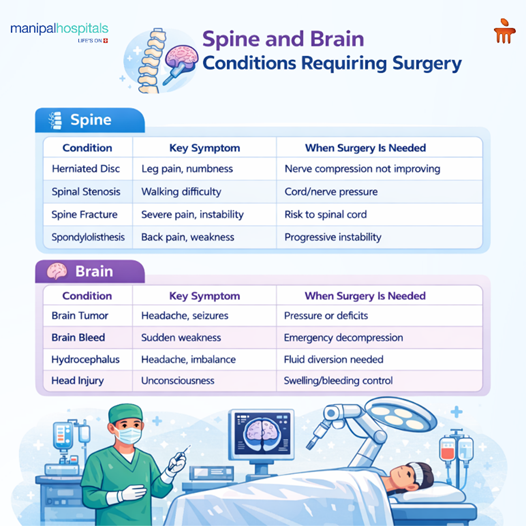
Modern practice relies on advanced imaging, intraoperative navigation, and operating microscopes to improve accuracy and safety. Surgeons may aim to decompress neural elements, remove abnormal tissue, stabilise the spine, or restore function, depending on the underlying disorder.
Spine Conditions That May Require Surgery
Not all back or neck pain requires an operation. However, certain disorders can threaten nerve integrity, mobility, or spinal stability. In such situations, timely brain and spine surgery may prevent progression and improve outcomes.
1. Herniated Disc with Nerve Compression
A prolapsed disc can press on adjacent nerve roots and produce significant pain, weakness, or numbness. When well-conducted conservative treatment fails to provide relief, surgeons may recommend intervention. This scenario is a frequent indication for patients undergoing brain and spine surgery in Sarjapur Road, Bangalore.
2. Spinal Stenosis
Narrowing of the spinal canal can compress neural structures, resulting in difficulty walking, an imbalance, or bowel and bladder disturbance. Early spine surgery helps relieve pressure and reduces the risk of permanent neurological injury.
3. Spinal Trauma and Fractures
High-impact injuries may create unstable fractures that endanger the spinal cord. Urgent brain and spine surgery aims to protect neural tissue, restore alignment, and stabilise the vertebral column.
4. Progressive Degenerative Spine Disorders
Conditions such as spondylolisthesis or advanced disc degeneration may gradually impair function and quality of life. When symptoms worsen despite non-surgical care, operative treatment becomes a reasonable and effective option.
Brain Conditions That May Require Surgery
Certain neurological disorders demand timely surgical management, either as an emergency or after careful planning. Neurosurgeons recommend intervention when structural abnormalities threaten brain function or produce significant symptoms.
1. Brain Tumours
Brain tumours often require surgical evaluation, particularly when they increase intracranial pressure, trigger seizures, or lead to progressive neurological deficits. Surgery may help obtain tissue diagnosis, reduce tumour burden, and relieve compression on surrounding structures.
2. Stroke and Intracranial Haemorrhage
Bleeding within the brain can rapidly elevate pressure and damage vital tissue. Emergency neurosurgery may be necessary to evacuate clots, control swelling, and prevent further deterioration.
3. Hydrocephalus
Abnormal accumulation of cerebrospinal fluid can impair brain function. Surgeons frequently manage this condition through shunt placement or other diversion procedures to restore normal pressure dynamics.
4. Traumatic Brain Injury
Severe head injuries may produce fractures, bleeding, or swelling that threaten survival and neurological recovery. Surgical intervention aims to remove haematomas, repair damage, and stabilise affected areas.
Surgical Treatment and Advances in Brain and Spine Surgery
Modern brain and spine surgery involves a broad range of operative techniques to manage structural, vascular, traumatic, and degenerative disorders affecting the nervous system. Neurosurgeons determine the most appropriate approach after evaluating imaging findings, neurological function, and overall patient health. For individuals seeking surgical treatment for spine and brain disorders in Sarjapur Road, Bangalore, available options may include:
-
Tumour surgery, from biopsy to maximal safe removal
-
Decompression procedures to relieve pressure on the brain, spinal cord, or nerves
-
Spinal stabilisation and fusion for trauma or progressive degeneration
-
Cerebrospinal fluid diversion, including shunt placement
-
Emergency neurosurgery for haemorrhage or severe injury
-
Minimally invasive and endoscopic techniques were suitable
Ongoing advances have further strengthened neurosurgery for brain and spine conditions. Technologies such as neuronavigation, high-resolution imaging, operative microscopy, and neuro-monitoring allow surgeons to work with greater accuracy while preserving healthy tissue. These improvements support:
-
Reduced surgical trauma
-
Lower complication risk
-
Better functional outcomes
-
Shorter hospital stay
-
Faster recovery
Together, modern capability and expertise make brain and spine surgery treatment in Sarjapur Road, Bangalore, safer and more effective, even in complex situations.
When Should You Consult a Neurosurgeon?
Seeking timely evaluation by a neurosurgeon is important when symptoms suggest involvement of the brain, spine, or nerves. Specialist assessment can clarify the diagnosis and guide appropriate treatment. You should obtain expert advice if you experience:
-
Persistent back or neck pain associated with weakness or numbness
-
Difficulty with balance, coordination, or walking
-
Seizures or severe, unexplained headaches
-
Sudden loss of sensation or strength in any limb
Early consultation helps determine whether surgical or non-surgical management is required and reduces the risk of long-term neurological complications.
Conclusion
Not all neurological conditions need surgery, but brain and spine surgery is necessary when nerve function, mobility, or life itself is in danger. For expert evaluation and surgical care, you can consult the Neurosurgery specialist at Manipal Hospitals in Sarjapur Road, Bangalore, offering full brain and spine surgery treatment with advanced neurosurgery, accurate diagnostics, and expert teams. The focus is always on the patient's safety, recovery, and long-term neurological health, whether they are deciding if brain surgery is necessary or when spine surgery is needed.
FAQ's
Spine surgery becomes necessary when pain, neurological weakness, or nerve compression persists despite adequate conservative treatment, or when structural instability threatens function or quality of life.
Brain surgery becomes necessary when tumours, bleeding, swelling, or raised pressure threaten vital brain function or endanger life. Timely intervention helps prevent permanent neurological damage.
No, not all brain tumours require surgery. The tumour type, size, location, growth behaviour, and the patient’s symptoms guide treatment decisions. In many cases, surgery provides significant benefit.
Neurosurgery helps treat disorders of the brain and spine by relieving pressure on nerves, restoring neurological function, stabilising structures, and preventing further deterioration or complications through carefully planned surgical intervention.
Manipal Hospitals Sarjapur Road provides advanced brain and spine surgery services, supported by comprehensive diagnostics, experienced neurospecialists, and multidisciplinary peri-operative care.
Share this article on: