7 Min Read
Fungal infections are more common than many people know, and they can occur on the skin, nails, lungs, or even inside the body. Different types of fungal infections differ in severity. There are mild cases that are easily treated with over-the-counter medications, while other types of fungal infections may require medical care as early as possible. Learning about the various types, symptoms, and causes of fungal infections could help to recognise them quickly and be able to manage them more effectively.
At Manipal Hospital Sarjapur Road, specialists use advanced diagnostic tools and compassionate care to help patients recover quickly. By learning more about fungal infections, you can take the right steps to protect your health and seek medical attention when needed.
Synopsis
What are Fungal Infections?
Fungal infections occur when harmful fungi invade and multiply in or near the body. Because fungi naturally exist in the environment and on human skin, they can sometimes grow uncontrollably into an infection with the right environment. Fungal infections can be infections of surfaces (skin or skin around your fingernails and toenails), and they can be systemic if they become internally significant.
Fungal infections on your skin or nails are not usually life-threatening, but they can progressively become worse if left untreated. The faster we can identify fungal infections, the faster we can start treatment protocols, which means faster recovery. The vast majority of fungal infections can be managed effectively with proper care, making the risk of recurrence substantially less. Finally, understanding how infections progress can also provide people with tools to perform preventative behaviours to mitigate the occurrence of future infections.
Types of Fungal Infections
There are many kinds of fungal infections, which affect various areas of the body:
|
Ringworm: |
This is a contagious fungal infection that is characterised by circular red, itchy rashes on the skin. |
|
thlete's Foot: |
There is a fungus (Tinea Pedis) that creates athlete's foot, and it grows between toes. You typically see this in sweaty feet or in people with tight shoes. |
|
Yeast Infections: |
Yeast infections are caused by the fungus Candida. Yeast infections can infect the mouth, areas where skin folds, or the genital area. |
|
Nail Fungus: |
Nail fungus leads to thickened, discoloured, and/or brittle nails. |
|
Systemic Fungal Infections: |
Systemic fungal infections affect your internal organs (lungs and sometimes the brain). Infections like these are serious in individuals with compromised immunity. |
Each type requires specific treatment, which is why professional medical guidance is important.
Symptoms of Fungal Infection
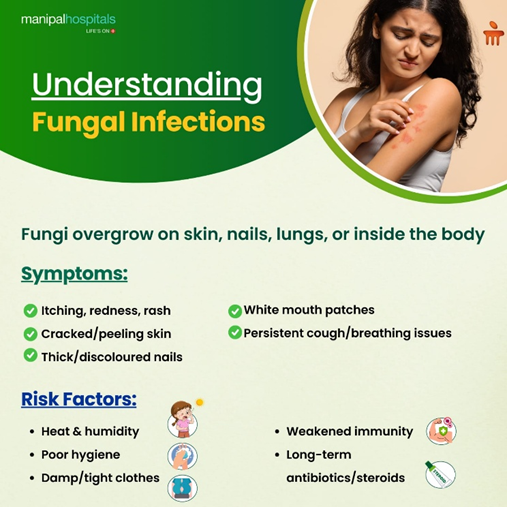
Fungal infections can present in various ways, depending on the part of the body affected. Symptoms may be mild and easily ignored. In contrast, some fungal infections may result in considerable pain and discomfort, even emotional distress.
Recognising signs of a potential fungal infection and adopting preventive measures helps in avoiding unnecessary complications. Some common signs of fungal infections include:
-
Itching or irritation at the site of infection
-
Redness, rash, or scaling of the skin
-
Cracked or peeling skin
-
Thickened or discoloured nails
-
Pain/discomfort (in the case of severe infection)
-
White patches on the inside of the mouth (oral thrush)
-
Persistent cough or trouble breathing (in case of severe deep-seated infections)
Diagnosis of Fungal Infections
Doctors may use several methods to confirm fungal infections, such as:
-
Examining the affected skin, nails, or tissues under a microscope
-
Taking small samples (like nail clippings or skin scrapings) for testing
-
Checking fluids like urine, sputum, or vaginal discharge for fungal growth
-
Advanced imaging tests like X-rays, CT scans, or MRIs are used when internal organs are suspected of being affected
Fungal Infection Treatments
Treating a fungal infection is not just about symptom management; it is about eliminating the infection and preventing recurrence. The right treatment will vary based on the nature of the fungus and where the infection exists, as well as whether the infection is local and mild or more extensive and serious. Because of this, there will be different treatment protocols in place due to the type of infection and severity. For example, topical creams and ointments may be used for mild skin infections, oral antifungal medications for more deeply seated or stubborn infections, antifungal shampoos for scalp infections, or intravenous antifungal drugs for serious, systemic infections. Lifestyle changes like cleaning and keeping skin dry and wearing breathable clothing can help prevent recurrence of the infection.
Our specialist doctors in Sarjapur Road will be able to create individualised treatment plans for each patient, based on requirements for meaningful recovery and their overall safety.
Conclusion
Fungal infections can vary from a minor skin irritation to a major health complication. If you know what symptoms to look for, you may be able to be treated quickly and manage your fungal infection successfully. While most infections can be treated effectively and easily, certain infections may require the help of a specialist.
At Manipal Hospital Sarjapur Road, experienced dermatologists and specialists aim to provide multiple treatment options to ease discomfort and promote optimal health for patients struggling with and managing fungal infections. Many fungal infections can receive a solid diagnosis and an effective treatment plan; therefore, the sooner the diagnosis, the sooner a patient can receive treatment to restore health and wellness.
FAQ's
Yes, certain fungal infections (like tinea—also known as ringworm or athlete's foot) can be spread through contact and sharing personal items.
Most are mild, but if left untreated, some can spread and cause complications, especially in people with weak immunity.
To prevent fungal infection, you need to maintain overall good hygiene, keep your skin dry, avoid sharing personal items, and wear clothes that are not too tight and are breathable.
The healing time of fungal infections depends on the type of fungus it is. If it is a simple skin infection, it usually clears up in a few weeks, while if it is more serious, like that of a nail infection, it typically takes longer time and maybe months to fully recover.
Yes, it is definitely advised to see a doctor when you have any fungal infection. It is even more important when home remedies don’t work or if the infection spreads, causes pain, or keeps recurring.
Share this article on: