8 Min Read
.webp "Allergies and Pneumonia: Understanding the Link, Warning Signs and Safe Treatment")
Homes with pets, dust in corners, seasonal pollen and children who seem to catch every cold are common scenes. The main point of this article is simple and practical. Allergies change how your airways work, and that change can make pneumonia more likely and recovery slower. Recognising the connection between allergic inflammation and lung infection lets you take steps that protect breathing today and reduce complications tomorrow.
You will find clear signs to watch for, what doctors look for, practical steps you can use at home and what to expect from medical care, including pneumonia treatment and respiratory infection treatment in the clinic. If you live near Sarjapur Road, you will also see where to go for local support, such as allergy testing and diagnosis in Sarjapur Road and a trusted chest specialist in Sarjapur Road.
Synopsis
- What Is Pneumonia?
- What Are Allergies and How Do They Affect the Lungs
- The Link Between Allergies and Pneumonia
- Signs to Watch For
- Why Early Recognition Matters
- How Doctors Diagnose the Problem
- Treatment Options and What to Expect
- Practical Home Measures That Help Recovery
- Preventing Pneumonia When Allergies Are Present
- When to Seek Urgent Care
- Conclusion
What Is Pneumonia?
Pneumonia is an infection of the lungs where air sacs, called alveoli, become inflamed and fill with fluid or pus. This makes breathing harder and reduces the oxygen your body gets. Pneumonia can be caused by bacteria, viruses or fungi, and it ranges from mild to life-threatening depending on the organism, your immune strength and other health conditions.
What Are Allergies and How Do They Affect the Lungs
Allergies happen when the immune system overreacts to ordinary particles such as pollen, dust mite droppings, mould spores or pet dander. The airway lining becomes inflamed and produces more mucus. The result is narrower airways and reduced ability to clear inhaled germs. Repeated allergic inflammation weakens the lungs' natural defence in two ways. First, excess mucus traps bacteria and viruses. Second, the inflamed airway lining does not clear germs as effectively. Together, these changes raise the chance that a simple exposure to a pathogen will turn into a full respiratory infection or pneumonia.
The Link Between Allergies and Pneumonia
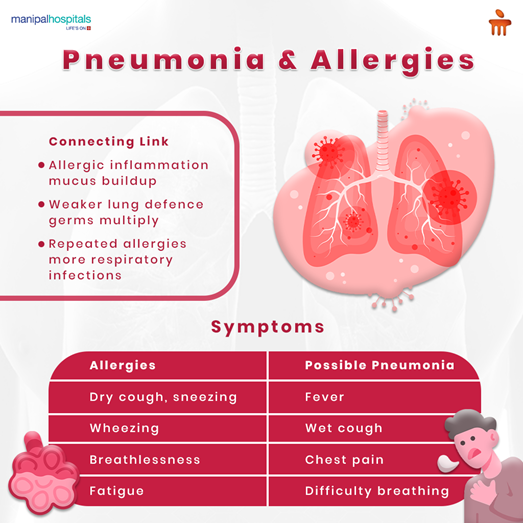
Allergic inflammation creates an environment where germs can multiply more easily. A common cold in someone without allergies may stay in the upper airway, but in someone with significant allergic inflammation, the infection can travel lower and involve the lungs. Asthma and chronic allergic rhinitis are frequent examples where ongoing allergy raises the risk of more severe respiratory infections.
Signs to Watch For
Symptoms of allergies and pneumonia can overlap so it helps to know how they differ and when to act. Allergy symptoms tend to be repetitive or seasonal and include sneezing and a dry cough. Pneumonia more often brings fever and a productive wet cough and can cause breathlessness and chest pain.
|
Allergy Signs to Watch For |
Possible Pneumonia Signs to Watch For |
|
Dry cough, sneezing, nasal blockage, and itchy eyes. |
Fever and a wet cough with coloured sputum. |
|
Recurrent pattern that improves with antihistamines or on days with low exposure to triggers. |
Increasing breathlessness or fast breathing. |
|
|
Chest pain that worsens with deep breaths. |
|
|
Fatigue, sweating, loss of appetite and slower recovery from a usual cold. |
If you notice a change from typical allergy patterns, for example new fever, worsening breathlessness or a cough that produces greenish sputum, contact your doctor for evaluation. In Bangalore, you can look for resources that describe Pneumonia symptoms and treatment in Bangalore if you need local information.
Why Early Recognition Matters
When pneumonia is recognised early, you can receive appropriate pneumonia treatment and avoid complications. Delays allow the infection to worsen and increase the chance of hospitalisation. For people with significant allergic disease or asthma, the margin for error is smaller. Prompt care reduces the risk of severe infection and supports faster recovery.
How Doctors Diagnose the Problem
Doctors use a combination of history, examination and simple tests. They will ask about the pattern of symptoms, including any known allergies, exposure to triggers and whether asthma is present. On examination, the doctor checks breathing rate, oxygen levels using a pulse oximeter and listens to the chest.
Basic tests commonly used
-
Chest X-ray to look for areas of lung consolidation that indicate pneumonia.
-
Blood tests to assess inflammation and white cell count.
-
Sputum tests or throat swabs if a bacterial cause is suspected.
-
Allergy testing is conducted if allergies are suspected as a driving factor. If you are near Sarjapur Road, you can ask about Allergy testing and diagnosis in Sarjapur Road for options and timing.
Treatment Options and What to Expect
Treatment depends on whether the infection is mild or severe and on the organism involved. Most mild pneumonia can be treated at home with oral antibiotics when bacteria are suspected, rest and supportive care. Viral pneumonia may not require antibiotics but does need close monitoring and sometimes antiviral medicines if caused by specific viruses. When asthma or heavy allergic inflammation is present, your doctor will also treat that concurrently so airways can clear more effectively.
Key elements of pneumonia treatment and respiratory infection treatment
-
Antibiotics are used when bacteria are likely. Choose the right antibiotic as advised by your doctor.
-
Oxygen therapy in a clinic or hospital is used when oxygen levels are low.
-
Bronchodilators and inhaled corticosteroids are used to reduce allergic airway narrowing and help breathing.
-
Hydration, fever control and rest.
-
Follow up chest imaging if symptoms do not improve or if recovery is slow.
If symptoms are severe or worsening, your doctor may refer you to a Chest specialist in Sarjapur Road for more advanced care, such as intravenous antibiotics, oxygen support or bronchoscopy if needed.
Practical Home Measures That Help Recovery
You play a central role in helping lungs recover. These simple steps reduce symptoms and support healing.
-
Keep water intake steady to thin secretions and help clearance.
-
Use a humidifier or steam to loosen mucus if safe for your child or household.
-
Encourage rest but include gentle mobility as tolerated to reduce the risk of complications from staying in bed.
-
Follow inhaler or nebuliser instructions precisely when asthma or obstructive disease is present.
-
Avoid smoke exposure, including tobacco and biomass smoke. This reduces irritation and speeds recovery.
-
Maintain good hand hygiene at home to reduce the spread of infections.
Preventing Pneumonia When Allergies Are Present
Reducing allergic triggers lowers the chance of repeated airway inflammation and subsequent infections. Practical prevention steps include cleaning habits and lifestyle changes.
When to Seek Urgent Care
If any of these occur, seek prompt medical attention or emergency care. These are signs of a severe infection or breathing compromise.
-
Urgent signs after explanation, then bullets.
-
Rapid breathing or difficulty breathing.
-
Lips or face turning bluish, confusion or extreme drowsiness.
-
High persistent fever or chest pain with each breath.
-
In children, poor feeding or reduced urine output.
Conclusion
Allergic inflammation and pneumonia are closely linked because allergies change the airway environment, making the lungs less able to clear germs. Recognising changing symptoms early helps you get the right pneumonia treatment and appropriate allergy care. Simple home measures, trigger control, and timely medical care reduce the chance of serious infection. If you live near Sarjapur Road, you can access Allergy testing and diagnosis in Sarjapur Road and consult a Chest specialist in Sarjapur Road for integrated care. With clear steps and collaboration between you and your doctor, most people recover well, and the risk of repeat infections falls.
FAQ's
Allergy cough is usually dry, repetitive and linked to exposure to triggers. Pneumonia often brings fever, a wet cough, breathlessness and a feeling of being much more unwell. If you notice fever, coloured sputum or increasing breathlessness, see your doctor for testing.
Treating allergies lowers the risk because it reduces airway inflammation, but it cannot remove all risk. Vaccination, good hygiene and avoiding smoke exposure also help.
Pneumonia is commonly confirmed with a chest X-ray and blood tests. Allergy triggers can be identified with skin prick tests or blood tests. In Sarjapur Road, ask about local options for Allergy testing and diagnosis in Sarjapur Road.
Yes. Children with poorly controlled allergic disease or asthma can have more frequent respiratory infections. Good allergy control and prompt treatment of infections reduce that risk.
Start with your primary doctor and ask for a referral to a chest specialist when symptoms are recurrent or severe. In Sarjapur Road, you can find a Chest specialist in Sarjapur Road to guide advanced care.
Share this article on: