7 Min Read
Is a slower metabolism actually helpful? The short, clear answer is that a slower metabolism is not intrinsically “better” or “worse”; it depends on what you want to achieve and the context of your health. Most of us focus on speeding metabolism to lose weight, but a modestly slower metabolic rate can bring surprising benefits: steadier energy balance, less overeating driven by constant hunger, deeper rest and recovery, and, according to research, a metabolic profile linked with longer, healthier ageing. That does not mean you should deliberately try to damage your metabolism. Instead, thinking about metabolism as a dial you can nudge helps you make safer, more sustainable choices.
Synopsis
- What Metabolism Really Means?
- How a Slower Metabolism Helps Your Body
- Foods That Help (and How to Think About Them)
- How to Think About the Difference Between Foods That Boost and Foods That Slow
- Practical Tips if You Want to Nudge Your Metabolism Down Safely
- When Slowing Metabolism Is Not the Right Goal
- Conclusion
What Metabolism Really Means?
Metabolism is the sum of all chemical reactions your body uses to convert food to energy and to build and repair tissues. It includes the energy burned at rest (resting metabolic rate), the extra calories used during activity, and the energy used to digest food. Many factors shape your metabolic rate: age, genetics, body composition, hormones, illness, climate and the type and timing of food you eat. Because metabolism is complex, changes are usually gradual and small. A slightly slower metabolism can be healthy in certain circumstances, for example, when your body needs to conserve energy, recover from illness or reduce oxidative stress.
How a Slower Metabolism Helps Your Body
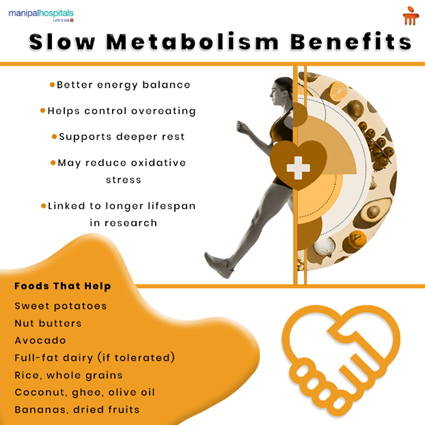
When you read slow metabolism benefits, think of the word “balance.” A metabolism that is less reactive and more measured can stabilise the way your body uses energy. That matters for several practical reasons.
-
First, better energy balance: A slower, steadier metabolic pace can help you avoid big swings in blood sugar and energy. Those peaks and troughs often trigger cravings and spur you to snack on high-calorie foods. If your body spends energy more evenly across the day, you’ll feel more stable and less driven to eat impulsively.
-
Second, it can help control overeating: Rapid metabolism and constant hunger are not the same thing, but they often go together. If your body burns fuel very fast, you may feel the urge to refill the tank more often. Slowing the metabolic tempo modestly can reduce those sudden hunger signals and make portion control easier.
-
Third, deeper rest and recovery: When metabolism is less “revved up,” your nervous system can shift towards parasympathetic activity, the state that supports digestion, repair and restorative sleep. Better sleep and recovery help in turn to regulate hormones that influence appetite and mood.
-
Fourth, a potential reduction in oxidative stress: Some animal and laboratory studies suggest that a slower metabolic rate produces fewer reactive oxygen species over time, molecules that, in excess, can damage cells. This is one reason why calorie restriction and other interventions that lower metabolic throughput have been studied for their links to longevity. In humans, the evidence is not definitive, but it’s an area of active research.
-
Finally, links to longevity are noted in research: Studies in animals and observational data in humans hint that a lower metabolic rate may be associated with a longer lifespan in certain contexts. That doesn’t mean slowing your metabolism guarantees a longer life; many other factors, including genetics, exercise, diet quality and social determinants of health, are far more important, but it’s a biologically plausible piece of the big picture.
Foods That Help (and How to Think About Them)
Food affects the speed at which your body processes energy. If you are curious about metabolism-slowing foods, think of options that provide steady fuel, are calorie-dense in a healthy way, or are slow to digest. These choices won’t dramatically change your metabolic rate overnight, but they can support steadier energy use.
A simple way to use this list is to aim for meals that combine a slow-release carbohydrate with a healthy fat and a source of protein. That mix keeps glucose steady and energy lasting longer.
Foods to consider:
-
Sweet potatoes: complex carbohydrates that are digested slowly and give sustained energy.
-
Nut butters (almond, peanut): calorie-dense, rich in healthy fats and protein; they slow digestion and blunt hunger.
-
Avocado: monounsaturated fats and fibre help steady blood sugar and delay hunger pangs.
-
Full-fat dairy (if tolerated): a balanced source of fat and protein; can be more satiating than low-fat versions.
-
Rice and whole grains: provide steady glucose release, especially when eaten with protein or fat.
-
Coconut, ghee, olive oil: fats that add calories and slow the emptying of the stomach, which can reduce appetite.
-
Bananas and dried fruits: concentrated energy that can blunt sudden hunger between meals.
It’s important to stress that these foods are not “metabolism-stopping”; they simply support a calmer, more even pattern of fuel use. Also note that some items on this list (dried fruits, full-fat dairy, nut butters) are calorie-dense; portion control matters.
How to Think About the Difference Between Foods That Boost and Foods That Slow
Many popular guides stress metabolism-boosting foods, spicy foods, green tea, and high-protein meals, because certain foods can raise calorie burn for a short time. If your goal is weight loss, those small boosts can add up. Thus, metabolism and weight loss are directly linked. By contrast, foods that encourage steadier energy help reduce hunger-driven overeating and may benefit people who struggle with constant hunger or who are focused on recovery and rest. Both approaches have valid uses; the key is matching the strategy to your goals. However, there are some pros and cons.
They are as mentioned below:
|
Pros (Potential Benefits) |
Cons (Potential Drawbacks) |
|
Longer lifespan potential |
Easier weight gain |
|
Less oxidative damage |
Harder fat loss |
|
Better fasting tolerance |
Possible low energy if diet is poor |
|
Steady energy levels |
Sensitivity to heavy or processed foods |
|
Lower appetite |
Sometimes cold hands/feet |
|
Better nutrient absorption |
Can cause hormonal imbalance if too slow (hypothyroid-like) |
|
More efficient energy use |
Practical Tips if You Want to Nudge Your Metabolism Down Safely
If you are considering how to slow down metabolism, for instance, to reduce restless energy, stabilise appetite or improve sleep, use gentle, evidence-informed steps. Don’t attempt extreme calorie restriction or stop activity abruptly; both approaches carry risks.
Here are measured, safe ideas you can discuss with your doctor:
-
Prioritise sleep: Aim for consistent, good-quality sleep. When you sleep well, your nervous system moves into repair mode and metabolic stress falls.
-
Include healthy fats and fibre at meals: A balance of fat, fibre and protein slows digestion and prevents sharp glucose spikes.
-
Avoid frequent high-intensity workouts: Replace some sessions with gentle movement, walking, yoga, or tai chi, which support circulation without revving up metabolism.
-
Manage stress: Chronic stress keeps your sympathetic nervous system activated, raising energy use and hunger. Mindfulness, breathing practices and simple relaxation can help.
-
Reconsider stimulant use: Excess caffeine or nicotine can push metabolic rate up; cutting back may reduce feelings of jitteriness and help you rest.
-
Keep strength training in the plan: Muscle mass affects resting metabolic rate; if you are concerned about becoming too slow metabolically, brief resistance work preserves function while still allowing a calmer metabolic tone.
-
Monitor portion sizes: The foods listed under “Foods that help” are useful, but portion control keeps weight stable.
Always consult a clinician, especially if you have thyroid disease, diabetes, or other chronic conditions that affect metabolism. These conditions require tailored management.
When Slowing Metabolism Is Not the Right Goal
There are clear scenarios where slowing metabolism is harmful. If you are recovering from malnutrition, have low thyroid function, or need to maintain strength and function, reducing metabolic drive can worsen outcomes. Similarly, if you aim to lose weight, deliberately slowing metabolism will generally work against that goal. In short: match your strategy to the clinical picture. Your general practitioner or a specialist such as Dr. Jagadeesh at Manipal Hospitals can assess whether a modest shift in metabolic tempo is sensible.
Conclusion
A slower metabolism carries hidden benefits that are worth understanding. When you frame metabolism as a spectrum rather than a battle to be won, you open the possibility of using diet, sleep, stress management and activity to shape energy use in healthier ways. That may mean steadier energy, reduced overeating, deeper rest and potential long-term benefits for cellular health. But these are modest, gradual shifts, not quick fixes. If you are curious about how to slow down metabolism safely, talk to the best internal medicine expert in Sarjapur Road, Bangalore to help you decide whether a gentle metabolic shift fits your goals and health needs.
FAQ's
Yes, in many cases, you can nudge your metabolism toward a calmer state, and this often improves sleep and recovery. Simple measures, prioritising sleep, reducing stimulants like caffeine, managing stress and choosing meals with healthy fats and fibre, support deeper rest. However, do this under medical guidance if you have underlying illnesses such as thyroid disease, diabetes, or a recent significant weight change.
They are better described as foods that promote steadier energy release and more sustained satiety. Items such as avocado, full-fat dairy (if you tolerate it), nut butters and whole grains slow gastric emptying and blunt rapid glucose swings.
Some research, mostly in animals, links lower metabolic throughput with markers of longevity. In humans, the evidence is not conclusive. Longevity depends on many factors, diet quality, exercise, sleep, genetics and social health. Focus on overall healthy habits rather than trying to slow metabolism as a sole strategy.
A slower metabolism may make it slightly easier to store calories, but healthy weight gain should focus on balanced, calorie-dense nutrition and strength training to build muscle. Intentional, supervised approaches are safest.
Share this article on: