7 Min Read
An ovarian cyst is a sac-like structure filled with fluid or semi-solid material that develops on or inside an ovary. They are very common among women of reproductive age, and many cysts cause no symptoms and resolve on their own. However, in some cases, they may grow, cause discomfort, or bring complications. By familiarising themselves with the different types of ovarian cysts, understanding the signs and symptoms, and acquiring knowledge on diagnostic and treatment methods, women can make informed choices for their health. Women's health specialists at Manipal Hospital Sarjapur Road offer individualised care to safely and effectively manage ovarian cysts.
Synopsis
What is an Ovarian Cyst?
An ovarian cyst is essentially a pouch or sac formed by fluid, semi-solid tissue, or even more complex material that develops on or within one or both ovaries. These cysts occur in many different sizes; some are small and unnoticeable, while others can grow larger and push against adjacent organs. The majority of ovarian cysts are nonmalignant in nature, especially in younger women or when linked to the menstrual cycle. They frequently resolve on their own and go unnoticed. If the cyst grows too large, causes pain, or interferes with ovarian performance, it may require intervention. Regular examinations or check-ups give us a baseline to help us recognise a cyst if it does develop, so that we can initiate treatment if it ever is needed.
Types of Ovarian Cysts
The primary ovarian cyst types are as follows:
-
Functional cysts: Related to the regular function of the ovary. The two main types are follicular cysts (when a follicle does not release an egg) and corpus luteum cysts (the follicle released an egg, but the empty follicle does not shrink). Most functional cysts disappear after a few menstrual cycles.
-
Dermoid cysts (teratomas): Contain tissue, such as hair, teeth, or fat. Most of the time, dermoid cysts are not cancerous, but can get fairly big.
-
Cystadenomas: These are cysts that develop on top of the ovary. They can be filled with watery or mucous material.
-
Endometriomas: These cysts are related to endometriosis. Endometriomas develop when tissue that typically grows inside the uterus grows outside of the uterus and attaches to an ovary.
-
Malignant cysts/stage growth: Rare, and most likely occur after menopause. These are solid or partly solid cysts and need careful evaluation.
Ovarian Cyst Signs
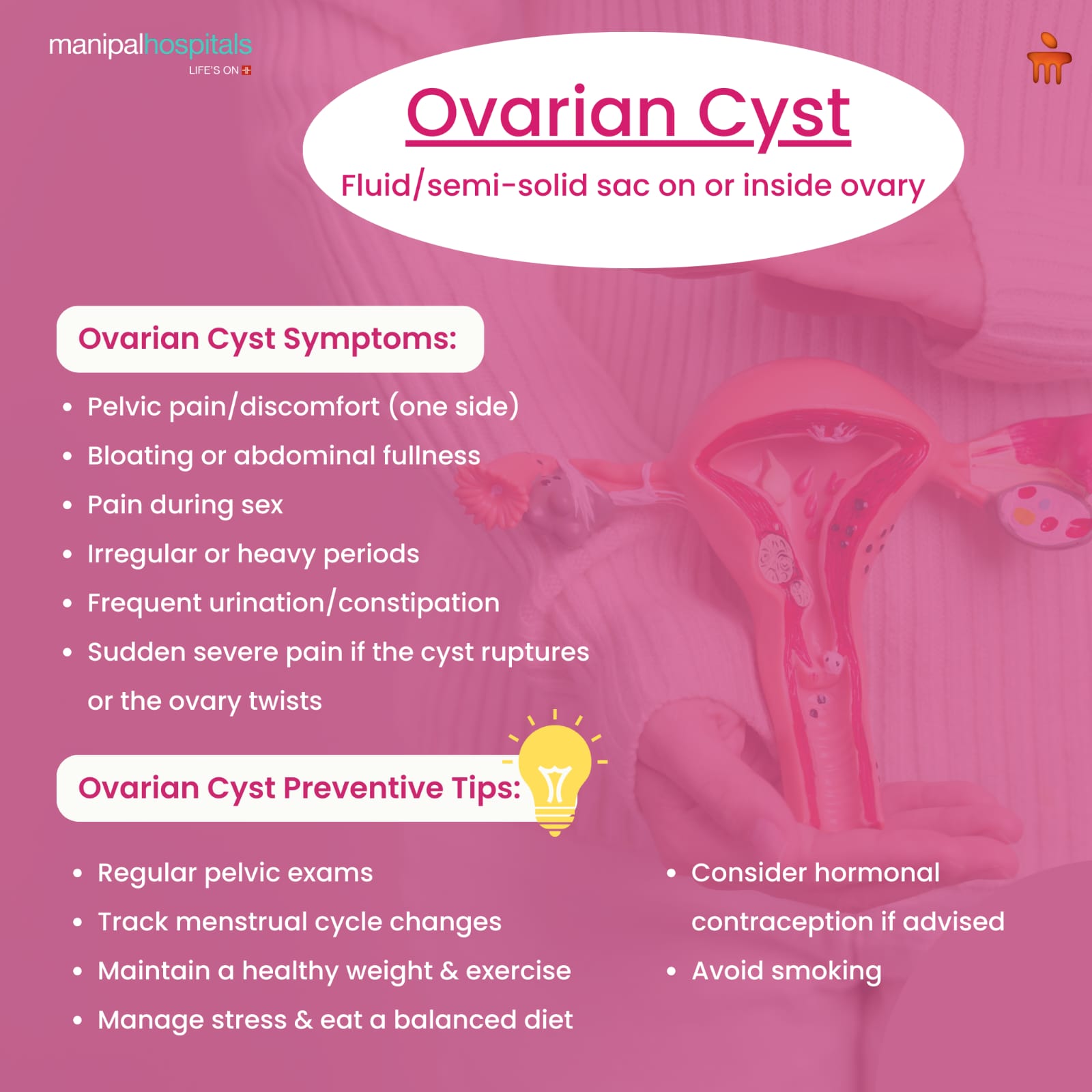
Sometimes the cysts don’t cause any noticeable ovarian cyst symptoms, but when they do, they might show up as:
-
Pelvic discomfort or a dull ache on one side
-
Feeling of fullness, bloating, or swelling in the lower abdomen
-
Pain during sexual intercourse
-
Changes in menstrual cycle - heavier, lighter, or irregular bleeding
-
Frequent urination or trouble emptying the bladder fully
-
Pressure on the bowel leading to constipation or a sense of discomfort
-
Sudden, sharp pain if the cyst ruptures or causes twisting (torsion) of the ovary
Do not avoid these early signs of ovarian cyst. If you feel severe pain, fever, vomiting, or sudden dizziness, seek medical care immediately.
Diagnosis of Ovarian Cysts
To determine if a cyst exists and requires treatment, a physician may use the following:
-
A pelvic examination to palpate for any swelling or tenderness in the ovaries.
-
Ultrasound imaging (either transvaginal or abdominal) to determine the size, shape, and whether it is filled with fluid or solid components.
-
Blood work (CA-125), especially if malignancy is suspected, or in older women or post-menopausal women.
-
Watching the cyst over time with repeated scans to determine if the cyst changes, shrinks, or enlarges.
-
Sometimes additional imaging, such as an MRI or a CT scan, is needed in cases of complex cysts or when the ultrasound is ambiguous.
Ovarian Cyst Treatments
Take into account the type and size of the cyst, the level of discomfort and symptoms, your overall age, and whether there is a desire to conserve fertility potential.
-
Watchful waiting/monitoring: Many cysts, especially functional cysts, will sometimes resolve spontaneously. In these instances, your physician may suggest regular follow-up ultrasounds with symptom monitoring.
-
Medications: Hormonal contraceptives can control the cycle and sometimes also prevent new cysts from arising; they cannot usually make existing cysts go away. Analgesics can help with symptom control during this time.
-
Surgery: If you have a large cyst that does not resolve in time, painful cyst(s), or concerns about certain features of the cyst pointing to a malignant cyst, then surgical excision may be required. Your surgical approach will be different in these situations, and you may have either a cystectomy (removal of just the cyst) or possibly an oophorectomy (removal of the affected ovary). Whenever possible, minimally invasive surgeries (laparoscopy) are warranted.
At a facility such as Manipal Hospital Sarjapur Road, treatment pathways will be provided considering your wish for fertility, your overall health, and other important risks. Experts in Sarjapur Road will try to provide effective treatments while considering the need to retain reproductive health opportunities, when possible.
Prevention Tips for Ovarian Cysts
While not all ovarian cysts can be prevented, certain ovarian cyst preventive tips may help reduce the risk or catch them early:
-
Attend regular pelvic exams so that any cysts can be found before they cause problems.
-
Take note of any changes in your menstrual cycle. Track the length of your cycle, flow, and level of discomfort. It will help you detect early problems with your menstrual health.
-
Manage your stress levels appropriately, stay at a healthy body weight, eat healthy nutrition, and exercise regularly which supports hormone health.
-
Consider hormonal contraception when advised and when applicable to help reduce the risk of some types of cyst development.
-
Smoking has been linked to disrupted hormone levels. Seek medical advice if symptoms like persistent pelvic pain, irregular bleeding, or abnormal fullness occur, rather than ignoring them.
Conclusion
Ovarian cysts are very common, especially during reproductive years, and most are harmless. Many cysts cause no ovarian cyst symptoms and resolve by themselves without treatment. Yet, some may grow large, produce discomfort, or lead to complications if not monitored. Recognising warning signs, getting a proper diagnosis, and adopting a treatment plan suited to your situation are essential. The professionals at Manipal Hospital Sarjapur Road offer gentle and full care for ovarian cysts, from monitoring when they are just not causing issues, to possibly surgery to prevent future damage, always ensuring the focus is on your health and your fertility. To stay in command of your reproductive health, stay informed and take action.
For accurate diagnosis and personalised ovarian cyst care, book an appointment with a gynaecologist at Manipal Hospital Sarjapur Road for expert evaluation and treatment guidance.
FAQ's
Functional cysts are linked to the menstrual cycle (follicle or corpus luteum) and often go away without treatment. Other types, like dermoid cysts, endometriomas, or cystadenomas, may need medical evaluation because they can persist or cause symptoms.
Most ovarian cysts do not affect fertility. However, cysts affiliated with endometriosis (and similar situations) or exceptionally large cysts that damage ovarian tissue could affect fertility; however, timely and appropriate treatment can help expand the window of benefit for your reproductive health.
Seek medical attention if you experience pelvic pain, abnormal menstrual bleeding, pelvic fullness/abdominal swelling, pain during sex, or sudden and severe pain listed above.
No, many (or even most) cysts will resolve on their own. Surgery is usually considered when:
-
If a cyst is large
-
If a cyst is chronic
-
If a cyst is causing symptoms
-
If there is suspicion of cancer
When considering surgery, it is important to think about and discuss the type of cyst, size of cyst, symptoms related to the cyst and personal health goals
Risk of malignancy is increased after menopause, so cysts identified during this time will be more carefully evaluated. Even cysts that are benign will be evaluated as a safety mechanism to ensure there are no concerns for cancer and to minimise risks to your overall health.
Risk of malignancy is increased after menopause, so cysts identified during this time will be more carefully evaluated. Even cysts that are benign will be evaluated as a safety mechanism to ensure there are no concerns for cancer and to minimise risks to your overall health.
Share this article on: