8 Min Read
In today's fast-paced world, many of us are seeking effective and sustainable ways to manage our health, weight, and overall well-being. One approach that has garnered significant attention is intermittent fasting (IF). But what exactly is intermittent fasting, and how can you adopt it safely into your lifestyle? At Manipal Hospitals, we believe in empowering you with accurate, patient-centric information to make informed health decisions. This comprehensive guide will walk you through the benefits, various intermittent fasting times, and practical intermittent fasting diet tips to help you navigate this popular health strategy.
Intermittent fasting isn't just another diet; it's an eating pattern that cycles between periods of eating and voluntary fasting. It doesn't dictate what you eat but rather when you eat. For many, it's become a flexible and effective way to achieve a range of health goals, from weight management to improved metabolic health. Let's explore how to do intermittent fasting safely and unlock its potential.
Synopsis
- The Remarkable Intermittent Fasting Benefits
- How to Do Intermittent Fasting Safely: Understanding Schedules
- Intermittent Fasting Diet Tips: Fuelling Your Body Right
- Care Essentials: Do's and Don'ts
- Is Intermittent Fasting a Treatment?
- Who Should Exercise Caution or Avoid Intermittent Fasting?
- Conclusion
The Remarkable Intermittent Fasting Benefits
The appeal of intermittent fasting extends beyond just weight loss. Research suggests a multitude of potential health advantages when practiced correctly. Here are some of the key intermittent fasting benefits:
-
Weight Management: Perhaps the most widely recognized benefit. By limiting your eating window, you naturally consume fewer calories, leading to weight loss. Studies, including a review of 27 trials, indicate that individuals following various IF patterns can experience a typical weight loss of 3-8% over 3-24 weeks, a figure often comparable to traditional calorie-restriction diets.
-
Improved Metabolic Health: Intermittent fasting can significantly improve insulin sensitivity, making your body more efficient at utilizing blood sugar. This can lead to better blood sugar control and a reduced risk of type 2 diabetes. For instance, a study published in the journal Cell Metabolism found that participants experienced a 10-14% improvement in insulin sensitivity after just a few weeks of IF.
-
Enhanced Cellular Repair (Autophagy): During fasting periods, your body initiates cellular repair processes, including autophagy, where cells remove old and damaged components. This process is crucial for cellular rejuvenation and may play a role in slowing down aging and preventing diseases.
-
Reduced Inflammation: Chronic inflammation is linked to numerous diseases, including heart disease and cancer. Intermittent fasting has been shown to reduce markers of inflammation in the body, contributing to overall better health.
-
Heart Health: IF may help improve various heart disease risk factors, such as blood pressure, LDL cholesterol, and triglyceride levels. For example, some clinical trials have reported a reduction in systolic blood pressure by up to 5-10 mmHg.
-
Brain Health: Emerging research suggests that intermittent fasting may support brain health by promoting the growth of new nerve cells, enhancing cognitive function, and potentially offering protection against neurodegenerative diseases like Alzheimer's and Parkinson's.
How to Do Intermittent Fasting Safely: Understanding Schedules
The beauty of intermittent fasting lies in its flexibility. There are several popular intermittent fasting times and methods, allowing you to choose one that best fits your lifestyle. When considering how to do intermittent fasting, starting slow and listening to your body is key.
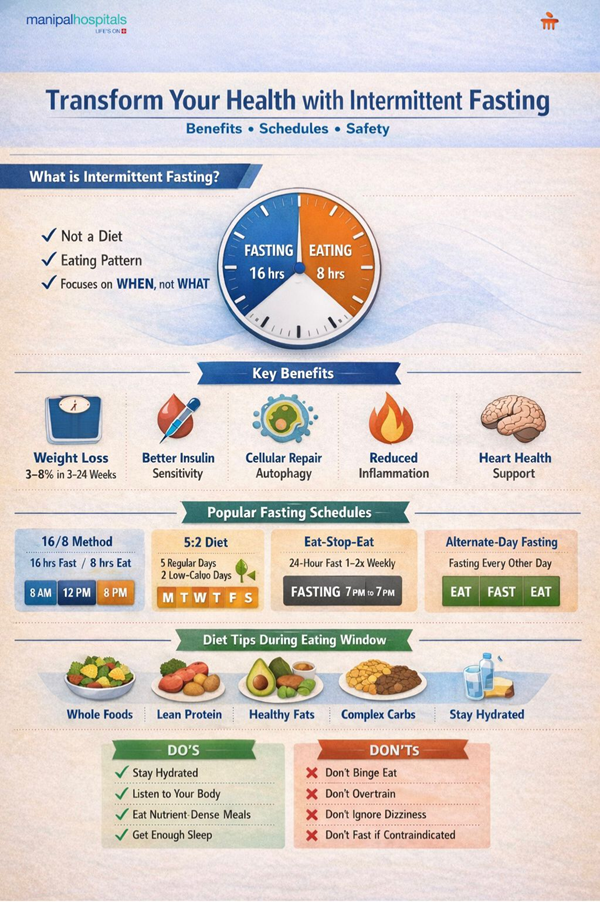
-
The 16/8 Method (Leangains Protocol): This is the most popular and often the easiest to follow. It involves fasting for 16 hours each day and restricting your eating to an 8-hour window. For example, you might fast from 8 PM to 12 PM the next day, then eat between 12 PM and 8 PM. Many people find this schedule easy to maintain as it typically involves skipping breakfast.
-
The 5:2 Diet (The Fast Diet): With this method, you eat normally for five days of the week and restrict your calorie intake to 500-600 calories on two non-consecutive days. For instance, you might eat normally Monday-Friday, and on Tuesday and Thursday, consume very few calories.
-
Eat-Stop-Eat (24-hour Fast): This involves a complete 24-hour fast once or twice a week. For example, you might finish dinner on Monday at 7 PM and not eat again until dinner on Tuesday at 7 PM. This can be more challenging for beginners.
-
Alternate-Day Fasting: As the name suggests, this involves fasting every other day. On fasting days, you either completely abstain from food or consume a very small amount (e.g., 500 calories). This method is more extreme and may not be suitable for everyone.
Remember, consistency is more important than perfection. Experiment with different intermittent fasting times to find what works best for you and your body. Many individuals achieve their health goals by consistently following the 16/8 method, which boasts a high adherence rate of over 70% in many self-reported user groups.
Intermittent Fasting Diet Tips: Fuelling Your Body Right
While intermittent fasting focuses on when you eat, the quality of your food during your eating window is paramount. To maximize intermittent fasting benefits and ensure your body receives adequate nutrition, focus on a balanced and nutrient-dense intermittent fasting diet. If you're looking for an intermittent fasting diet plan in Sarjapur Road or any other location, our nutrition experts can provide personalized guidance.
-
Prioritize Whole, Unprocessed Foods:
-
Lean Proteins: Include sources like chicken, fish, eggs, legumes, and tofu to help maintain muscle mass and keep you feeling full.
-
Healthy Fats: Incorporate avocados, nuts, seeds, and olive oil for sustained energy and essential fatty acids.
-
Complex Carbohydrates: Opt for whole grains (oats, brown rice, quinoa), fruits, and vegetables for fiber, vitamins, and minerals.
-
Plenty of Fruits and Vegetables: These are packed with vitamins, minerals, and antioxidants crucial for overall health and satiety.
-
-
Stay Hydrated: Drink plenty of water throughout the day, especially during fasting periods. Herbal teas, black coffee, and unsweetened sparkling water are also permissible during fasts and can help manage hunger.
-
Avoid Sugary Drinks and Processed Foods: These offer little nutritional value and can undermine your fasting efforts, leading to energy crashes and cravings.
-
Eat Mindfully: Pay attention to your hunger and fullness cues. Avoid overeating simply because you have an eating window.
Care Essentials: Do's and Don'ts
To practice intermittent fasting safely and effectively, keep these essential guidelines in mind:
|
Do's |
Don'ts |
|
Stay Hydrated: Drink plenty of water, black coffee, or unsweetened tea during your fasting window. |
Don't Overtrain: Intense exercise during prolonged fasting periods can be risky. Adjust your activity level as needed. |
|
Listen to Your Body: If you feel unwell, lightheaded, or excessively hungry, break your fast and reassess. |
Don't Ignore Symptoms: Headaches, dizziness, or extreme fatigue are signs to stop and consult a doctor. |
|
Prioritize Nutrient-Dense Foods: During your eating window, focus on whole, unprocessed foods. |
Don't Overcompensate: Avoid binging during your eating window; this negates the benefits of fasting. |
|
Get Enough Sleep: Quality sleep is crucial for hormone regulation and overall well-being, especially during fasting. |
Don't Fast If Contraindicated: Pregnant or breastfeeding women, individuals with eating disorders, or those with certain medical conditions should avoid IF unless specifically advised by a doctor. |
|
Consult a Healthcare Professional: Before starting any new eating pattern, especially if you have underlying health conditions. Our experts at Manipal Hospitals can help. |
|
Is Intermittent Fasting a Treatment?
It's important to clarify the role of "intermittent fasting treatment." While intermittent fasting offers significant health benefits, it is generally considered a dietary approach or a lifestyle modification rather than a direct medical treatment for a specific disease. However, it can serve as a powerful complementary strategy when managed under medical supervision.
-
Supportive Role: For conditions like obesity, type 2 diabetes, or metabolic syndrome, IF can be an effective tool to aid in weight loss and improve metabolic markers. For instance, studies show that IF can help improve blood glucose levels in type 2 diabetic patients by up to 3-6% within 12 weeks when combined with appropriate medical care.
-
Not a Cure: It's crucial to understand that IF does not replace conventional medical treatments or medications. It should be considered an adjunct that supports your body's natural healing processes and improves overall health, enhancing the efficacy of prescribed intermittent fasting treatment plans for chronic conditions.
-
Personalized Guidance: If you are considering intermittent fasting as part of a therapeutic approach for a medical condition, always consult your doctor or a dietitian at Manipal Hospitals. They can assess your individual health profile and guide you on how to incorporate IF safely and effectively alongside your ongoing medical care.
Who Should Exercise Caution or Avoid Intermittent Fasting?
While intermittent fasting is generally safe for many healthy adults, it is not suitable for everyone. Certain individuals should exercise extreme caution or avoid IF altogether:
-
Pregnant or breastfeeding women.
-
Individuals with a history of eating disorders (e.g., anorexia, bulimia).
-
Children and adolescents.
-
People with certain medical conditions, especially those on medications that require food intake, such as:
-
Individuals with diabetes (especially type 1) or those prone to hypoglycemia.
-
Those with significant heart conditions.
-
People with chronic kidney disease.
-
Anyone taking prescription medications – particularly those that need to be taken with food.
-
Always seek medical advice from your healthcare provider before starting intermittent fasting, especially if you fall into any of these categories.
Intermittent fasting can be a powerful tool for improving health and well-being, but its success and safety hinge on a thoughtful and informed approach. By understanding the intermittent fasting benefits, choosing appropriate intermittent fasting times, and adhering to healthy intermittent fasting diet tips, you can integrate this pattern into your life effectively. Remember, personal health journeys are unique, and what works for one person may not work for another. Prioritizing safety and seeking expert guidance is always the best path forward.
Intermittent fasting can be a powerful tool for improving health and well-being, but its success and safety hinge on a thoughtful and informed approach. By understanding the intermittent fasting benefits, choosing appropriate intermittent fasting times, and adhering to healthy intermittent fasting diet tips, you can integrate this pattern into your life effectively. For personalised guidance especially if you have underlying medical conditions like diabetes or hormonal imbalances consult with diabetes and endocrinology at Manipal at Manipal Hospitals, Sarjapur Road, Remember personal health journeys are unique, and what works for one person may not work for another. Prioritizing safety and seeking expert guidance is always the best path forward.
Conclusion
If you are experiencing these symptoms or considering a new health regimen, it's crucial to seek timely medical advice.
Book an appointment with our expert nutritionists and endocrinologists at Manipal Hospitals, Sarjapur Road, Bangalore, today.
FAQ's
No, it's not. While many healthy adults can practice IF safely, it's not recommended for pregnant or breastfeeding women, individuals with a history of eating disorders, children, or those with certain medical conditions like diabetes without strict medical supervision. Always consult a healthcare professional before starting.
During your fasting window, you can drink water, black coffee, unsweetened tea (herbal or green), and unsweetened sparkling water. These beverages contain negligible calories and won't break your fast.
Contrary to popular belief, short-term fasting (<48 hours) has actually been shown to boost metabolism by increasing norepinephrine. Long-term, severe calorie restriction, not IF, is typically associated with a metabolic slowdown. When done correctly, IF can support a healthy metabolism.
Results vary based on individual factors like starting weight, metabolism, and adherence to the intermittent fasting diet tips. Some people notice changes in energy levels and weight within a few weeks, while significant weight loss or metabolic improvements might take several months. Consistency is key.
If you experience persistent dizziness, extreme fatigue, nausea, or other severe symptoms, it's crucial to break your fast immediately. Listen to your body, ensure adequate hydration, and consider whether IF is the right approach for you. Consult your doctor if symptoms persist.
Yes, many people exercise while practicing IF. For moderate exercise, it's generally fine. However, for intense workouts, you might find it beneficial to schedule them during your eating window or ensure you are adequately fueled before and after. Listen to your body and adjust as needed.
Share this article on: