7 Min Read
Although male fertility is a major aspect of family planning consideration, it is rarely talked about. Many men have concerns about low sperm count that could inhibit their ability to conceive. There are medical interventions to support sperm count; however, there are also interventions to help with sperm health, but if affected by lifestyle decisions and behaviours, there could be less likelihood of improvement.
If you are asking yourself, “How can I increase sperm count?” There are numerous natural ways to accomplish this in relatively simple and effective ways. Men’s health experts at Manipal Hospital Sarjapur Road provide comprehensive education and medical interventions to improve fertility and men’s reproductive health overall.
Why Work to Improve Male Fertility?
A healthy sperm count and healthy sperm quality are part of a man's ability to become a father with his partner. Sperm problems rarely amount to permanent infertility, but they can disrupt pregnancy while adding to relational stress. Improving fertility is more than childbearing; it has an impact on health, too. Numerous causes of low sperm count, such as obesity, hormonal imbalances, smoking, and chronic illness, have implications for overall health and well-being. By following male infertility solutions, men can improve fertility while enhancing energy, hormonal balance, and confidence. With qualified medical advice available at quality centres like Manipal Hospital Sarjapur Road, men can avail of individual solutions based on their needs.
10 Effective Ways to Increase Sperm Count
Often, the process of improving fertility can start with daily choices. Here are ten practical, evidence-based natural ways to increase sperm count.
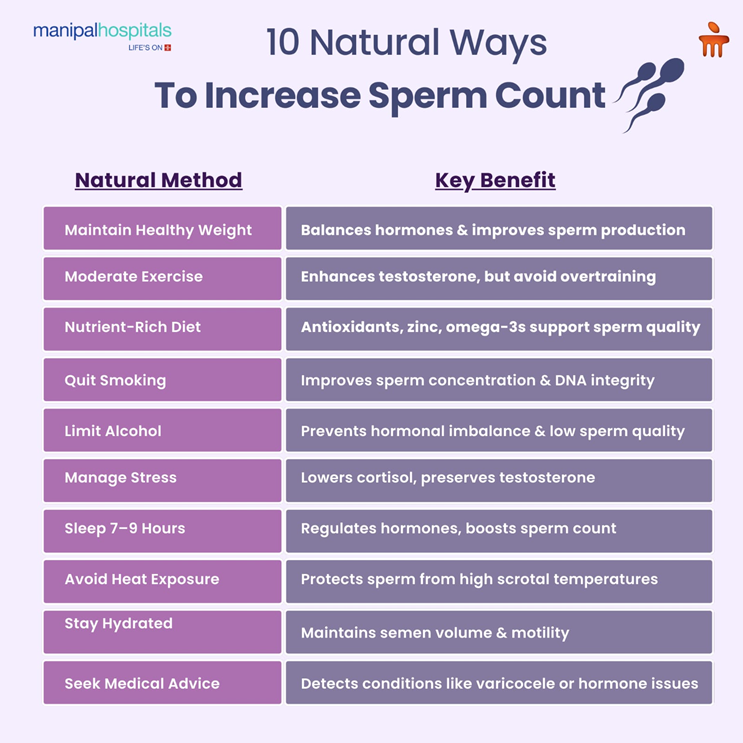
1. Get a Healthy Body Weight
Excess body fat can affect your hormone levels and decrease sperm production. Studies have shown that men who can reach a healthy body weight have improvements in sperm count and motility. Regular exercise and a proper diet (eating healthy, with lots of lean proteins, vegetables, and whole grains) can make a big difference. Even modest weight loss can help improve reproductive health, meaning it will be better in the long run to take the long-term sustainable plan than the quick-fix diet.
2. Moderate Physical Activity, Regularly
Physical activity will balance hormones and improve general wellness, both of which lead to better sperm quality. Moderate physical activity, like walking, biking, swimming, etc., for about 30 minutes a day, will be beneficial. On the flip side, overtraining, or excessive endurance training, increases stress hormones and decreases testosterone, leading to harmful outcomes. Consistency and balance are the name of the game.
3. Follow a Nutrient-Supportive Diet
A diet rich in nutrients supports sperm production. Food rich in antioxidants is best since they are rich in vitamin C, vitamin E, and selenium. Antioxidants protect the sperm. Food with zinc, including pumpkin seeds, beans, and lean meats, is essential to testosterone levels. Omega-3 fatty acids found in oily fish, walnuts, or flaxseeds help with sperm motility. One of the simplest recommendations for men who ask how to increase their sperm count is to decrease processed foods, sugar, and trans fat and concentrate on consuming fresh, whole foods.
4. Stop Smoking
Smoking has been associated with reduced sperm concentration, decreased motility, and potential DNA damage in sperm cells. The toxins in tobacco can affect blood flow and the hormonal environment of the body, both of which are important for sperm production and the environment. Stopping smoking can lead to improvements in sperm health in three months or less. Using available assistance (healthcare professional services, nicotine replacement products, etc.) at the start can help make the cessation journey easier and more effective.
5. Limit Alcohol Use
While social drinking should not impose any significant challenges to fertility, habitual drinking with resultant alcohol abuse does lower testosterone levels and the quality of sperm. Long-term heavy use of alcohol is also associated with hormonal imbalances, leading to less production of sperm. Cutting back or avoiding alcohol altogether can support reproductive health and improve overall energy levels. Replacing alcoholic drinks with hydrating alternatives like water, herbal teas, or fresh juices is a simple lifestyle shift that helps both fertility and general well-being.
6. Manage Stress Effectively
Stress makes your body produce stress hormones like cortisol, which inhibit testosterone and sperm production, and long-term stress can cause sexual health complications that can also impact fertility. A relaxation practice (meditation, deep breathing, or yoga) can help. Spending time in nature, engaging in hobbies, and socialising with friends can all help reduce stress. Stress management can help not only improve sperm count but also emotional and physical health.
7. Sleep Well
The quality and quantity of sleep can be undervalued when talking about reproductive health. Many studies show that men who sleep poorly usually have lower testosterone and poorer sperm quality. Searching out and getting 7–9 hours of good-quality sleep gives the body the opportunity to regulate hormones as well as have healthy sperm production. Simply establishing a consistent sleep schedule and developing a bedtime routine may be small but important changes.
8. Avoid Excessive Heat Exposure
Sperm production is highly sensitive to temperature. Frequent use of hot tubs, saunas, or even placing laptops directly on the lap can raise scrotal temperature, reducing sperm count. Men who are trying to improve fertility should minimise prolonged heat exposure in these areas. Wearing loose-fitting underwear and avoiding tight pants can also help maintain an optimal temperature for sperm health.
9. Stay Hydrated
Seminal fluid, which carries sperm, is largely made up of water. Dehydration can reduce semen volume, concentration, and sperm motility. Drink enough water throughout the day to ensure healthy semen production. Aiming for 2–3 litres daily, depending on activity levels and climate, is recommended. Replacing caffeinated or sugary drinks with plain water can provide additional benefits for both reproductive and overall health.
10. Seek Professional Help if Required
In rare cases, lifestyle changes are not enough. Disruptive conditions like varicocele, hormonal imbalance, or chronic health issues can obstruct male fertility. In those cases, you will need to see a doctor. Doctors can suggest tests, supplements, or treatments based on the individual's case. Manipal Hospital Sarjapur Road can provide advanced diagnostics and personalised care for men's fertility, so every patient is on the best path to grow sperm count and improve their reproductive health.
Conclusion
Male fertility issues are influenced by everyday habits and lifestyle. From diet to movement to sleep and stress management, making small changes and doing them consistently can go a long way to improving sperm health. If you have ever asked yourself how to increase sperm count, the list of 10 male fertility tips are practical and natural things to try. If you are experiencing fertility concerns or low sperm count, book an appointment with a doctors at Manipal Hospitals, Sarjapur Road for evaluation, advanced diagnostics, and personalised treatment support.
FAQ's
Sperm production follows a cycle of around 70–90 days. This means noticeable improvements from positive lifestyle changes—such as a healthy diet, exercise, and avoiding harmful habits—are usually seen after about 3 months of consistency.
Some supplements, like zinc, vitamin C, vitamin D, and CoQ10, may support sperm quality and overall reproductive health. However, they are not a one-size-fits-all solution and should only be taken under medical guidance to ensure safety and effectiveness.
Yes. Prolonged stress can disrupt hormone balance, lower testosterone, and negatively impact sperm production. Practicing stress-management techniques—such as regular exercise, adequate sleep, or mindfulness—can play an important role in maintaining fertility.
Not always. A lower sperm count can reduce the likelihood of conception but does not automatically mean infertility. Many men with low sperm counts are still able to father children, depending on other sperm parameters and overall reproductive health.
If you’ve been trying to conceive for a year without success (or six months if you or your partner are over 35), it’s best to consult a fertility specialist. Seeking medical advice earlier is also recommended if you have known health issues that may affect fertility.
Share this article on: