6 Min Read
Scrotal swelling can be concerning, particularly if it causes discomfort or interferes with daily activities. A hydrocele is a common and generally benign cause of painless scrotal swelling. Because hydroceles are often painless, many individuals delay seeking medical attention; however, prompt evaluation is important to rule out other conditions and ensure appropriate hydrocele treatment. Hydroceles can occur in infants, adolescents, and adult men. This article covers what a hydrocele is, its causes, symptoms, treatment options, and when surgery might be needed. It also explains what patients can expect before and after hydrocele surgery at a specialised urology centre.
Synopsis
What is a Hydrocele?
A hydrocele happens when clear fluid collects in the sac around the testicle, called the tunica vaginalis. This causes swelling in the scrotum and fluctuation in the size, particularly in communicating hydroceles.
There are many different types of hydroceles.
-
Congenital hydrocele: Occurs in infants due to the incomplete closure of the processus vaginalis.
-
Acquired hydrocele: Occurs in adults due to inflammation, trauma, infection, or lymphatic obstruction.
Getting the right diagnosis helps decide if simple treatment is enough or if surgery is needed.
Common Hydrocele Symptoms Patients Should Notice
Hydrocele symptoms often develop gradually and are typically mild in the early stages. Recognising these signs enables patients to seek timely evaluation and receive appropriate hydrocele treatment.
Some common signs of a hydrocele are:
-
Swelling of one or both sides of the scrotum that doesn't hurt.
-
A feeling of heaviness or dragging.
-
Pain when standing or walking for a long time.
-
The size of the swelling gets bigger over time.
-
In cases of inflammation, the scrotum may be mildly sore.
Causes and Risk Factors
Hydroceles develop when the scrotal sac produces excess fluid or fails to absorb it adequately. Several factors can contribute to this imbalance.
Some common reasons are:
-
Congenital persistence of the processus vaginalis.
-
Inflammation of the testicles, or epididymitis.
-
Injury to the scrotum.
-
Fluid buildup after surgery or an infection.
-
Filariasis causes lymphatic blockage in common areas.
-
Age-related deterioration of scrotal tissues.
Identifying the underlying cause assists in determining the most appropriate hydrocele treatment and whether surgical intervention or observation is indicated.
How Is Hydrocele Diagnosed?
Diagnosis of a hydrocele involves a physical examination and targeted imaging studies. Urologists typically assess scrotal swelling using the following methods:
-
Physical examination: The transillumination test frequently reveals fluid-filled swelling.
-
Scrotal ultrasound: Verifies fluid accumulation and excludes hernia, tumours, or testicular abnormalities.
-
Laboratory tests: Used when there is a chance of infection or inflammation.
These diagnostic tests help doctors decide between conservative management and surgical treatment.
When Is Hydrocele Surgery Needed?
Doctors recommend hydrocele surgery if the swelling gets large, causes pain, or affects how you look. Surgery is also needed if there might be other problems that cannot be ruled out.
Some reasons to have hydrocele surgery are:
-
Swelling getting bigger
-
Feeling uncomfortable or heavy all the time
-
Trouble walking or doing everyday things
-
Fluid accumulation that keeps happening after aspiration
-
Suspected concurrent hernia or testicular pathology
In such cases, timely surgical hydrocele treatment provides long-term relief and reduces the risk of recurrence.
What to Expect During Hydrocele Surgery
Patients undergoing hydrocele surgery receive comprehensive perioperative care from experienced urologists.
Before the Operation
-
Clinical evaluation: Physical examination and a comprehensive review of the patient's medical history.
-
Ultrasound imaging: Confirms the size of the hydrocele.
-
Blood tests and anaesthesia: Ensure the patient’s safety during surgery and recovery.
-
Preoperative counselling: Explains procedure, risks, and expected recovery outcomes.
During the Surgery
-
Anaesthesia: Administered regionally or generally, based on the patient's clinical profile.
-
Procedure: Making a small scrotal incision, draining the hydrocele fluid, and excising or repairing the sac to prevent recurrence.
-
Timeline: Lasts between 30 and 60 minutes.
Post Operation
-
Discharge: Generally on the same day or after a brief postoperative observation period.
-
Postoperative care: Management of mild swelling and administration of drugs.
-
Follow-up: Regular monitoring of healing and prevention of potential complications.
Treatment Approaches for Hydrocele
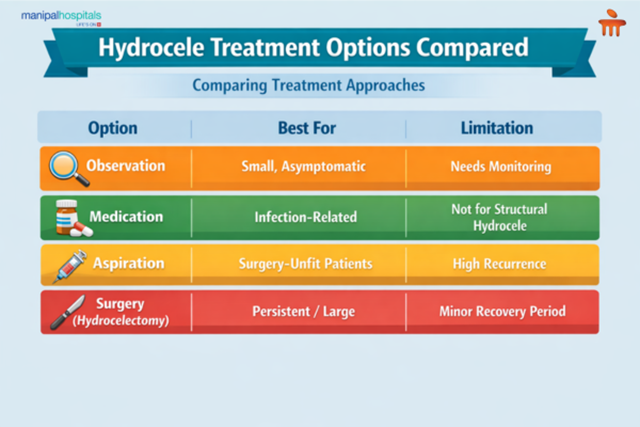
Management of a hydrocele depends on patient age, symptom severity, hydrocele size, and the underlying cause. While some cases remain stable without intervention, others require active treatment to prevent discomfort or complications.
Available treatment approaches include:
-
Observation: Small, asymptomatic hydroceles may only need periodic monitoring.
-
Medical management: Infections or inflammatory causes are treated with appropriate medication.
-
Aspiration with or without sclerotherapy: May be considered for selected adults who are unfit for surgery, though recurrence is common.
-
Hydrocele surgery (hydrocelectomy): The most effective and definitive treatment for persistent, enlarging, or symptomatic hydroceles.
Conservative hydrocele treatment may suit mild presentations; however, ongoing swelling, pain, or functional limitation usually warrants surgical correction.
When Should You Consult a Urologist?
Certain symptoms may indicate progression, complications, or an alternative diagnosis. Early review by expert urologists at Manipal, Sarjapur road, Bangalore to allow timely intervention and prevent avoidable risks. Seek medical attention if you notice:
-
Persistent or progressively enlarging scrotal swelling
-
Heaviness or discomfort limiting daily activities
-
Associated pain, redness, warmth, or fever
-
Previous scrotal injury or infection
-
Reappearance of swelling after earlier hydrocele treatment
Conclusion
A hydrocele is a common and typically benign condition characterised by fluid accumulation around the testicle, resulting in scrotal swelling. Mild cases can be managed with simple measures such as medical observation. However, symptomatic hydroceles are most effectively treated with hydrocelectomy, a safe and well-established surgical procedure. Modern techniques are minimally invasive, performed under anaesthesia, and usually allow same-day discharge.
Visit Urology at Manipal Hospitals Sarjapur Road, Bangalore patients benefit from advanced diagnostic facilities, expert surgical care, and personalised recovery plans tailored to ensure optimal outcomes and faster healing.
FAQ's
A hydrocele is fluid accumulation around the testicle within the tunica vaginalis. Doctors diagnose it using examination, transillumination, and ultrasound to confirm fluid and exclude hernia, tumour, or infection.
Hydrocele typically presents as painless scrotal swelling with heaviness, mild discomfort on standing, and gradual enlargement. Pain, redness, or fever are unusual and require evaluation for other causes.
Hydrocele surgery is recommended when swelling becomes large, painful, restricts movement, or recurs after aspiration. A hydrocele operation offers definitive treatment and helps prevent repeated fluid accumulation and long-term complications.
Recovery after a hydrocele operation typically takes about three to four weeks. Most patients resume light activities within a few days but should avoid heavy lifting and strenuous exercise until cleared at follow-up.
Hydrocele surgery at specialised centres on Sarjapur Road is routinely performed by experienced urologists, offering excellent outcomes, minimal complications, and low recurrence with appropriate surgical technique and aftercare.
Share this article on: