6 Min Read
Many people brush off stomach pain, nausea, or bloating after meals, thinking it's just a minor issue. However, for some, these symptoms can signal gallbladder stones, a common but sometimes serious problem. Spotting the signs early, getting checked by a doctor, and choosing the right treatment can help prevent complications like infection or pancreatitis. People of all ages can get gallstones, and they are often found by accident. This blog post talks about how gallbladder stones form, how they are diagnosed, the different treatment options for them, and when surgery is needed to remove them.
Synopsis
What Are Gallbladder Stones?
Gallbladder stones, commonly known as gallstones, are solid deposits that form from components of bile within the gallbladder. They usually consist of cholesterol, bile pigments, or a combination of both.
Many individuals remain asymptomatic. However, when stones obstruct bile flow or irritate the gallbladder, they can produce pain and other complications, making gallbladder stone treatment necessary. Recognising symptoms early helps clinicians determine whether observation or active intervention is the most appropriate approach.
Signs and Symptoms of Gallbladder Stones
Gallbladder stone symptoms may remain silent for long periods, but when they obstruct bile flow or irritate the gallbladder, characteristic symptoms can appear.
Common features include:
-
Sudden pain in the upper right abdomen
-
Pain that radiates to the back or right shoulder
-
Nausea and vomiting
-
Bloating or indigestion, particularly after fatty meals
-
In more severe cases, fever or jaundice
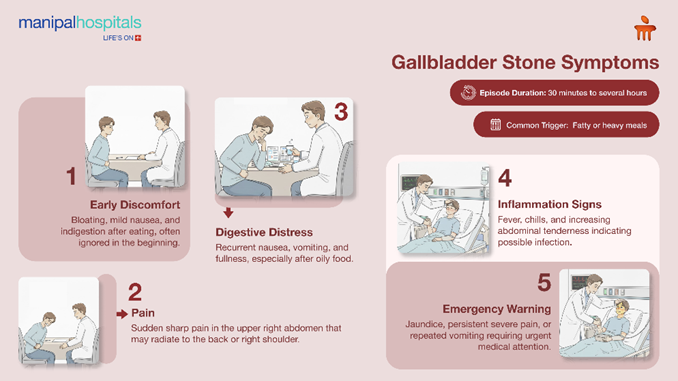
Many individuals notice discomfort within 30–60 minutes of eating rich or fatty food, while others may remain asymptomatic for years. Persistent, recurrent, or severe symptoms usually require further evaluation and may indicate the need for active treatment.
Gallbladder Stones Diagnosis
Accurate diagnosis is essential for selecting the most appropriate gallbladder stone treatment. Specialists evaluate symptoms, clinical findings, and imaging results to confirm the presence of stones and identify complications.
Diagnostic assessment commonly includes:
-
Abdominal ultrasound is the primary and most widely used test to detect stones and inflammation
-
Blood investigations to assess infection, liver function, and bile duct obstruction
-
CT scan or MRI in complex cases where additional anatomical detail is required
-
MRCP (Magnetic Resonance Cholangiopancreatography) is used when stones within the bile ducts are suspected
These investigations help determine the size, number, and location of stones, as well as their impact on surrounding organs. The findings guide doctors in planning the safest and most effective treatment strategy.
Gallbladder Stones Treatment Options
The best treatment for gallbladder stones depends on your overall health, your symptoms, and the type of stones you have.
|
Treatment Option |
How It Works / When Used |
|
Watchful Waiting & Lifestyle Care |
Doctors may suggest watchful waiting if stones don't cause any problems. Sometimes, changing your diet and controlling your symptoms can put off the need for active treatment of gallbladder stones. |
|
Medications (Oral Drugs) |
Oral bile acid medicines may dissolve small cholesterol stones, but they work slowly, and recurrence is common. The symptoms may recur once you stop taking the drugs. |
|
Laparoscopic or Robotic Surgery |
Minimally invasive removal of the gallbladder through small cuts. The most common and preferred method for recurring pain or complications. |
|
Open Surgery |
Traditional surgery with a larger incision is used only in complicated cases or when minimally invasive surgery isn’t possible. |
|
Post‑Treatment Care |
No major dietary changes are required. The only advice is to maintain good hydration and stick to follow-up schedules as advised by the doctor. |
Types of Gallbladder Stone Surgery
Advances in surgical practice have made treatment for gallbladder stones safer and more effective. Surgeons select the approach based on the patient’s condition, severity of inflammation, previous abdominal surgery, and overall health.
1. Laparoscopic or Robotic Cholecystectomy
This is the preferred and most commonly performed procedure. Surgeons remove the gallbladder through small incisions using specialised instruments and a camera. Compared with traditional surgery, patients typically experience:
-
Reduced postoperative pain
-
Shorter hospital stay
-
Faster return to normal activities
-
Minimal scarring
2. Open Cholecystectomy
Surgeons reserve open surgery for complex situations, such as severe infection, dense adhesions, unclear anatomy, or when minimally invasive access is unsafe. The procedure requires a larger incision but continues to be a dependable and effective option in selected situations. Both approaches offer definitive management, and with experienced surgical teams, most patients obtain durable relief from symptoms.
When Is a Gallbladder Stone Operation Needed?
Doctors recommend surgery when gallbladder stones produce persistent symptoms or lead to complications that may threaten health. While some stones remain silent, recurrent or severe episodes usually indicate the need for definitive treatment.
Surgical removal of the gallbladder (cholecystectomy) becomes appropriate in situations such as:
-
Repeated or intense pain attacks, especially when they interfere with daily activity
-
Development of infection or inflammation of the gallbladder (cholecystitis)
-
Blockage of the bile ducts, which can impair liver function
-
Occurrence of pancreatitis triggered by migrating stones
-
Worsening symptoms despite medical management
In these circumstances, postponing intervention can increase the likelihood of emergency events or further organ damage. Planned surgery offers a reliable solution, prevents recurrence, and reduces the risk of serious complications.
When Should You See a Specialist?
Timely consultation with a gastroenterologist or surgeon is important when symptoms suggest complications related to gallbladder stones. Delaying assessment can increase the risk of infection. bile duct obstruction, or inflammation of nearby organs. Seek medical advice from expert gastrologist at Manipal Hospitals, Sarjapur Road, Bangalore, if you notice any of the following:
-
Recurrent or worsening pain in the upper abdomen, particularly after meals
-
Fever accompanied by abdominal discomfort or chills
-
Yellowing of the eyes or skin (jaundice), which may indicate blockage of bile flow
-
Persistent nausea or vomiting, especially after eating fatty food
Early specialist evaluation helps confirm the diagnosis, assess severity, and determine whether medication, monitoring, or surgical removal of the gallbladder offers the safest and most effective treatment.
Conclusion
Gallbladder stones are common, but you should never ignore them if you have symptoms. If you want to avoid complications, it is important to recognise the signs of gallbladder stones, get a timely diagnosis in Sarjapur Road, Bangalore, and choose the right treatment. Surgery for gallbladder stones is a safe and effective long-term solution for patients with persistent or severe symptoms.
Consult the Gastrointestinal Science department at Manipal Hospitals Sarjapur Road, Bangalore where patients receive comprehensive care from advanced diagnostics to minimally invasive surgery and post-operative recovery support. This integrated approach helps ensure long-term digestive health and improved quality of life.
FAQ's
Gallbladder stones commonly produce upper abdominal pain, nausea, bloating, and discomfort after fatty meals. Some individuals may also experience indigestion, vomiting, or pain radiating to the back or shoulder.
Not all stones require surgery. If they remain asymptomatic, doctors may recommend observation. However, persistent pain, infection, or complications often make surgical treatment necessary for durable relief.
Surgery becomes necessary when gallstones lead to severe pain, infection, jaundice, or obstruction of bile flow. Removal of the gallbladder helps prevent recurrence and supports normal digestive function.
Doctors use ultrasound scans to find gallstones and blood tests to check how your liver and pancreas are working. These tests help confirm the diagnosis and decide on the best treatment.
Yes. Modern laparoscopic gallbladder surgery is considered safe and involves small incisions, leading to faster recovery, reduced postoperative pain, and minimal scarring. Experienced surgeons achieve excellent long-term outcomes.
Share this article on: