6 Min Read
Cholesterol has a bad reputation, but it’s not all the same. Some types of cholesterol help protect your heart, and understanding that difference is the main point of this article. Instead of panicking about a single number on a blood test, it helps to know what “good” cholesterol does, how it behaves in your body, and which everyday foods and habits support it. You’ll also learn the practical difference between HDL and LDL, and why raising HDL is useful, yet not a magic bullet. By the time you finish reading, you’ll have a clear, usable plan for choosing foods that increase HDL cholesterol and for spotting habits that chip away at it.
Synopsis
- What Is Good Cholesterol?
- Understanding the Difference Between HDL vs LDL Cholesterol
- Why Raising HDL Matters, and Its Limits
- How to Read HDL Numbers
- Foods That Increase HDL Cholesterol
- How to Use These Foods in Everyday Meals
- Habits That Lower HDL (and What to Do Instead)
- Practical Steps You Can Take Today
- When Food Changes Alone Aren’t Enough
- Conclusion
What Is Good Cholesterol?
Good cholesterol refers to high-density lipoprotein, or HDL. HDL is called “good” because it helps remove other types of cholesterol, notably low-density lipoprotein (LDL), from your bloodstream and takes it back to the liver, where it can be processed and eliminated. A higher HDL level is generally associated with a lower risk of heart attack and stroke, though it’s one part of a larger picture that includes LDL, triglycerides and other risk factors. Your clinician will interpret HDL alongside your overall risk and other lab numbers.
Understanding the Difference Between HDL vs LDL Cholesterol
LDL carries cholesterol to tissues (and to arterial walls when levels are high), which can lead to plaque formation over time. HDL helps reverse that process by shuttling cholesterol away from arteries and back to the liver. The difference between HDL and LDL cholesterol is apparent, but they both exist naturally, and both have roles; it’s the balance between them that matters for heart health. Clinicians often focus on lowering LDL and maintaining or raising HDL as part of a heart-healthy strategy.
Why Raising HDL Matters, and Its Limits
Higher HDL is usually a good sign, because observational studies show people with higher HDL tend to have fewer heart events. However, trials of drugs designed only to raise HDL have not consistently reduced heart attacks. That tells us HDL is helpful, but simply pushing one number up without improving overall cardiovascular health does not guarantee protection. The healthiest approach combines diet, activity, smoking cessation and control of other risks such as high blood pressure and diabetes.
How to Read HDL Numbers
Exact “normal” ranges can vary by lab and country, but as a general guide, clinicians often view HDL above 60 mg/dL (about 1.6 mmol/L) as protective, while levels below 40 mg/dL for men and 50 mg/dL for women raise concern. Your doctor will interpret your HDL alongside LDL, total cholesterol, triglycerides and your overall cardiovascular risk. If you have questions about your target numbers, discuss them with your cardiologist.
Foods That Increase HDL Cholesterol
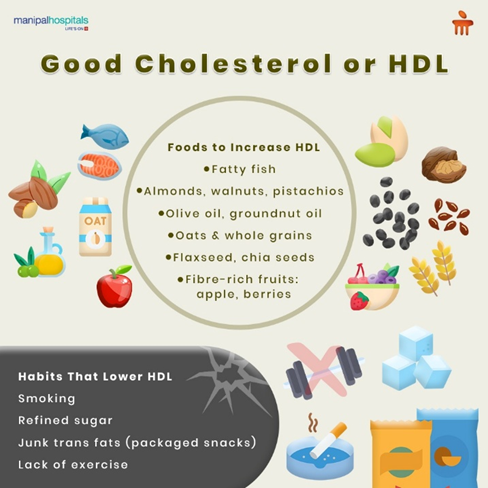
Diet won’t transform your HDL overnight, but certain foods and patterns reliably support healthier HDL levels and overall lipid profiles. Instead of chasing single “superfoods,” aim for a heart-healthy dietary pattern that includes these choices regularly. Below is a practical list of foods to include and why they help.
-
Fatty fish: salmon, mackerel, sardines and trout are rich in omega-3 fats that support healthy lipid profiles and may modestly raise HDL.
-
Almonds, walnuts, pistachios: tree nuts provide unsaturated fats and fibre; regular nut consumption is associated with improved cholesterol balance.
-
Olive oil and groundnut oil: these plant oils are high in monounsaturated fats that support HDL and reduce harmful LDL oxidation.
-
Oats and whole grains: whole grains add soluble fibre, which helps lower LDL and can indirectly improve HDL ratios.
-
Flaxseed and chia seeds: sources of fibre and plant omega-3s; they help overall lipid health.
-
Fibre-rich fruits: apples, berries and other fibre-rich fruits support blood-lipid balance and help lower LDL, improving the HDL-to-LDL relationship.
How to Use These Foods in Everyday Meals
A realistic approach beats extremes. Try these habits: include a portion of fatty fish two to three times weekly; add a handful of mixed nuts or a tablespoon of ground flaxseed to breakfasts; cook with olive oil instead of ghee or butter where possible; pick oats, barley or brown rice instead of highly refined white flour; and make berries or an apple your usual snack. These small changes accumulate and support good cholesterol without complex diets.
Habits That Lower HDL (and What to Do Instead)
Some common behaviours actively lower HDL or blunt its beneficial effects. Recognising these gives you straightforward targets for change.
-
Smoking: smoking consistently lowers HDL; quitting can raise HDL substantially over months.
-
Refined sugar and high-glycaemic diets: excess added sugars are linked to poorer lipid profiles.
-
Junk trans fats and processed snacks: Industrial trans fats lower HDL and raise LDL; avoid packaged foods with “partially hydrogenated” oils.
-
Sedentary lifestyle: lack of regular activity is associated with lower HDL; moderate exercise raises HDL over time.
Practical Steps You Can Take Today
If you want to support HDL in a sensible, evidence-based way, consider these measured steps. They are simple and safe for most people, but check with your clinician if you have a chronic disease or are on medication.
-
Move regularly: aim for a mix of aerobic activity and some resistance training; even brisk walking for 30 minutes most days helps.
-
Stop tobacco: quitting smoking is one of the most effective lifestyle steps to raise HDL.
-
Choose healthy fats: swap saturated fats for monounsaturated and polyunsaturated fats (olive oil, nuts, fatty fish).
-
Prioritise whole foods: whole grains, legumes, fruits and vegetables improve overall lipid balance.
-
Limit added sugars and processed snacks: these worsen triglycerides and the overall lipid picture.
-
Maintain a healthy weight: losing even a small amount of excess weight can improve HDL and lower LDL.
When Food Changes Alone Aren’t Enough
Some people have genetic or medical reasons for low HDL or high LDL that diet and lifestyle cannot fully fix. In those cases, doctors may prescribe medications, usually to lower LDL (statins, ezetimibe, PCSK9 inhibitors), because lowering LDL has a clear, proven benefit for reducing heart disease. Medications that simply raise HDL have not consistently reduced heart attacks, so clinicians focus on overall risk reduction rather than chasing HDL alone.
Conclusion
Good cholesterol, HDL, plays a helpful role in protecting the heart by carrying cholesterol away from the arteries. You can support HDL with sensible, sustainable choices: eat fatty fish, nuts, whole grains, olive oil and fibre-rich fruit; quit smoking; stay active; and avoid processed trans fats and excess sugars. These steps do more than nudge a number on a lab report; they improve how your whole cardiovascular system works. If your lipid numbers are concerning or you have multiple risk factors, consult our cardiologist at Manipal Hospitals Sarjapur Road, Bangalore, for a personalised plan that combines diet, lifestyle and medical treatments where needed.
FAQ's
Include fatty fish (salmon, mackerel), nuts (almonds, walnuts, pistachios), olive oil, oats and whole grains, flaxseed and fibre-rich fruits such as apples and berries. These choices support HDL and the overall cholesterol balance when used as part of a heart-healthy diet.
Yes. Regular aerobic exercise and resistance training can raise HDL modestly and improve overall lipid health. Consistency is more important than intensity for long-term benefits.
Not automatically. Doctors typically focus on lowering LDL and reducing overall cardiovascular risk because medications aimed solely at raising HDL have not consistently reduced heart attacks. Work with your cardiologist to decide the best approach for your specific risk profile.
Small improvements can appear in weeks to months. Smoking cessation, weight loss and regular exercise show measurable benefits within a few months, but sustained habits deliver the best long-term results.
Share this article on: