8 Min Read
A persistent sense of fullness or tightness in the stomach is an uncomfortable and often puzzling symptom, especially when it occurs even after consumption of a normal meal. Abdominal bloating is a common digestive problem that anyone may encounter at times. Frequent occurrence of bloating may be an indication of an underlying problem associated with digestion or diet. This blog explains the common triggers of bloating, abdominal bloating symptoms to watch for, and provides practical approaches to abdominal bloating treatment that can help restore digestive comfort.
Synopsis
What Is Abdominal Bloating?
It refers to a sensation of fullness, swelling, or tightness in the stomach area. In many cases, it occurs due to the build-up of gas in the digestive tract. However, bloating can also result from digestive disorders, food intolerances, hormonal changes, partial intestinal blockages or slow digestion.
If you feel bloated after a big meal, it's usually not a big deal. You might need to see a doctor and get the right abdominal bloating treatment if the symptoms don't go away. If you often get bloated and have pain, nausea, or changes in your bowel habits, it could be a sign of a digestive problem that needs to be checked out.
Common Causes of Abdominal Bloating
In order to effectively treat bloating of the abdomen, it is important to identify its causes. Several everyday habits and medical conditions may contribute to this problem.
Excess Gas in the Digestive System
Bacteria in the intestines break down food, which makes gas. Eating quickly, chewing gum, drinking soda, or swallowing air while you eat - all such factors contribute to this gas building up faster. This is one of the most common causes of abdominal bloating.
Food Intolerances
Some people have trouble digesting certain foods. People who are gluten sensitive, lactose intolerant, or intolerant to some carbohydrates may have gas, pain, and swelling in their stomachs. Making the right changes to your diet is often an important part of abdominal bloating treatment.
Constipation
When you don't have a bowel movement very often, or it hurts to go, stool builds up in the colon. This buildup can cause gas to stay in the body and pressure in the stomach, which can make you feel bloated.
Overeating
When you eat too much at once, your stomach gets bigger, and it takes longer to digest. This could make you feel bloated and hurt for a short time, especially after eating foods that are heavy or greasy.
Irritable Bowel Syndrome (IBS)
IBS is a common digestive problem that causes stomach pain, changes in bowel habits, and frequent bloating. A structured plan for abdominal bloating treatment, which includes changes to your diet and lifestyle, is often necessary to manage IBS.
Hormonal Changes
Hormonal changes during the menstrual period can cause water retention and digestive changes, which may result in temporary bloating in many women. Additionally, hormonal factors can cause further issues that directly lead to bloating, such as slower digestion due to progesterone, water retention during the pre-menstruation phase, and PMS.
Small Intestinal Bacterial Overgrowth (SIBO)
In this condition, excessive bacteria build-up in the small intestine leads to excessive gas while the body digests food. This can cause stomach bloating that doesn't go away easily.
Knowing the causes of abdominal bloating can help people take steps to avoid it and get the right treatment when they need it.
Abdominal Bloating Symptoms
Although bloating is often described as a simple sensation of fullness, several associated signs may occur. Recognising abdominal bloating symptoms early helps determine whether lifestyle adjustments or medical care are necessary.
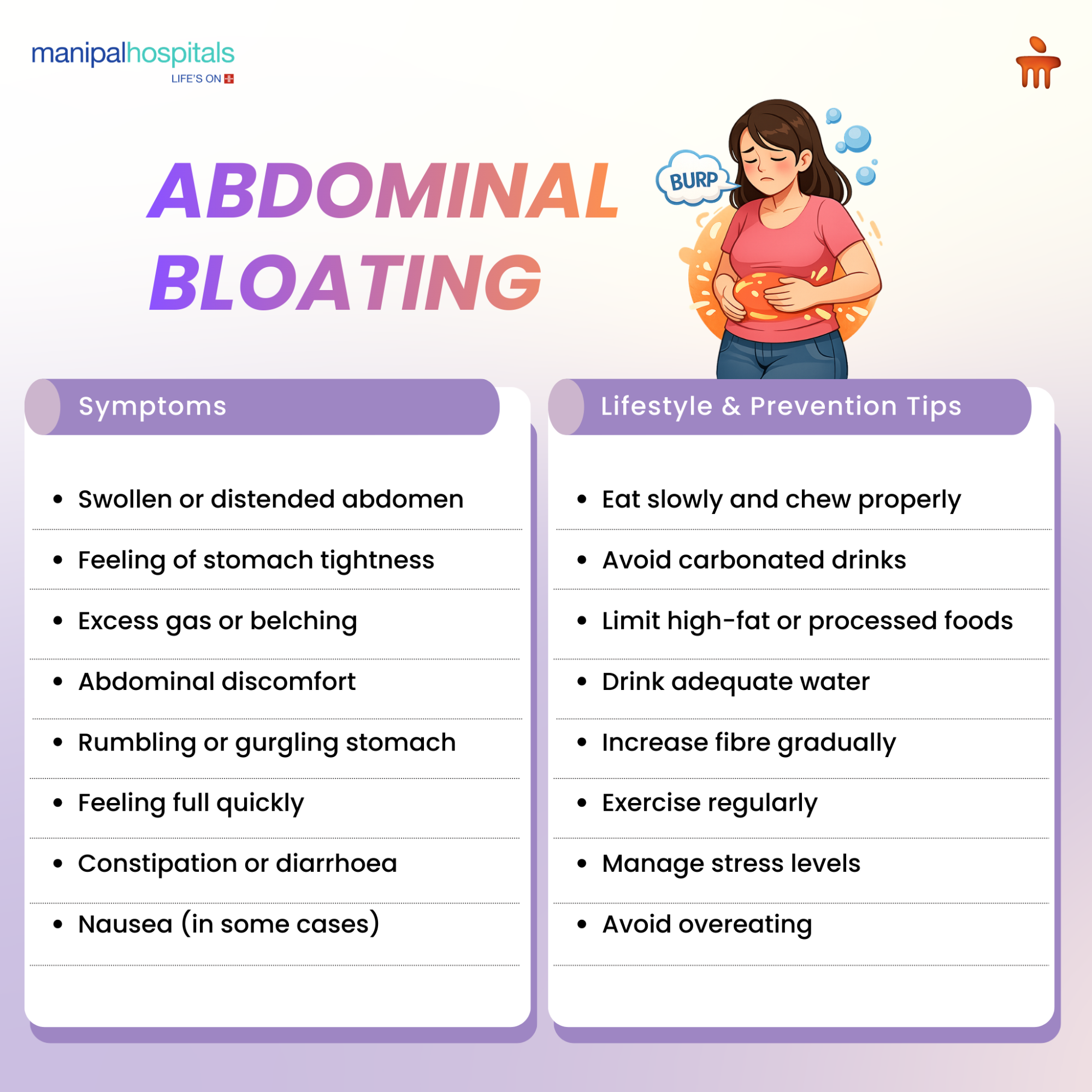
Common abdominal bloating symptoms include:
-
A swollen or distended abdomen
-
Feeling of tightness or pressure in the stomach
-
Excessive gas or belching
-
Abdominal discomfort or mild pain
-
Rumbling or gurgling sounds in the stomach
-
A feeling of fullness even after small meals
Sometimes, abdominal bloating symptoms can also include constipation, diarrhoea, or nausea. If your symptoms last for more than a few weeks or get worse over time, you should see a doctor for the right abdominal bloating treatment.
How Abdominal Bloating is Diagnosed
When abdominal bloating occurs frequently or does not improve with dietary and lifestyle changes, doctors may recommend a detailed evaluation to identify the underlying cause. The diagnostic process usually begins with a discussion about symptoms, eating habits, medical history, and bowel patterns.
On the basis of this assessment, tests may be recommended by doctors. Blood tests may be conducted to identify any signs of inflammation or infection, or even celiac disease. Breath tests may be conducted to identify lactose intolerance or small intestinal bacterial overgrowth. Ultrasound or CT scans may be conducted to identify structural abnormalities in the abdomen. Procedures like endoscopy or colonoscopy may be recommended to identify digestive disorders.
Effective Abdominal Bloating Treatment Options
The treatment for bloating depends on what is causing it. Long-term relief can come from a mix of changes to your diet, your lifestyle, and your medical care.
1. Dietary Modifications
Diet is a big part of dealing with bloating. Some foods can make you gassy or slow down your digestion.
Some simple ways to eat better are:
-
Reducing carbonated drinks
-
Limiting high-fat and heavily processed foods
-
Identifying food intolerances through elimination diets
-
Increasing fibre intake gradually
These changes often form the foundation of abdominal bloating treatment and can significantly improve digestive comfort.
2. Eating Habits and Lifestyle Changes
How you eat can influence digestion as much as what you eat.
-
Healthy practices that help with abdominal bloating treatment include:
-
Eating slowly and properly chewing food
-
Eating smaller meals frequently rather than large quantities of food
-
Avoid talking when eating to prevent swallowing air
-
Engaging in physical activity to improve digestive functions
-
Exercise helps improve bowel movements and gas release.
3. Hydration and Fibre Balance
Drinking water helps move food through the digestive system easily. Drinking more water with a balance of fibre helps with constipation and bloating.
4. Medications and Medical Management
In some cases, medication may be prescribed to improve digestive functions or decrease the production of gas. Treatment for medical abdominal bloating may include:
-
Digestive enzyme supplements
-
Probiotics to improve gut bacteria balance
-
Anti-gas medications
Treatment for underlying conditions, such as IBS or infections
A healthcare professional will recommend the appropriate therapy depending on the diagnosis.
5. Managing Stress
Stress can influence digestive health by affecting gut motility and increasing sensitivity in the gastrointestinal tract. Relaxation methods like yoga, meditation, and breathing exercises may support abdominal bloating treatment by improving gut function.
6. Personalised Medical Evaluation
When symptoms persist or worsen, professional evaluation is important. A specialist may recommend tests such as blood tests, stool tests, imaging, or endoscopy to determine the underlying cause and develop an appropriate abdominal bloating treatment plan.
Preventing Abdominal Bloating
Prevention strategies can reduce the frequency of bloating episodes and improve digestive health.
Key preventive measures include:
-
Keeping a balanced diet rich in nutrients and fibre
-
Avoiding overeating and heavy late-night meals
-
Drinking adequate water throughout the day
-
Engaging in regular physical activity
-
Managing stress and maintaining consistent sleep patterns
These habits can help with treating bloating in the stomach and keep digestive problems from coming back.
When to Seek Medical Attention
Occasional bloating is usually harmless. However, certain symptoms may indicate a more serious digestive issue.
Seek medical advice from Best gastro specialists in Sarjapur Bangalore, if bloating occurs with:
-
Severe abdominal pain
-
Persistent vomiting
-
Unexplained weight loss
-
Blood in stool
-
Frequent diarrhoea or constipation
-
Difficulty eating or swallowing
An immediate medical checkup ensures that serious problems are not present and that the right treatment for abdominal bloating is given.
Conclusion
Abdominal bloating is a common digestive concern that can affect people of all ages. While some occurrences of bloating may be caused by dietary habits or short-term alterations in digestion, some long-term occurrences of bloating may be an indication of underlying health conditions. Knowing the causes of abdominal bloating, as well as identifying abdominal bloating symptoms, can help people take proactive steps to finally find relief from the condition. Those looking for the best gastroenterology hospital in Sarjapur Road, Bangalore, can get in touch with our experts at Manipal Hospital Sarjapur Road.
FAQ's
Drinking water is essential for digestion. However, drinking a lot of water in a short time can stretch the stomach, causing a feeling of fullness. This is a short-term effect, which goes away after digestion.
Many people notice bloating becoming more noticeable later in the day. This is possible since gas tends to build up in the intestines as food is being digested throughout the day, and the abdominal muscles may also relax due to prolonged sitting or inactivity.
Yes, it is possible that certain medications may contribute to bloating as a side effect. Pain relievers, diabetes drugs, antibiotics, and drugs that affect bowel movements may contribute to increased gas or slowed digestion.
Digestive processes may slow slightly with age, and changes in gut bacteria can occur over time. These factors may make older adults more prone to gas accumulation, constipation, and bloating.
Yes. Exercise tends to stimulate intestinal contractions that help move food and gas through the digestive tract. A lack of physical activity may slow down digestion, causing gas to accumulate.
Share this article on: