8 Min Read
Bone and joint pain are common complaints that can impact daily life, limit mobility, and reduce overall quality of life significantly. From a persistent ache to sharp, debilitating sensations- the experience of musculoskeletal discomfort is widespread. Understanding the causes of bone and joint pain helps identify the most appropriate treatment options and lifestyle changes for effective relief. Early awareness also allows timely medical care, improving mobility and preventing long-term complications. This article delves into the several reasons why bones and joints hurt, how these conditions are diagnosed, and the effective treatment options available.
Synopsis
Why do bones and joints hurt?
To know exactly what causes bone pain, one has to consider the complexity of the human skeletal and muscular systems. Pain can arise from a multitude of factors; hence, identifying the specific cause is the first step towards effective treatment.
-
Arthritis - This is the primary cause of bone and joint pain. This includes:
-
Osteoarthritis (OA) - A degenerative arthritis, where cartilage wears down
-
Rheumatoid Arthritis (RA) - An autoimmune disease that causes joint inflammation
-
Other joint conditions - Issues like Psoriatic Arthritis, Gout, and Ankylosing Spondylitis also contribute to severe bone and joint pain.
-
-
Injuries - Direct trauma is one of the common bone pain causes. These could be:
-
Fractures - Breaks or cracks in the bone or a shattered bone
-
Sprains and strains - Injuries affecting the ligaments or muscles/tendons
-
Tendonitis and Bursitis - Types of inflammation that are often caused by overuse or repetitive strain (common in athletes)
-
-
Infections - Bacterial or viral infections can affect bones (Osteomyelitis) or joints (Septic Arthritis).
-
Nutritional deficiencies - Lack of essential vitamins and minerals leads to weaker bones. Vitamin D and Calcium deficiencies can lead to bone softening or osteoporosis.
-
Osteoporosis - Affected bones become brittle and fragile but remain painless until a fracture occurs. It is counted among the significant backbone pain causes, which is felt suddenly due to vertebral compression fractures.
-
Other medical conditions - Fibromyalgia, certain cancers, and nerve impingement, like sciatica, can also manifest as bone and joint discomfort.
What are the symptoms of bone and joint pain?
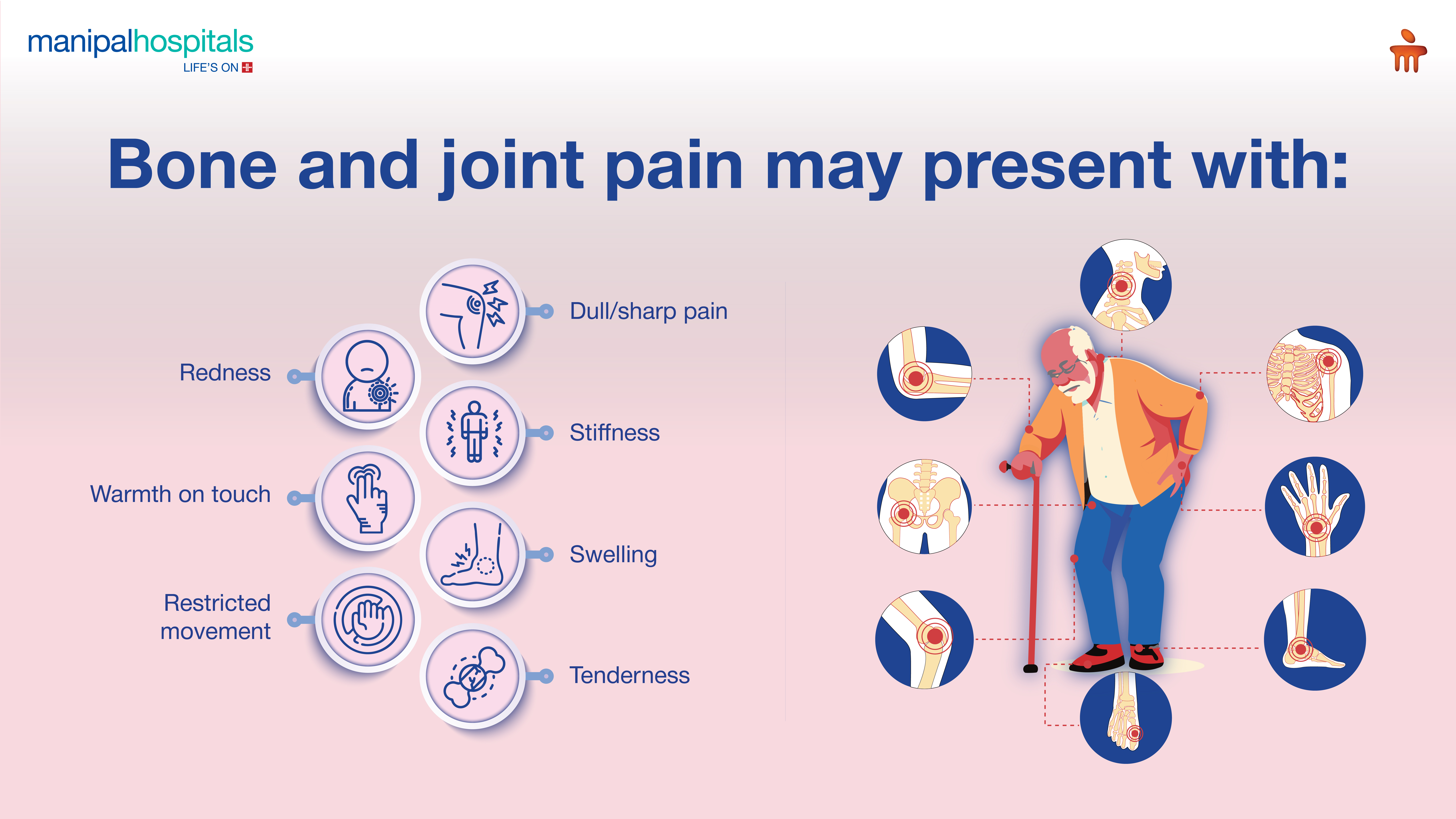
While pain is the primary symptom, bone and joint problems often present with additional signs in the affected area that may indicate underlying inflammation, injury, or degenerative conditions requiring proper evaluation and care, these symptoms are:
-
Persistent ache or sharp pain - Bone and joint pain may feel like a constant dull ache or sudden sharp discomfort, often worsening with movement, pressure, or physical activity.
-
Stiffness - Stiffness usually occurs after periods of inactivity, such as in the morning or after sitting for long durations, making initial movement difficult.
-
Swelling, tenderness, redness, and warmth - Inflammation around the joint may cause swelling, sensitivity to touch, redness, and a warm sensation in the affected area.
-
Reduced range of motion - Joint issues can restrict normal movement, making it harder to bend, stretch, or perform regular activities comfortably.
How are bone and joint conditions diagnosed?
Accurate diagnosis is paramount for identifying the exact cause of bone and joint pain and guiding appropriate treatment. Specialists often use a comprehensive, multi-faceted approach that includes detailed medical history, physical examination, and relevant diagnostic tests to ensure precise evaluation.
-
Medical history - A detailed assessment of the patient’s symptoms, medical background, and lifestyle factors helps doctors understand the probable causes of bone and joint pain.
-
Physical examination - A thorough physical evaluation allows the specialist to check the affected area for signs of discomfort, movement limitations, or structural abnormalities.
-
Imaging tests - Doctors often advise imaging tests like X-rays for bone structure, MRI for soft tissues (crucial for understanding what causes bone pain beyond fractures), and DEXA scans for osteoporosis diagnosis.
-
Laboratory tests - A few blood tests may be run to check inflammatory markers, autoimmune antibodies, infection indicators, and nutrient levels.
What are the effective treatment options?
Treatment for bone and joint pain is tailored to the specific diagnosis, underlying cause, and severity of the condition. The primary goal should be to relieve pain, restore mobility, improve joint function, and enhance overall quality of life through appropriate and personalised care. The different approaches are:
-
Medications - This includes pain relievers, anti-inflammatory drugs, disease-modifying antirheumatic drugs (DMARDs) for inflammatory conditions, and bone-strengthening medications for osteoporosis.
-
Physical therapy and rehabilitation - As the cornerstone of treatment, this helps to strengthen muscles, improve flexibility, and restore range of motion.
-
Lifestyle modifications - Weight management, regular low-impact exercise, and a diet rich in Vitamin D and calcium can make a difference.
-
Injections - Corticosteroid injections offer temporary relief from pain and inflammation, while visco-supplementation can improve joint lubrication.
-
Surgical interventions - For severe cases, options include arthroscopy, joint replacement surgery (arthroplasty) with high success rates, and spinal surgery for causes of severe back bone pain, like herniated discs.
Care Essentials
Proper care and lifestyle habits play a key role in managing bone and joint pain and preventing further discomfort. Following certain guidelines can help protect your joints, reduce strain, and support better mobility in daily life.
-
Maintain a healthy weight and engage in regular, low-impact exercise
-
Maintain good posture, especially for back bone pain
-
Seek timely medical advice for persistent pain
-
Never ignore a persistent pain or push through severe discomfort
-
Do not try self-medication without a proper diagnosis
-
Avoid lifting heavy objects improperly, as it can exacerbate pain in the backbone
Conclusion
Bone and joint pain can affect daily life, but timely evaluation and proper management can significantly improve comfort and mobility. Understanding the causes and seeking appropriate care can help maintain joint health and support a better quality of life.
At Manipal Hospitals, we understand the profound effect that such pain can have, and our mission is to provide comprehensive, empathetic care to help you regain comfort and function. If you are experiencing these symptoms, it is crucial to seek timely medical advice. Consult the experts in orthopaedics at Manipal Hospitals Mukundapur for fast and precise diagnosis, followed by comprehensive multidisciplinary care tailored to your needs.
FAQ's
You should consult a doctor if the pain persists for several days, worsens over time, or is accompanied by swelling, stiffness, or difficulty moving the joint. Early medical evaluation helps identify the cause and prevent potential complications.
No, while ageing can increase the risk of joint problems, bone and joint pain can occur at any age. Injuries, inflammatory conditions, infections, or repetitive strain may also lead to pain in younger individuals.
Yes, poor posture can place excessive strain on bones, joints, and muscles over time. Maintaining proper posture while sitting, standing, and lifting objects can help reduce stress on joints and prevent long-term discomfort.
Yes, poor posture while sitting, standing, or working for long hours can put extra stress on bones and joints. Over time, this strain may lead to discomfort in the neck, back, shoulders, and hips.
Although not all cases are preventable, regular exercise, a healthy diet, proper body mechanics, and avoiding excessive strain on joints can significantly reduce the risk of developing bone and joint problems over time.
Share this article on: