Back pain that keeps coming back, stiffness that does not settle easily, or a feeling that the lower spine is not quite as stable as it used to be can be frustrating and worrying. Sometimes the discomfort starts after an activity, sometimes it appears gradually, and in many cases, it is difficult for a person to explain exactly what feels wrong. When these symptoms are linked to a defect in one of the small bones of the spine, the condition may be lytic spondylolisthesis. This is a spine condition that often develops slowly and may affect people differently depending on their age, activity level, and degree of nerve involvement. For some, the main complaint is lower back pain. For others, the pain may spread into the buttocks or legs, especially when standing or walking for long periods. Although the name sounds complex, the condition itself becomes easier to understand once you know how it develops and why it causes pain.
This blog explains what lytic spondylolisthesis is, what usually leads to it, how the symptoms appear, and what doctors consider when planning lytic spondylolisthesis treatment. It also discusses when lytic spondylolisthesis surgery may be needed and what patients can do in daily life to reduce strain on the spine.


What Is Lytic Spondylolisthesis?
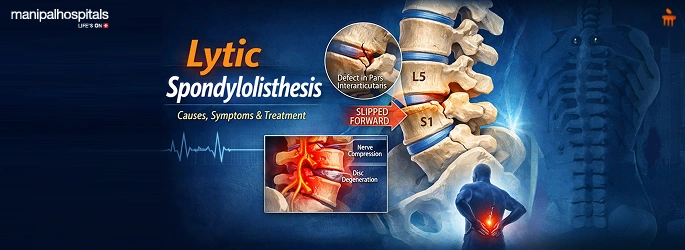
To understand what lytic spondylolisthesis is, it helps to break the term into parts. “Lytic” refers to a defect or break in a small area of bone in the spine, usually in a part called the pars interarticularis. “Spondylolisthesis” means that one vertebra slips forward over the one below it.
So, lytic spondylolisthesis happens when a stress-related defect in the bone allows one spinal bone to shift out of its normal position. This can make the lower spine feel painful, stiff, or unstable. If the slip becomes significant, nearby nerves may also become irritated, which can lead to pain travelling into the legs.
This condition often affects the lower back, especially the L5-S1 level, because that area carries a lot of mechanical load. It is commonly seen in people who have repeated stress on the spine over time, although it can also be linked to earlier spinal changes or injuries.
Common Causes of Lytic Spondylolisthesis
There are several reasons lytic spondylolisthesis may occur, and in many patients, it develops over time rather than from a single event.
Common contributing factors include:
-
Repeated stress on the lower spine, especially during sports or activities that involve frequent bending, twisting, or extension
-
A defect in the pars interarticularis, which weakens the support structure of the vertebra
-
Previous stress fractures that did not heal fully
-
Long-term strain from posture, lifting, or physical work
-
Genetic or structural factors that may make some people more prone to spinal instability
In younger people, this condition may be noticed after years of physical activity. In adults, it may become more obvious when the spine begins to tolerate stress less effectively. That is why the symptoms can appear at different stages of life, even if the underlying weakness has been present for some time.
Symptoms of Lytic Spondylolisthesis
The symptoms of lytic spondylolisthesis vary greatly from person to person. Some people may be suffering from the problem and not know it, while others may find it difficult to stand up for more than a few minutes.
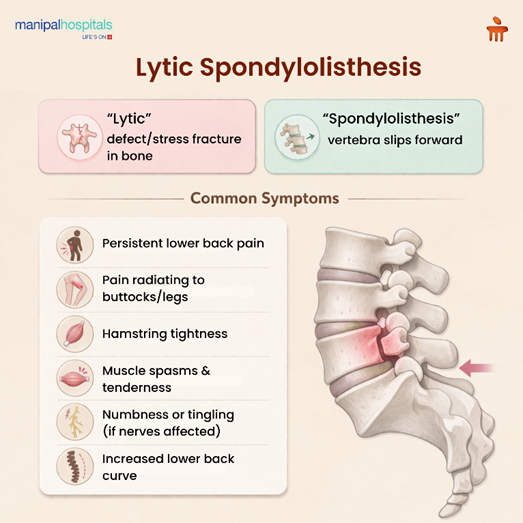
The common symptoms of lytic spondylolisthesis include:
-
Persistent Lower Back Pain: This is the most common symptom of lytic spondylolisthesis. The pain is often described as a deep muscle ache and it often improves with rest and worsens with activity.
-
Hamstring Tightness: This is one of the more unique symptoms of lytic spondylolisthesis. The hamstring muscles, which are located at the back of your legs, may be extremely tight and alter your gait.
-
Nerve Pain or Sciatica: If the bone slips and presses against a nerve, you may feel pain, numbness, and tingling that travels down into your buttocks and legs.
-
Increased Curvature of the Spine: If the lytic spondylolisthesis is more severe, the lower back area of your spine may appear to be curving inward too far, and your abdomen may protrude outward.
-
Tenderness and Spasms: Muscles in the area of the slippage often go into spasm in an effort to stabilise the spine and hold everything together. This often results in muscle spasms and tenderness over the area of the lytic spondylolisthesis.
How Doctors Confirm the Diagnosis
A proper diagnosis starts with a detailed medical history and physical examination. The doctor will usually ask about the location of the pain, what makes it worse, whether it improves with rest, and whether the pain spreads into the legs.
The evaluation often includes:
-
A physical examination to check posture, flexibility, and areas of tenderness
-
Assessment of strength and reflexes if nerve symptoms are present
-
X-rays to look for vertebral slippage and spinal alignment
-
MRI or CT scans if more detail is needed about the disc, nerves, or bone defect
Understanding "What is lytic spondylolisthesis?” from a diagnostic point of view is important because treatment depends not only on the amount of slippage but also on whether the nerves are being affected and how much the condition is limiting daily life.
Non-Surgical Lytic Spondylolisthesis Treatment Options
For many patients, lytic spondylolisthesis treatment begins without surgery. The goal is to reduce pain, improve stability, and protect the spine from further stress.
-
Rest and activity modification - Temporary reduction in high-impact activity may help the back settle. This does not mean complete inactivity, but rather avoiding movements that repeatedly trigger pain.
-
Physiotherapy - Guided exercises are often a key part of lytic spondylolisthesis treatment. Physiotherapy can strengthen the muscles that support the spine, improve posture, and reduce strain on the lower back. Core strengthening is often especially helpful.
-
Pain relief medicines - Doctors may recommend medicines to help reduce pain and inflammation. These may be used for short-term symptom control while the rest of the treatment plan is being followed.
-
Bracing in selected cases - Some patients may benefit from a support brace, particularly if the doctor feels the spine needs extra stability for a period of time.
These measures may not reverse the bone defect itself, but they can make a real difference in comfort and function when used consistently.
When Lytic Spondylolisthesis Surgery Is Needed
Most people with lytic spondylolisthesis do not need immediate surgery, but lytic spondylolisthesis surgery may be considered when symptoms remain significant despite non-surgical care.
Surgery may be discussed if:
-
Pain continues even after proper conservative treatment
-
Walking, work, or sleep is being affected
-
Numbness, tingling, or weakness is getting worse
-
The spinal slip is progressing
-
The nerves are under pressure, and the symptoms are not improving
The type of lytic spondylolisthesis surgery recommended depends on the severity of the slip and whether there is nerve compression or instability. In some cases, surgery may aim to decompress the nerves, stabilise the spine, or both.
It is important to understand that surgery is usually not the first step for everyone. It is generally reserved for people who are not getting enough relief from other methods or whose condition is affecting daily function in a major way.
Lifestyle Changes to Support Recovery
Living with lytic spondylolisthesis often means learning how to move in ways that do not overload the lower back. Small, consistent habits can help a great deal.
Helpful daily steps include:
-
Avoiding repeated back extension movements if they worsen pain
-
Keeping the core muscles active through doctor-approved exercises
-
Using the correct lifting technique and avoiding sudden twisting
-
Taking breaks from long periods of standing or sitting
-
Choosing supportive footwear during long days on the feet
-
Following the physiotherapy plan regularly rather than only when pain is severe
These habits do not replace lytic spondylolisthesis treatment, but they often support recovery and help reduce flare-ups.
Warning Signs That Need Medical Attention
You should seek medical review if lower back pain keeps returning, begins to spread, or starts affecting daily movement. It is especially important to get checked if you notice:
-
Pain that is not improving with rest
-
Leg symptoms such as tingling, numbness, or weakness
-
Difficulty standing or walking for long periods
-
Pain that is getting worse over time
-
Changes in balance or mobility
A timely evaluation can help identify the condition earlier and guide the right lytic spondylolisthesis treatment before symptoms become more limiting.
Conclusion
Lytic spondylolisthesis is a condition that can cause persistent lower back pain, stiffness, and sometimes leg symptoms, especially when the spine becomes less stable or nearby nerves are affected. Understanding what lytic spondylolisthesis is makes it easier to see why the condition develops and why treatment needs to be tailored to the person, not just the scan result. Consulting a specialist for a comprehensive evaluation of lytic spondylolisthesis at Manipal Hospitals can provide you with a clear path forward. With expert guidance and personalised care, you can ensure your spine remains strong and stable for years to come.