8 Min Read
A couple may spend months trying for a pregnancy without realising that male reproductive health could be linked to their difficulty. In many households, fertility conversations still focus mainly on women, even though male-related factors contribute to a large number of infertility cases worldwide. Because the topic remains sensitive, many men delay testing or avoid discussing symptoms until frustration builds over time.
Doctors working in urology clinics often notice that men arrive only after repeated failed conception attempts. Some are completely healthy otherwise. Some note that symptoms, which doctors have overlooked for decades, include a decreased sex drive, swelling around the testicles, or hormonal issues. Some forms of infertility may be temporary and treatable, whereas others are chronic conditions.
Identifying early signs of male infertility, identifying causes of male infertility, and consulting with physicians can dramatically help improve reproductive potential. With modern science and medicine providing many methods, starting from changing one’s lifestyle to advanced reproduction techniques, it is important to understand the reasons, diagnostics, treatment modalities, and possible solutions to male infertility. This blog explains everything you need to know about the causes of male fertility issues, how doctors diagnose them, and the most effective treatments available today.
Synopsis
- Common Male Infertility Symptoms
- Understanding the Causes of Male Infertility
- Lifestyle Habits That Affect Sperm Quality
- How Male Infertility Is Diagnosed
- Understanding Semen Analysis Results
- Treatment and Surgical Solutions
- Assisted Reproductive Techniques
- Diet, Prevention, and Emotional Health
- When to Consult a Specialist
- Conclusion
Common Male Infertility Symptoms
While many men experience no visible outward signs of fertility issues at all, certain warning signals can suggest an underlying reproductive problem. It is vital to pay attention to your body, as catching these issues early significantly boosts the success of any treatment.
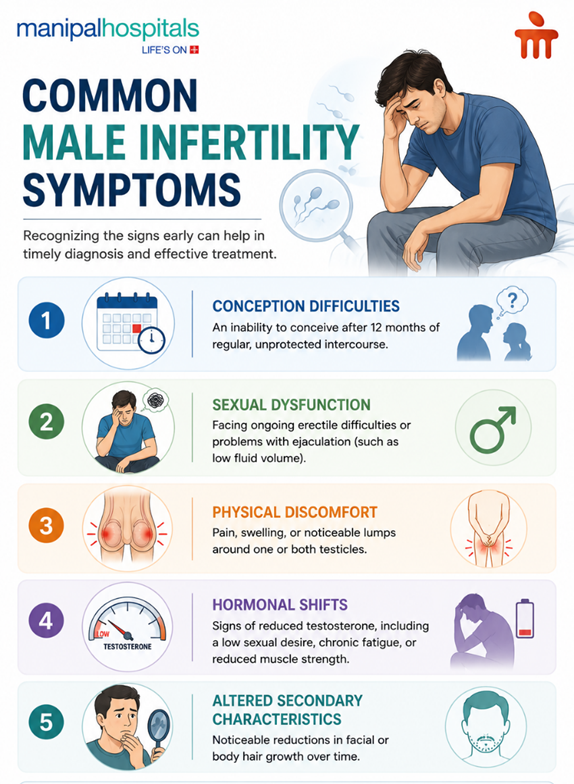
Typical symptoms include the following:
-
Conception difficulties: An inability to conceive after 12 months of regular, unprotected intercourse.
-
Sexual dysfunction: Facing ongoing erectile difficulties or problems with ejaculation (such as low fluid volume).
-
Physical discomfort: Pain, swelling, or noticeable lumps around one or both testicles.
-
Hormonal shifts: Signs of reduced testosterone, including a low sexual desire, chronic fatigue, or reduced muscle strength.
-
Altered secondary characteristics: Noticeable reductions in facial or body hair growth over time.
Understanding the Causes of Male Infertility
There is rarely a single, simple explanation for male fertility challenges. Instead, issues generally stem from one of three areas: production quality, structural blockages, or systemic health.
Sperm Production and Quality Issues
The most common culprits involve problems with how sperm develop and perform:
-
Low Sperm Count (Oligozoospermia): Producing fewer sperm than the standard threshold required for reliable conception.
-
Subpar Motility (Asthenozoospermia): Sperm that cannot swim efficiently through the female reproductive tract to reach the egg.
-
Abnormal Morphology (Teratozoospermia): Sperm with structural defects (malformed heads or tails) that prevent them from penetrating an egg.
Structural and Medical Conditions
-
Varicocele: Swollen veins inside the scrotum, a lot like varicose veins in the legs. This is the most common treatable cause of low sperm counts because it overheats the testicles and messes with blood flow.
-
Duct Blockages: Physical blocks or narrow spots in the reproductive tubes that stop sperm from mixing into the semen before ejaculation.
-
Infections & Genetics: Past bacterial infections, STIs, or genetic conditions that disrupt normal hormone levels and sperm production.
Lifestyle Habits That Affect Sperm Quality
Your daily routine impacts sperm health far more than you might think. Between chronic stress, sitting all day, and running on poor sleep, modern life can easily take a toll on your fertility.
-
Scrotal Overheating: The testicles sit outside the abdominal cavity because they need to stay about 2°C cooler than the rest of the body to produce healthy sperm. Spending hours with a hot laptop on your lap, taking frequent hot baths, or wearing tight underwear can raise testicular temperatures enough to slow down sperm production.
-
Substance Use: Smoking cigarettes introduces toxins that damage sperm DNA. Drinking heavily or using recreational drugs also lowers testosterone levels.
-
Weight and Stress: Carrying extra weight throws hormones out of balance, sometimes converting testosterone into oestrogen. On top of that, constant stress floods your body with cortisol, which disrupts the signals your brain sends to produce sperm.
How Male Infertility Is Diagnosed
Urologists begin assessment with a detailed medical history and physical examination. The history involves information about their illnesses in the past, surgeries, medications, and lifestyle practices that might affect fertility.
Test types may include:
-
Semen analysis
-
Hormone tests in blood
-
Imaging scans using ultrasound technology
-
Genetic tests
-
Bacteria tests
One of the most critical tests in fertility testing for men is semen analysis, where semen is analysed in terms of number, motility, and quality.
Understanding Semen Analysis Results
A semen analysis helps identify reproductive abnormalities affecting fertility.
|
Test Component |
Purpose |
Why It Matters |
|
Sperm Count |
Measures the overall quantity of sperm per millilitre of fluid. |
Low counts may reduce conception chances |
|
Motility |
Evaluates the percentage of sperm moving forward effectively. |
Poor movement affects fertilisation |
|
Morphology |
Evaluates the exact shape and size structure of the sperm cells. |
An abnormal structure may lower fertility |
|
Semen Volume |
Measures fluid quantity |
Low volume may suggest a blockage |
|
pH Level |
Checks the acidity balance |
Helps identify gland problems |
Abnormal results do not always mean permanent infertility. Many men respond positively to appropriate male infertility treatment and healthier lifestyle habits.
Treatment and Surgical Solutions
Receiving abnormal test results does not mean permanent infertility. Modern reproductive medicine offers highly effective targeted strategies depending on the source of the problem.
Medical and Surgical Treatments
-
Varicocele Repair: A minor, minimally invasive microscopic surgery that seals off the widened, malfunctioning veins. This restores natural blood flow, lowers scrotal temperature, and routinely improves sperm count and quality within a few months.
-
Hormone Therapy: Balancing underlying deficiencies using targeted medications to kickstart natural sperm production.
-
Antibiotic Therapy: Clearing out active bacterial infections in the reproductive tract to eliminate white blood cells that generate harmful oxidative stress.
Assisted Reproductive Techniques
In case of difficulty achieving conception naturally, assisted reproduction techniques can be considered by couples. They might involve:
-
IUI (Intrauterine Insemination): Concentrated, washed sperm is placed directly inside the partner’s uterus right at ovulation.
-
IVF (In Vitro Fertilisation): Eggs are retrieved and combined with optimised sperm inside a laboratory setting.
-
ICSI (Intracytoplasmic Sperm Injection): The ultimate solution for severe sperm quality issues or extremely low counts. Under a high-powered microscope, an embryologist selects a single healthy sperm and injects it directly into the egg.
These techniques are commonly used for severe sperm quality issues or extremely low sperm counts.
Diet, Prevention, and Emotional Health
Optimising Your Nutrition
Sperm development relies heavily on key micronutrients to shield growing cells from oxidative damage. A diet rich in fresh fruits, green vegetables, nuts, and healthy fats provides vital antioxidants like vitamin C, vitamin E, zinc, and Coenzyme Q10, which actively protect sperm structure. Staying adequately hydrated and cutting out sugary beverages or heavily processed foods prevents metabolic stress from disrupting your hormone profile.
Managing the Emotional Toll
Dealing with fertility struggles is incredibly tough, and the emotional side of things is often harder than the physical tests. It is completely normal to face feelings of isolation, self-doubt, or tension in your relationship when pregnancy does not happen as quickly as you hoped. You are definitely not alone in feeling this way. Urologists increasingly encourage integrating psychological counselling alongside medical protocols, as lower stress levels actively improve overall treatment outcomes.
When to Consult a Specialist
If you and your partner have been trying to conceive for over a year without success, it is a good idea to book an evaluation with a specialist. You should consider speaking with a urologist sooner if you notice any of the following:
-
Continuous pain, unusual swelling, or lumps in the testicular area
-
Ongoing difficulties with maintaining an erection or problems with ejaculation
-
A medical history that includes childhood surgeries, an undescended testicle, or a groin hernia repair
If you are looking for a reliable, comprehensive male infertility cause cure, taking that first step to get checked early gives you the best chance of finding a clear path forward.
Conclusion
Male fertility problems are more common than many people realise, and several conditions can affect sperm production, hormone balance, or reproductive function. Spotting male infertility signs early and getting checked out right away can significantly improve your chances of having a baby. Luckily, with modern testing, advanced surgeries, and new fertility treatments, couples today have far better, more practical options than in the past.
Men seeking expert urology assessment and advanced male infertility causes cure near Millers Road, Bangalore, can consult specialists at Manipal Hospital, Millers Road, for comprehensive fertility evaluation and personalised treatment guidance.
FAQ's
Common male infertility symptoms include difficulty achieving pregnancy, low sexual desire, erectile problems, testicular swelling, hormonal changes, and abnormalities related to sperm production or ejaculation.
Yes, smoking may damage sperm quality, reduce sperm count, and contribute to several male infertility causes, affecting both fertility potential and overall reproductive health significantly.
Semen analysis is the most important test during fertility testing for men because it evaluates sperm count, movement, shape, and overall semen quality accurately.
No, many cases respond well to male infertility treatment, including lifestyle changes, medicines, surgery, or assisted reproductive procedures, depending on the exact underlying condition involved.
Men should seek urology fertility care if conception does not occur after one year or if symptoms like swelling, pain, erectile problems, or ejaculation issues develop.
Share this article on: