7 Min Read
A blockage in the brain can sometimes happen suddenly. One minute someone might be talking, walking, or doing their normal business, and the next they might find it hard to move an arm, speak properly, or keep their balance. In many cases, this happens because of a blood clot that blocks an artery that carries oxygen-rich blood to the brain, known as an ischaemic stroke. If the blood flow stops, the brain cells will no longer be supplied with the oxygen and nutrients they need to function.
The brain can't store oxygen for future use, so even a short pause can cause injury. This is why an ischaemic stroke is a medical emergency. The faster we restore blood flow, the better our chances of saving brain tissue and reducing long-term effects. If you recognise the ischaemic stroke symptoms and get treatment quickly, you increase the chances of treatment being effective. This blog will help you understand the causes, symptoms, diagnosis, and treatment of ischaemic stroke, and explain the steps that can improve outcomes when treatment is received without delay.
Synopsis
What Is an Ischaemic Stroke?
An ischaemic stroke happens when a blood clot blocks an artery that carries blood to the brain. If such an event happens, the affected part is suddenly cut off from the oxygen and nutrients it needs to function. Brain cells can begin to die in minutes, so immediate medical attention is critical.
Clots in narrowed arteries are one of the most frequent ischemic stroke causes. Occasionally a clot develops elsewhere in the body and travels through the bloodstream until it lodges in a blood vessel in the brain, causing a blockage.
Ischaemic stroke may develop in two main ways:
-
A clot develops in an artery that supplies the brain.
-
A blood clot forms elsewhere in the body, most commonly in the heart, and travels through the bloodstream to the brain.
It is important to understand that strokes don't all occur for the same reason. These are two types you need to understand:
-
Ischaemic stroke: Occurs when a blockage stops blood flow to a part of the brain.
-
Haemorrhagic stroke: This is when a blood vessel bursts and causes bleeding in or around the brain.
The causes are different, but both types of stroke require urgent medical care. The faster a stroke is diagnosed the faster a doctor can identify the type of stroke and the correct treatment.
Warning Signs of a Brain Blockage
The signs of a stroke usually appear suddenly. A person may seem completely well one moment and develop noticeable symptoms the next. Recognising these early warning signs is important because prompt treatment can help restore blood flow and reduce brain damage. The symptoms can vary depending on which part of the brain is affected. Some people may experience only one symptom, while others may develop several at the same time.
Some of the most common blockage in brain symptoms include:
|
Symptom |
How It May Appear |
|
Facial weakness |
One side of the face droops |
|
Arm weakness |
Difficulty raising one arm |
|
Speech difficulty |
Slurred speech or trouble speaking |
|
Vision problems |
Sudden loss or blurring of vision |
|
Balance issues |
Trouble walking or dizziness |
|
Confusion |
Difficulty understanding conversation |
Other symptoms that may occur include:
-
Sudden numbness or weakness, especially on one side of the body
-
Difficulty understanding what others are saying
-
Loss of coordination
-
Trouble walking normally
-
Unexplained dizziness
-
Sudden confusion
-
Changes in vision affecting one or both eyes
Why Ischemic Strokes Occur
Several conditions and lifestyle factors can increase the likelihood of developing a blood clot that blocks blood flow to the brain. Understanding these ischemic stroke reasons can help identify people who may be at higher risk.
Key risk factors include:
-
High blood pressure: One of the most significant stroke risk factors. Persistently high pressure can damage blood vessels over time.
-
Atrial fibrillation (AFib): This irregular heart rhythm can allow blood clots to form in the heart. These clots may then travel to the brain and block an artery.
-
High cholesterol: Excess cholesterol can contribute to the buildup of fatty deposits inside arteries, narrowing the passage for blood flow.
-
Diabetes: High blood sugar levels can damage blood vessels and increase the risk of clot formation.
-
Obesity: Excess body weight is associated with several stroke risk factors, including high blood pressure, diabetes, and high cholesterol.
-
Physical inactivity: A sedentary lifestyle can increase the risk of cardiovascular conditions linked to stroke.
-
Smoking: Tobacco use damages blood vessels and makes blood more likely to clot.
-
Excessive alcohol consumption: Heavy drinking can contribute to conditions such as high blood pressure and irregular heart rhythms.
-
An unhealthy diet: Diets high in saturated fats, salt, and processed foods can increase the risk of vascular disease and stroke.
Ischemic Stroke Diagnosis
When someone comes in with stroke-like symptoms, doctors move quickly to see if a blocked blood vessel is the cause. The diagnosis begins with a thorough assessment of the symptoms and a physical exam to check how well the brain and nervous system are functioning.
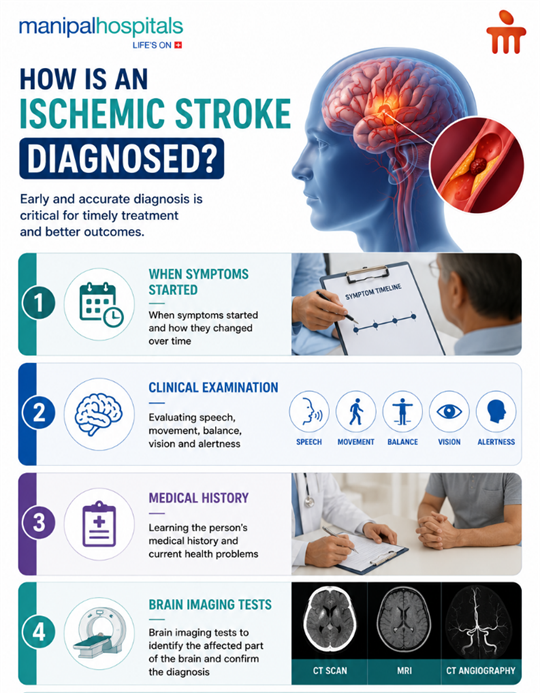
This assessment may include:
-
When symptoms started and how they changed over time
-
Evaluating speech, movement, balance, vision and alertness
-
Learning the person’s medical history and current health problems
-
Brain imaging tests to identify the affected part of the brain and confirm the diagnosis
Sometimes the clot that caused the stroke may have started somewhere else in the body. Additional cardiac investigations may be recommended to identify the source of the clot and any underlying heart condition that contributed to the stroke.
Emergency Treatment for Ischemic Stroke
The goal of ischemic stroke treatment during an emergency is to restore blood flow to the brain as quickly as possible. The right treatment depends on when the symptoms began, where the blockage is, and how large the blood vessel is.
Clot Dissolving Drugs
Eligible patients may be given a thrombolytic, a type of IV clot-busting medicine. The treatment works by breaking up the clot that is blocking the blood flow to the brain.
Thrombolytic treatment Important points to note:
-
It works best if given as soon as possible after symptoms begin.
-
Patients who qualify should be treated within the recommended time frame.
-
Thrombolytic therapy is most effective when administered as early as possible and is generally considered within specific time windows based on clinical assessment and imaging findings. Early treatment means better recovery and less risk of long-term disability.
Mechanical Thrombectomy
In some patients, a procedure known as mechanical thrombectomy may be required, especially if a large artery to the brain is blocked.
In this process:
-
A specialist threads a thin catheter through a blood vessel to reach the clot.
-
Specialised devices are used to retrieve the clot and restore blood flow to the affected area of the brain.
-
Blood flow can then be restored to the affected part of the brain.
Patients with large vessel blockages are often treated with mechanical thrombectomy, sometimes together with clot-busting medication where appropriate, but only after careful selection. The treatment decision is made on the basis of the patient’s condition and the imaging studies that are done during the emergency evaluation.
Stroke Recovery & Prevention
Restoring blood flow is only the first stage of treatment, and recovery often continues through a structured rehabilitation programme. Many people require time and assistance to relearn skills that may have been lost due to the stroke. Depending on which part of the brain is affected, recovery may involve working on movement, speech, balance, or everyday activities. Rehabilitation is often an important part of this process and is tailored to the individual’s needs and recovery goals.
It is also important to prevent another stroke. The process usually involves:
-
Bringing blood pressure, blood sugar and cholesterol levels under control
-
Treatment of conditions such as atrial fibrillation
-
Eating a well-balanced healthy diet
-
Staying active physically
-
Avoid smoking and limit alcohol consumption.
-
Following prescribed medication directions
Conclusion
An ischemic stroke occurs when a blood clot blocks blood flow to a part of the brain, cutting off the oxygen that brain tissue needs to work. Because the effects can develop quickly, it is important to recognise symptoms such as facial drooping, weakness, speech difficulties, vision changes, or loss of balance. Early diagnosis and treatment can restore blood flow, limit brain damage, and improve recovery. If you or someone around you develops sudden stroke symptoms, seek immediate medical care. Timely evaluation and stroke emergency treatment in Millers Road, Bangalore, at Manipal Hospitals, Millers Road, Bangalore, can help ensure rapid intervention when every minute matters.
FAQ's
Sudden numbness or weakness on one side of the body is often the first symptom of an ischaemic stroke. Some people might have a droopy face, trouble speaking, slurred speech, or trouble understanding other people.
Temporary stroke-like symptoms may resolve completely, but they still require urgent medical evaluation because they may indicate a transient ischaemic attack (TIA) or an increased risk of a future stroke. Temporary symptoms can be a warning sign of a serious underlying problem and may indicate a risk of a future stroke.
Treatment should be started when symptoms develop. Getting medical help right away is important because some stroke treatments work best if they are given within a certain amount of time.
Doctors diagnose an ischaemic stroke by considering the symptoms, the results of the physical and neurological exam, the medical history, and brain imaging tests. Further tests on the heart may be done to find out where the clot is coming from.
Although not all strokes are preventable, you can reduce your risk by managing blood pressure, diabetes, and cholesterol; leading an active lifestyle; avoiding smoking; and eating a healthy diet. Regular medical care is also important in managing stroke-related conditions.
Share this article on: