7 Min Read
Have you ever seen someone suddenly lose consciousness, stare blankly, or shake uncontrollably and wondered what was going on? A seizure happens when there is a sudden burst of abnormal electrical activity in the brain, which can lead to sudden changes in behaviour, awareness, or movement. While a seizure is the most recognised sign, epilepsy is more than that. Epilepsy is a neurological disorder characterised by recurrent, unprovoked seizures caused by abnormal electrical activity in the brain. Recognising the signs of epilepsy, understanding the types of seizures, and knowing how to give first aid during a seizure can save lives. In this article, we will cover the types of seizures, early warning signs, available treatments, and how to help someone safely during a seizure.
Synopsis
What Happens When You Have a Seizure?
A seizure happens when neurons, which are the brain’s nerve cells, begin firing abnormal electrical signals in the brain and disrupt normal brain activity. This unusual activity can affect movement, sensations, behaviour, awareness, or even memory. Some people might feel briefly confused or lose focus, while others may have strong convulsions. The symptoms depend on which part of the brain is involved, so each seizure is different. Learning about these changes helps people notice patterns and manage their condition better.
Epilepsy Symptoms You Should Not Ignore
Seizures usually come with warnings. Many people notice early epilepsy symptoms before a major episode occurs. Common early symptoms include:
-
Confusion or memory loss that happens out of the blue
-
Jerking movements of the arms or legs that you can't control
-
Short periods of staring
-
Loss of awareness all of a sudden
-
unusual sensations such as tingling or feeling dizzy
-
Sudden changes in emotions like fear or anxiety
-
Vision or hearing problems that come and go
Some people experience an aura, which is one of the epilepsy symptoms. An aura is a focal, aware seizure that often acts as an early warning sign. It might be a change in feeling, smell, or vision, letting the person know a larger seizure could happen soon.
Examples of Auras
-
A weird smell or taste
-
Feeling like you've been here before
-
Fear or panic that comes out of nowhere
-
Seeing flashing lights
-
Part of the body feels numb
Recognising these early signs of epilepsy can help people seek medical help before their seizures become more serious.
Understanding the Different Types of Seizures
Seizures are generally categorised according to the origin of atypical brain activity. Knowing the type of seizure helps doctors choose the best treatment. Let's look more closely at the most common types of seizures.
1. Focal (Partial) Seizures
Focal seizures begin in a particular region of the brain. Symptoms may include:
-
sudden jerking of a limb
-
Feeling of tingling
-
Staring or being confused
-
Repetitive movements like smacking your lips
These seizures can cause you to lose awareness, but sometimes you stay aware during them.
2. Absence Seizures
These seizures happen more often in kids and teens.
Signs include:
-
A short blank stare
-
rapid blinking
-
A sudden stop in activity
-
Not answering for a few seconds
Absence seizures are often mistaken for daydreaming because they can happen many times a day.
3. Grand Mal Seizures (Tonic-Clonic)
This is one of the most dramatic and recognisable types of seizures. It happens in two steps:
| Phase |
Epilepsy Symptoms |
|
Tonic Phase |
The body stiffens, and the person loses consciousness |
| Clonic Phase |
Rhythmic jerking of arms and legs |
Other signs might be:
-
Temporary breathing difficulty
-
Drooling
-
Temporary loss of bladder control
-
Unusual tiredness afterwards
These seizures typically endure for 1 to 3 minutes.
4. Myoclonic Seizures
Myoclonic seizures involve sudden muscle jerks caused by sudden bursts of abnormal electrical activity in the brain. They often appear as quick twitches in the arms or shoulders, sudden dropping of objects, or repeated jerks. Unlike generalised seizures, you stay conscious and alert during these episodes. These jerks are similar to the “sleep starts” many people feel when falling asleep, but in epilepsy, they happen often and without warning, which can make daily activities more difficult.
5. Seizures Without Muscle Tone (Atonic)
Atonic seizures, also known as drop attacks, happen when the brain’s motor control circuits suddenly stop working, causing a sudden loss of muscle tone. This may make the head drop forward, the body slump, or even cause a person to fall without warning. Since people usually stay aware during these seizures, the suddenness can be dangerous and often leads to injuries from unexpected falls. These seizures show how delicate the brain’s balance of signals really is.
How to Provide First Aid During a Seizure
While witnessing a seizure can be frightening, understanding how to administer first aid can prevent harm.
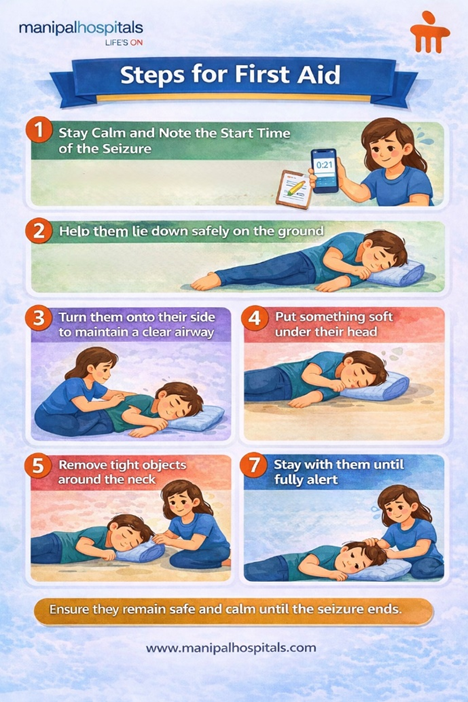
Steps for First Aid
-
Stay calm and note the start time of the seizure.
-
Help the person lie down on the ground safely.
-
Turn them onto their side to maintain a clear airway.
-
Put something soft under their head.
-
Get rid of sharp things that are close by.
-
Take off tight clothes around your neck.
-
Stay with the person until they are fully alert.
What NOT To Do
-
Do NOT restrain the person
-
Do NOT put anything in their mouth.
-
Do NOT give food or water until the person is fully awake.
If someone has a seizure in a public place, they may need immediate seizure first aid at Millers Road, Bangalore, or a nearby medical facility.
Diagnosis of Epilepsy
Diagnosing epilepsy requires careful evaluation because several conditions can mimic seizures. The table below outlines common diagnostic tests used to identify epilepsy and understand its underlying causes:
|
Diagnostic Test |
Test Purpose |
|
EEG (electroencephalogram) |
Checks the brain's electrical activity |
|
MRI Scan |
Detects brain abnormalities |
|
CT Scan |
Identifies structural problems |
|
Blood Tests |
Rules out infections or metabolic causes |
An accurate diagnosis helps doctors choose the best treatment for seizures.
Seizure Treatment Options
The primary goal of epilepsy care is to control seizures so that patients can lead safe and active lives. In many cases, medication is effective in reducing or preventing seizures. For some individuals, additional approaches such as lifestyle adjustments or specialised procedures may also be recommended.
Common Treatment Approaches
1. Drugs
Antiepileptic drugs (AEDs) are medicines that help stabilise abnormal brain electrical activity to prevent seizures.
Some examples include:
-
Sodium valproate
-
Levetiracetam
-
Lamotrigine
-
Carbamazepine
Many people achieve good seizure control with medication.
2. Lifestyle Adjustments
Some habits can help lower the risk of having a seizure:
-
Get enough sleep every night.
-
Don't drink too much alcohol.
-
Take your medicine on a regular basis.
-
Avoid contact with flashing lights if you have photosensitive epilepsy.
3. Surgical Treatment
Surgery may be an option for patients who do not respond to drugs. Procedures may include:
-
Taking out the brain tissue that causes seizures
-
Vagus Nerve Stimulation (VNS)
-
Responsive Neurostimulation (RNS)
Neurologists decide if someone is a good candidate for surgery after a careful evaluation.
When Should You Seek Emergency Care?
Emergency medical care may be required in certain situations. Call emergency services if:
-
The seizure lasts longer than five minutes
-
Multiple seizures occur without recovery between them
-
The person has difficulty breathing after the seizure
-
The seizure occurs in water
-
The person is pregnant or has been injured during the seizure
Conclusion
If you or someone you know has unusual episodes like sudden confusion, jerking movements, or loss of awareness, see a neurologist as soon as possible. Early diagnosis and proper seizure treatment can help control seizures and restore confidence in daily life. At Manipal Hospitals, Millers Road our neurologists provide thorough evaluations, advanced diagnostic tools, and personalised treatment plans to help people with epilepsy manage their condition safely and effectively.
FAQ's
Some common symptoms of epilepsy are sudden jerking movements, staring spells, confusion, loss of awareness, unusual sensations, and short-term memory loss.
Focal seizures, absence seizures, tonic-clonic seizures, myoclonic seizures, and atonic seizures are the most common types.
To give someone first aid for a seizure, put them on their side, move any nearby objects, protect their head, and keep track of how long the seizure lasts.
Yes, epilepsy can be treated. Many patients can control their seizures well with drugs, changes in their daily lives, or more advanced treatments.
Patients experiencing recurrent seizures can consult neurologists at Manipal Hospitals for seizure treatment in Millers Road, Bangalore. Treatment may include diagnostic tests, anti-seizure medications, lifestyle guidance, and long-term neurological care to help control seizures and improve quality of life.
Share this article on: