6 Min Read
Have you ever eaten a fatty meal and felt sudden, rapidly intensifying pain in the upper right side of your stomach? For many people, this discomfort can indicate the presence of gallstones, a common digestive disorder. Gallstones often remain undetected because many people do not develop symptoms. These are small, hardened deposits that form in the gallbladder, a small organ just below the liver. Understanding what causes them, spotting early signs, and knowing when to seek treatment can help prevent complications. This blog talks about gallstones, their definition, what causes gallstones, symptoms, available treatments, and indications for seeking medical care.
Synopsis
- What Are Gallstones?
- Types of Gallstones
- Early Gallstone Symptoms
- What Causes Gallstones?
- Complications of Untreated Gallstones
- How Are Gallstones Diagnosed?
- Treatment of Gallstones
- Advantages of Gallstone Surgery
- Recovery After Gallbladder Surgery
- Lifestyle Tips to Prevent Gallstones
- When Should You See a Doctor?
- Conclusion
What Are Gallstones?
The gallbladder is a small, pear-shaped organ in the upper right abdomen. The main function of the gallbladder is to store and concentrate bile produced by the liver. It releases bile into the small intestine to aid in the digestion and emulsification of fats. If bile has too much cholesterol or not enough bile salts, crystals are formed, which can gradually turn into gallstones. These gallstones can vary in size, ranging from as small as a grain of sand to as large as a golf ball. They might stay in the gallbladder without causing any gallstone symptoms. However, a blocked bile duct due to these stones can cause pain, inflammation, and problems with digestion.
Types of Gallstones
Gallstones are classified into two primary categories based on their composition. Some of the common forms of gallstones are:
|
Type of Gallstone |
Description |
|
Cholesterol Gallstones |
The most prevalent types are typically yellow-green and primarily composed of hardened cholesterol. |
|
Pigment Gallstones |
Dark brown or black stones made from excess bilirubin in bile. Often linked to liver disease or blood disorders. |
Early Gallstone Symptoms
Gallstones typically remain asymptomatic until they obstruct the bile ducts or cause irritation of the gallbladder.
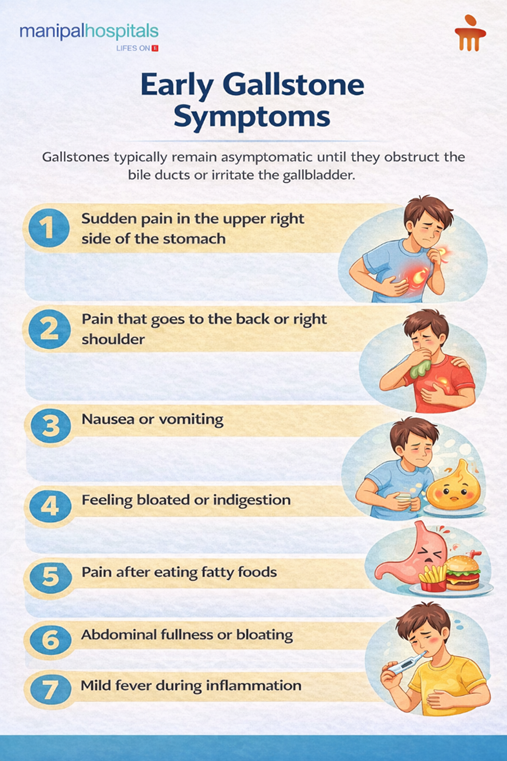
Common signs of gallstones include:
-
Sudden pain in the upper right side of the stomach
-
Pain that goes to the back or right shoulder
-
Nausea or vomiting
-
Feeling bloated or experiencing indigestion
-
Pain after eating fatty foods
-
Abdominal fullness or bloating
-
Mild fever during inflammation
These symptoms may appear suddenly and persist for several minutes to hours.
What Causes Gallstones?
Some people are more likely to get gallstones because of their biology or lifestyle. Many factors can contribute to the formation of gallstones.
Common Causes of Gallstones
-
Cholesterol supersaturation
-
reduced emptying of the gallbladder
-
Increased bilirubin
-
Being overweight
-
Diets high in fat
-
Changes in hormones, especially during pregnancy
-
Age above 40 years
-
Family history of having gallstones
-
Sedentary lifestyle
Hormonal fluctuations that alter bile composition contribute to higher chances of gallstones in women.
Complications of Untreated Gallstones
Untreated gallstones can result in serious health complications. Possible complications include:
|
Complication |
Description |
|
Cholecystitis |
Inflammation of the gallbladder causes severe pain and fever. |
|
Gallbladder blockage |
Stones in the bile duct can cause swelling and impair bile flow. |
|
Pancreatitis |
The pancreas gets inflamed due to pancreatic duct blockage. |
|
Cholangitis |
The bile ducts become infected due to the spread of bacteria. |
|
Digestion problems |
Reduced bile flow causes digestive discomfort like bloating. |
How Are Gallstones Diagnosed?
Physicians use the following imaging studies and physical exams to confirm gallstones:
|
Test |
Purpose |
|
Ultrasound |
The most common test to detect gallstones |
|
CT Scan |
Identifies associated problems or inflammation |
|
Blood Tests |
Detect infection or liver problems |
|
MRI/MRCP |
Provides a clear picture of the bile ducts |
Treatment of Gallstones
The severity of symptoms and complications determines the appropriate treatment approach.
1. Observation (Watchful Waiting)
Asymptomatic gallstones can be managed by simply observing the situation. People with asymptomatic gallstones usually do not need immediate treatment for their gallstones.
2. Medication
Some medicines can help dissolve cholesterol gallstones, but this approach has limitations. Treatment often takes a long time to work, and gallstones usually return when the medication is stopped. Because of these drawbacks, doctors recommend medicines only in specific situations where other treatments are not effective.
3. Surgery
For people who have repeated gallstone symptoms, surgery is often the most effective treatment. The common procedure is laparoscopic cholecystectomy, in which the gallbladder is removed.
Advantages of Gallstone Surgery
-
Minimally invasive
-
Low complication rates
-
Recovery is faster
-
A short stay in the hospital
-
Long-term benefits
Following the surgery, the gallbladder is removed, and the bile flows directly from the liver to the intestine. Some individuals may experience mild digestive changes after the surgery, though temporarily.
Recovery After Gallbladder Surgery
Recovery after gallbladder surgery is usually smooth, especially when the procedure is performed laparoscopically. Because the surgery uses small incisions, most patients begin to feel better within a short period and they can gradually return to their normal routine. Here is what the typical recovery timeline looks like:
-
Hospital stay: Many patients are discharged on the same day of surgery, while some may stay in the hospital for about one day for observation.
-
Light activities: Gentle daily activities such as walking and light household tasks can usually be resumed within about one week, depending on how the patient feels.
-
Full recovery: Most people return to their usual routine within two to four weeks, although recovery time can vary slightly from person to person.
During this healing period, doctors may also suggest temporary dietary adjustments, such as eating lighter meals and avoiding very fatty or heavy foods, to help the digestive system adapt after the gallbladder is removed.
Lifestyle Tips to Prevent Gallstones
Certain lifestyle modifications may reduce the risk of gallstone formation, although not all risk factors are preventable.
Healthy Lifestyle Tips
-
Maintain a healthy body weight.
-
Don't lose weight too quickly.
-
Eat a balanced and fibre-rich diet.
-
Cut back on fried and fatty foods.
-
Stay active physically.
-
Get enough water.
These tips can aid in better digestion and lower the risk of gallstone formation.
When Should You See a Doctor?
Mild digestive discomfort may resolve on its own, but persistent or severe symptoms should not be ignored. Seek medical attention if you experience:
-
Severe abdominal pain lasting longer than 30 minutes
-
Fever or chills
-
Yellowing of the skin or eyes (jaundice)
-
Persistent nausea or vomiting
-
Pale-coloured stools or dark urine
These symptoms may indicate a bile duct obstruction, gallbladder inflammation, or infection and require prompt medical evaluation.
Conclusion
Gallstones are a common digestive disorder that may remain undetected for years before symptoms manifest. Understanding gallstones, their causes, and treatment is key to the right gallstone treatment. Early recognition of gallstone symptoms can help prevent complications. Individuals experiencing recurrent abdominal pain or digestive disturbances should seek medical consultation at Manipal Hospitals, Millers Road. Our gallstones treatment in Millers Road, Bangalore, includes comprehensive care for gallstones, including diagnosis, pharmacological management, and minimally invasive gallstone surgery, to facilitate rapid recovery and return to daily activities.
FAQ's
Early gallstone symptoms are sudden pain in the upper right abdomen, nausea, bloating, indigestion after eating fatty foods, and pain that spreads to the shoulder or back.
Gallstones can form when there is too much cholesterol in the bile. Factors like obesity, rapid weight loss, pregnancy, diabetes, and family history can raise the risk.
Cholesterol gallstones are the most common type. Pigment gallstones are another type, and they form due to excess bilirubin.
No. If gallstones cause pain, infection, or other problems that keep coming back, gallstone surgery is usually the best option. Asymptomatic gallstones may only need to be monitored.
People who have symptoms of gallstones can see specialists on Millers Road in Bangalore. The gallstone treatment in Millers Road, Bangalore, includes diagnostic imaging, medication, and non-invasive surgery.
Share this article on: