7 Min Read
Many people experience stomach discomfort for months without realising that a bacterial infection could be the hidden cause. Frequent bloating, a burning sensation, or a sudden loss of appetite are often brushed off as standard acidity or just a consequence of poor eating habits. In reality, these issues might actually be early indicators of a bacterial infection that requires proper medical evaluation.
This bacterium wears down the stomach's natural defence system, which can cause painful sores and long-term irritation. Seeing a gastroenterologist gets rid of the guesswork to figure out exactly what is going on. Getting a clear explanation of the test results is always the best way to start recovery. From there, switching to simpler, lighter meals gives the stomach tissue a much-needed break to heal. This guide covers how long recovery usually takes, what to eat, daily tips for feeling better, and when you should see a specialist.
Synopsis
- What Is H. pylori Infection?
- Common H pylori Infection Symptoms
- Understanding an H. pylori Positive Result
- H pylori Treatment Duration
- Why Diet Matters During Recovery
- Essential Recovery Tips After Treatment
- Possible Complications if Left Untreated
- Role of Gastroenterology in H. pylori Care
- Conclusion
What Is H. pylori Infection?
This bacterium manages to live in harsh stomach acid by producing an enzyme called urease, which softens the acidity right around it. This lets it dig deep into the stomach's protective mucus lining. It can sit there quietly for decades without causing any trouble at all, but for some people, it eventually triggers painful and uncomfortable flare-ups.
The bug spreads through contaminated food and water, or via direct contact with an infected person's saliva. Starting an early, targeted gastritis treatment with a specialist protects the stomach wall and stops the bacteria from causing painful ulcers.
Common H pylori Infection Symptoms
The signs of this bacterial presence rarely appear overnight, often developing gradually as the stomach lining weakens over time. While some individuals experience nothing more than mild, occasional indigestion, others suffer from intense burning pain and severe internal irritation.
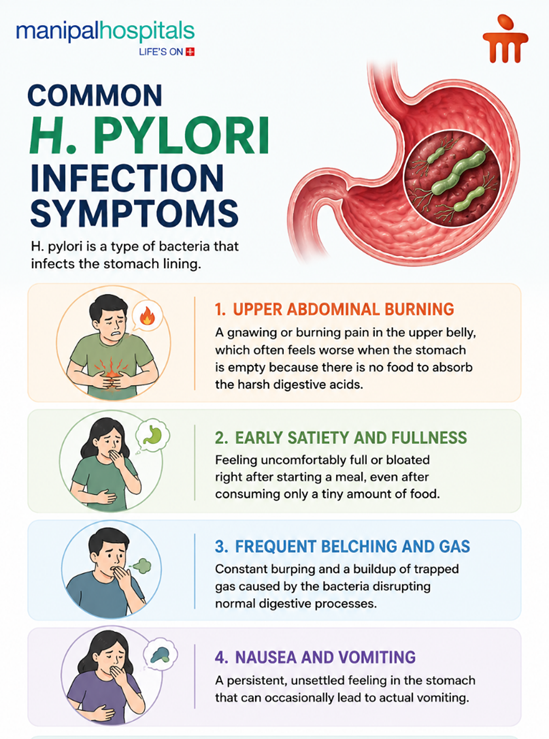
The most frequent warning signs include:
-
Upper abdominal burning: A gnawing or burning pain in the upper belly, which often feels worse when the stomach is empty because there is no food to absorb the harsh digestive acids.
-
Early satiety and fullness: Feeling uncomfortably full or bloated right after starting a meal, even after consuming only a tiny amount of food.
-
Frequent belching and gas: Constant burping and a buildup of trapped gas caused by the bacteria disrupting normal digestive processes.
-
Nausea and vomiting: A persistent, unsettled feeling in the stomach that can occasionally lead to actual vomiting.
Ignoring persistent stomach pain after eating spicy or oily foods allows the bacteria to cause serious, long-term damage.
Understanding an H. pylori Positive Result
Receiving a positive test report often creates unnecessary anxiety, but understanding the diagnosis makes it much easier to manage. A positive result simply confirms that this specific strain of bacteria is living inside the stomach lining.
To detect these bacteria accurately, gastroenterologists rely on a few common diagnostic methods:
-
Urea breath test: A simple test where breathing into a collection card reveals chemical changes caused by the bacteria.
-
Stool antigen test: A highly reliable laboratory test that detects specific bacterial proteins.
-
Blood test: An analysis used to check for antibodies, showing if the body has ever fought the infection.
-
Endoscopy and biopsy: A procedure where a tiny camera examines the stomach wall and takes a small tissue sample for verification.
H pylori Treatment Duration
The standard H pylori treatment duration usually lasts between 10 and 14 days, depending on the severity of the infection. This intensive medical approach typically combines multiple medications to fully eliminate the bug:
-
A combination of two antibiotics: Working together to target the bacteria from different angles and prevent them from developing drug resistance.
-
Proton pump inhibitors: Medications that suppress stomach acid production, giving the raw, inflamed lining a safe environment to heal.
-
Bismuth subsalicylate: Occasionally added to the regimen to help coat the stomach wall and kill the bacteria more effectively.
While the primary healing period follows a fixed timeline, the overall recovery process depends heavily on the presence of severe ulcers, past antibiotic use, and how well the body tolerates the prescription.
Why Diet Matters During Recovery
While medications eliminate the bacteria, the stomach lining remains raw and sensitive. Following a structured H pylori diet directly prevents further inflammation, protects the sensitive tissue, and eases digestion. Cutting out spicy, greasy, and highly processed foods ensures a faster, much more comfortable recovery.
Foods Recommended in an H pylori Diet
Choosing simple and nourishing foods can support recovery and improve overall stomach comfort.
|
Food Group |
Examples |
Benefits |
|
Probiotic Foods |
Yoghurt, curd, kefir |
Help maintain healthy gut bacteria |
|
Fruits |
Banana, apple, papaya |
Gentle on the stomach |
|
Vegetables |
Carrot, spinach, pumpkin |
Rich in nutrients and fibre |
|
Lean Proteins |
Fish, eggs, chicken |
Support tissue repair |
|
Whole Grains |
Oats, brown rice |
Improve digestion |
|
Herbal Drinks |
Ginger tea, chamomile tea |
May soothe irritation |
A structured H pylori diet may also help patients dealing with acid reflux and H pylori together.
Many specialists recommending an H pylori diet in Millers Road, Bangalore, advise patients to eat smaller meals throughout the day instead of heavy portions.
Essential Recovery Tips After Treatment
Finishing your prescription is only the first step in overcoming the infection; daily habits play a major role in how fast the stomach lining repairs itself.
-
Finish every dose: Stopping your medication early because you feel better allows the strongest bacteria to survive and become resistant to antibiotics. You must complete the entire H. pylori treatment to ensure the bug is completely wiped out.
-
Keep your meals simple: Following a steady H pylori diet for a few weeks after your treatment keeps the stomach from working too hard. Steering clear of greasy, hot, or heavily processed foods gives the raw tissue a proper chance to heal.
-
Switch to smaller portions: Eating small amounts of food more frequently throughout the day prevents your stomach from stretching and overproducing acid. This simple shift takes the pressure off your system and protects long-term digestive health.
-
Skip the standard painkillers: Over-the-counter anti-inflammatory pills can irritate and thin the stomach lining. Avoiding these medications prevents painful setbacks during your ongoing gastritis treatment.
-
Drink plenty of water: Sipping water throughout the day keeps your digestive tract moving smoothly. Good hydration aids your recovery and naturally cuts down on painful bloating and gas.
-
Keep stress in check: While worry doesn't cause the infection, high stress levels prompt your body to flood the stomach with acid, which triggers intense indigestion.
-
Get a final check-up: Doctors usually order a breath or stool test about four weeks after your last dose. This step gives you total peace of mind that the bacteria are gone before you return to your normal routine.
Possible Complications if Left Untreated
An untreated H. pylori infection may gradually damage the stomach lining and create serious digestive problems.
Possible complications include:
-
Peptic ulcers
-
Chronic gastritis
-
Internal bleeding
-
Iron deficiency anaemia
-
Vitamin B12 deficiency
-
Rarely, stomach cancer
Ignoring ongoing H pylori infection symptoms can complicate future treatment. Early diagnosis and timely treatment significantly reduce these risks.
Role of Gastroenterology in H. pylori Care
Gastroenterologists specialise in diagnosing and treating digestive system disorders, including H. pylori infection. Specialist evaluation becomes important when symptoms persist despite medication or when ulcers are suspected.
Doctors may recommend:
-
Endoscopy examination
-
Advanced ulcer assessment
-
Long-term monitoring
-
Personalised dietary planning
-
Follow-up testing after treatment
Professional gastroenterology care focuses not only on eliminating the bacteria but also on restoring long-term digestive health.
Conclusion
H. pylori infection is a condition that is easy to manage when detected early. It is essential for patients with H pylori infection to know their symptoms and understand what it means to be H pylori positive. They need to take the full course of H pylori medication. Besides medications, having a healthy H pylori diet helps the patient to recover faster by reducing irritation in the stomach. For professional assistance with the H. pylori diet near Millers Road, consider visiting experts at Manipal Hospital Millers Road.
FAQ's
The normal course for treating an H. pylori infection typically lasts between 10 and 14 days. In some cases, people might need more time based on their condition.
Finding out you are positive for the infection simply means a doctor has confirmed the bacteria are living in your stomach. It clears up any confusion about what is causing your symptoms and shows that you likely need a combination of antibiotics and a gentler diet to clear it up.
Certain foods constitute an H pylori diet. It mainly consists of foods that contain probiotics, fruits, vegetables, grains, and proteins.
H. Pylori reinfection can occur due to consumption of infected food or water, as well as poor hygienic practices. Proper care must be taken concerning digestive health to avoid reinfection.
If you are suffering from stomach ache, abdominal swelling, vomiting, or weight loss due to your H. pylori infection, then it’s time to see a gastroenterologist.
Share this article on: