


 7 Min Read
It’s easy to ignore your gut until something feels off. Maybe your digestion isn’t as smooth as usual, you feel bloated more often, or your energy just isn’t where it should be. These small changes can be confusing, especially when you’re not sure what’s causing them. This is where probiotics start to come into the picture in a simple, practical way. They’re not just another health trend you need to keep up with. Probiotics are actually part of how your body is designed to work. They help keep things balanced inside, especially in your digestive system, so everything runs more comfortably day to day. Once you understand what probiotics are and how they help, it feels much more intuitive to add them to your routine.
In this blog, we will discuss probiotics and their benefits, how they support your overall well-being, and which probiotic foods you can start including without overthinking it.
Synopsis
What Are Probiotics?
Probiotics are live microorganisms, mostly beneficial bacteria, that support your digestive system and overall health when consumed in the right amounts. Although the word “bacteria” is often associated with negative connotations, your body actually relies on a healthy and thriving community of these microbes to function properly.
The definition of probiotics is easier to grasp if you think of these microbes as helpful friends. They reside in your digestive system and work continuously in the background, helping your digestive system and overall internal environment thrive. When your internal balance is disrupted due to stress, illness, or an unhealthy diet, you may experience bloating, digestive issues, and in severe cases, mood swings. Probiotics may help restore balance in the gut and improve digestion over time.
Why Your Gut Needs Probiotics?
Your gut is more than just an organ that helps digest your food. It’s actually one of the most important factors in how your body will respond to the various stresses it faces every day. The connection between your immunity, your mental clarity, and your overall well-being starts in your gut.
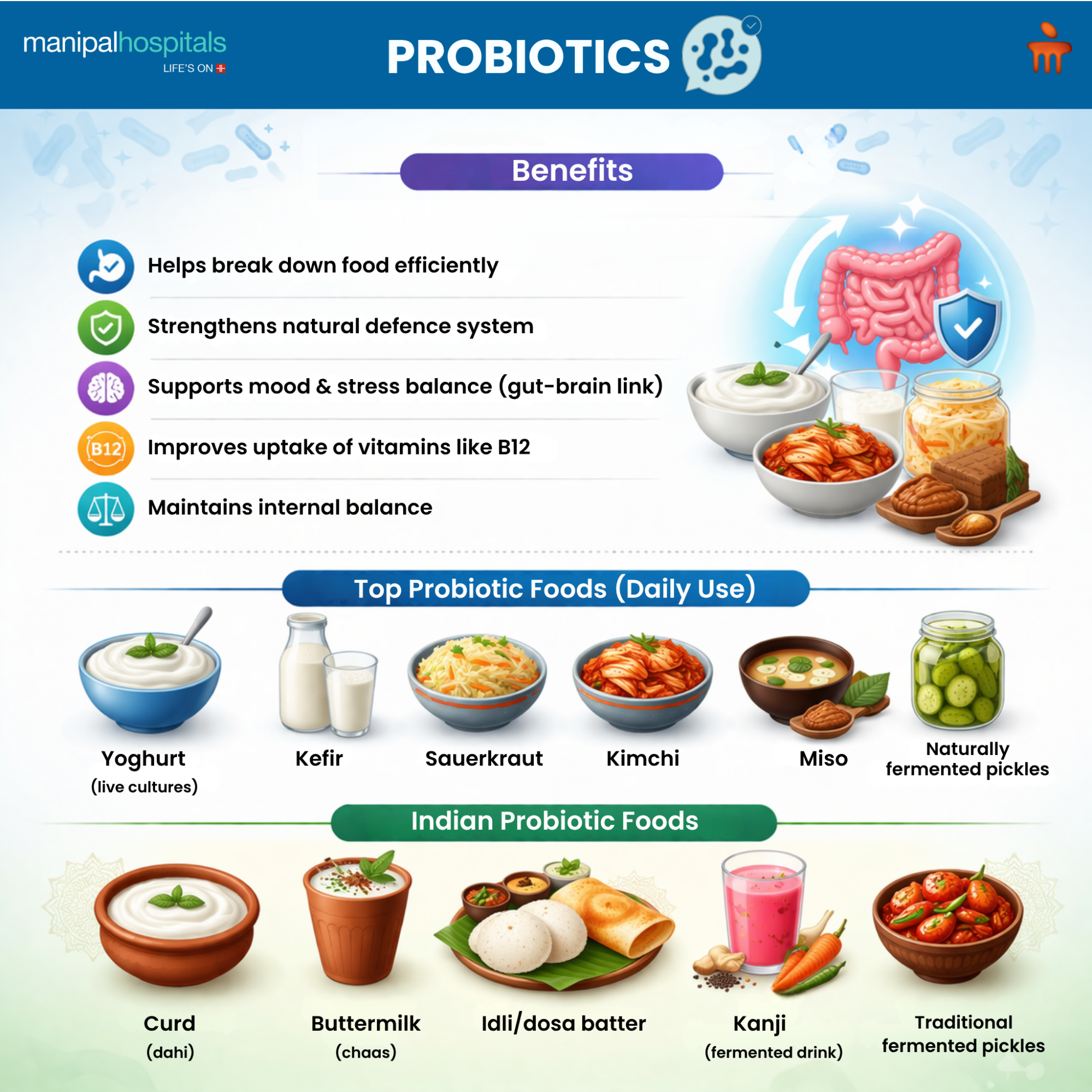
The ways in which probiotics can benefit your body in a positive way are:
-
Digestion: It helps your body digest your food in the most efficient way possible.
-
Immunity: A healthy gut is the first line of defence against infections.
-
Brain: The connection between your brain and your stomach has a direct impact on your mood and your levels of stress.
-
Nutrient absorption: Probiotics can support better absorption of nutrients like vitamin B12.
-
Inflammation: The balance of bacteria in your body helps regulate the levels of inflammation in your body.
The positive effects of probiotics take some time to become evident in the way your body functions and the way it makes you feel.
Natural Sources of Probiotics in Everyday Foods
You don’t have to go searching for complex supplements to get started. There are plenty of common foods that naturally have probiotics in them, especially fermented foods. Adding these foods into your routine can be a gentle way of supporting your gut health without making any drastic changes.
Some of the most effective probiotic foods include:
-
Yoghurt with live cultures
-
Kefir (a fermented milk drink)
-
Sauerkraut (fermented cabbage)
-
Kimchi (spiced fermented vegetables)
-
Pickled vegetables made without vinegar
-
Miso (fermented soybean paste)
These are widely recognised as probiotic-rich foods, and adding even one or two to your daily meals can begin to make a difference.
Probiotic Indian Foods
Indian diets already include several naturally fermented foods, which means you may already be consuming probiotics without realising it. These foods are not only familiar but also easy to incorporate into daily meals.
Some of the commonly used probiotic Indian food items include
-
Homemade curd (dahi)
-
Buttermilk (chaas)
-
Idli and dosa batter
-
Carrot or beetroot kanji
-
Fermented pickles
These food items are easy on the stomach, and you can include them in your routine with ease.
Probiotic Drinks and Their Role
It is often convenient to consume your probiotics in the form of a drink, particularly if you are a light eater. Probiotic drinks can be an easy way to increase your intake of beneficial bacteria in your life without having to make significant changes to your diet.
Popular options include:
-
Buttermilk with mild spices
-
Kefir drinks
-
Kombucha (fermented tea)
-
Fermented rice water
These drinks are especially helpful during warmer months when heavier meals feel less appealing. They hydrate while also supporting digestion, making them a simple addition to your day.
Different Types of Probiotics: How Often Should You Take Them?
Finding the right balance matters. While probiotics are beneficial, remember that more is not necessarily better. It is best to have your body get used to a moderate amount of probiotics, rather than an extreme amount.
The best way to get started with probiotics is:
-
Start with a single serving of probiotic-rich foods per day
-
Pay attention to how your body reacts to the new probiotics
-
Increase your variety of probiotic-rich foods, but don’t increase the amount
-
Combine your probiotics with fibre for better digestion
The key to making your body work better is to be consistent with your probiotic use. Better digestive health often contributes to overall well-being.
Probiotic foods come in many forms, each with its own taste, preparation style, and benefits for gut health. Some are mild and easy to include daily, while others have stronger flavours due to longer fermentation. The following table gives a quick comparison of common probiotic sources:
|
Food/Drink |
Type of Bacteria Commonly Found |
Fermentation Time |
Taste Profile |
Best Time to Consume |
Storage Needs |
|
Yoghurt |
Lactobacillus |
6–8 hours |
Mild, slightly tangy |
Morning or with meals |
Refrigerated |
|
Kefir |
Multiple strains |
24 hours |
Tangy, slightly fizzy |
On an empty stomach |
Refrigerated |
|
Kimchi |
Lactobacillus kimchii |
1–5 days |
Spicy, sour |
With meals |
Refrigerated |
|
Kombucha |
Yeast + bacteria culture |
7–14 days |
Sweet-sour, fizzy |
Midday |
Refrigerated |
|
Buttermilk |
Lactic acid bacteria |
Few hours |
Light, refreshing |
After meals |
Refrigerated |
Signs Your Body May Benefit from Probiotics
Sometimes your body gives subtle hints that it needs better gut support. Recognising these early signs can help you take action before discomfort becomes persistent.
You may benefit from increasing probiotic- rich foods, if you notice:
-
Frequent bloating or gas
-
Irregular bowel habits
-
Low energy without a clear reason
-
Skin issues like acne or dullness
-
Increased sensitivity to certain foods
Addressing these signs early often leads to a noticeable improvement in how you feel from day to day.
Conclusion
Understanding probiotics doesn’t have to feel overwhelming. Once you recognise how closely your gut is tied to your overall well-being, small dietary changes begin to feel more meaningful. Adding probiotic foods and drinks and including traditional probiotic Indian foods can gently support your system without disrupting your routine.
If you’re experiencing ongoing digestive issues or want personalised guidance on improving your gut health, consult the expert at Manipal Hospitals Malleshwaram. Their experienced gastroenterology team can help you choose the right diet and treatment plan tailored to your needs, ensuring better digestive health and overall wellness in Malleshwaram.
FAQ's
Yes, antibiotics often disrupt the natural balance of gut bacteria by affecting both harmful and beneficial microbes. Introducing probiotics afterwards can help restore this balance. It’s usually best to space them a few hours apart from antibiotics and continue for a couple of weeks after completing the course.
For most people, probiotics are safe when consumed through natural food sources over long periods. The body adapts well to them. However, individuals with weakened immune systems or specific medical conditions should consult a doctor before making them a regular part of their diet.
Yes, high heat can kill live bacteria present in probiotic foods. That’s why foods like yoghurt or fermented pickles are best consumed fresh and not heated. If you’re adding them to meals, add them after cooking to preserve their benefits.
Both children and older adults can benefit from probiotics, especially through natural foods like curd or buttermilk. The key is to introduce them gradually and ensure the sources are fresh and hygienically prepared.
Absolutely. A well-balanced diet that includes a variety of fermented and probiotic-rich foods can provide sufficient beneficial bacteria for most people. Supplements are usually only needed in specific situations and should be taken under medical guidance.
Share this article on:


