6 Min Read
A sudden hit to the head can be unsettling. It may happen during a sports match, a fall at home, or even a minor road accident. While cuts and bruises are easy to spot, the real concern often lies inside the head. A concussion is one such invisible injury that needs careful attention, even when things seem normal on the outside.
A concussion is a mild traumatic brain injury (TBI) that occurs when a sudden jolt or impact causes the brain to move rapidly inside the skull. This movement can temporarily disturb how the brain functions. The good news is that with timely diagnosis and the right concussion treatment, most people recover completely and return to their normal lives without long-term issues.
At Manipal Hospitals Pune, patients with head injuries are guided through every stage of recovery with a structured, patient-first approach.
Synopsis
- Understanding Concussion: More Than Just a Minor Head Injury
- What Causes a Concussion Injury?
- Recognising Concussion Symptoms Early
- When to Seek Emergency Medical Care
- Concussion Treatment: Supporting the Brain’s Healing Process
- Do’s and Don’ts During Concussion Recovery
- Understanding Post-Concussion Syndrome (PCS)
- Conclusion
Understanding Concussion: More Than Just a Minor Head Injury
Many people underestimate concussions, assuming they are just “bumps on the head”. In reality, a concussion affects the brain’s normal functioning, even if scans like CT or MRI appear normal.
This happens because a concussion causes functional and chemical changes in the brain, rather than visible structural damage. The brain cells become temporarily disrupted, leading to symptoms that affect thinking, balance, emotions, and sleep.
One important fact to remember: loss of consciousness is not necessary for a concussion to occur. In fact, most concussions happen without the person ever blacking out.
What Causes a Concussion Injury?
A concussion injury can occur whenever the head or body experiences a sudden, forceful movement. Common causes include:
-
Direct blows to the head, face, or neck
-
Falls at home, especially in children and older adults
-
Road traffic accidents, even low-speed collisions
-
Sports injuries from contact sports like football, boxing, or hockey
-
Whiplash injuries, where the head snaps forward and backwards
Even if the impact feels minor at first, symptoms can develop later, which is why observation after a head injury is so important.
Recognising Concussion Symptoms Early
Concussion symptoms are not always immediate. They may appear hours or even a day or two after the injury. Being alert to subtle changes can help prevent complications.
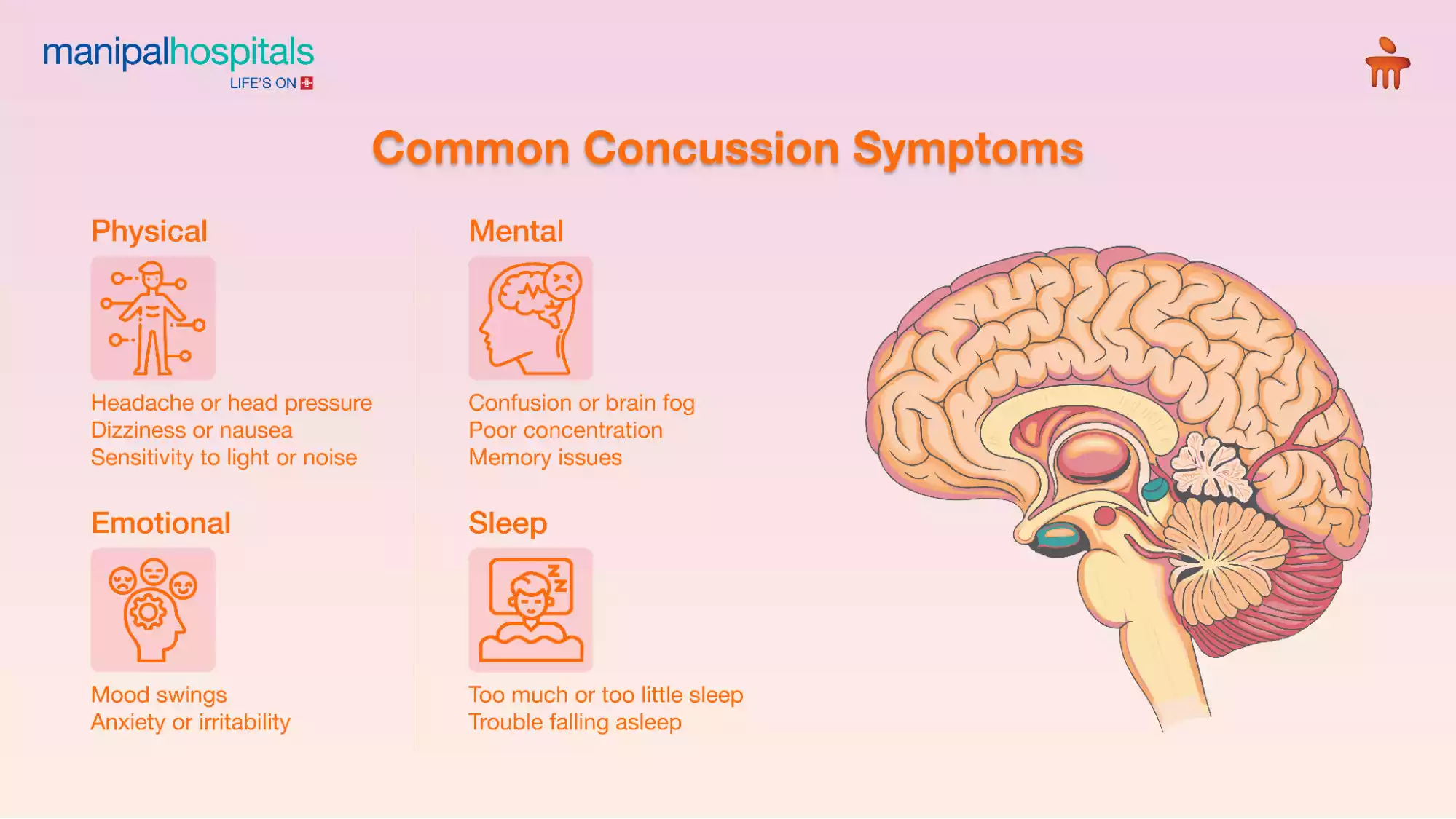
Physical concussion symptoms
-
Persistent headache or pressure in the head
-
Dizziness or balance problems
-
Nausea or vomiting
-
Sensitivity to bright lights or loud sounds
Cognitive symptoms
-
Feeling mentally foggy or slowed down
-
Trouble concentrating or remembering things
-
Confusion about recent events
-
Taking longer than usual to answer questions
Emotional symptoms
-
Irritability or mood swings
-
Anxiety or unexplained sadness
-
Feeling more emotional than usual
Sleep-related symptom
-
Feeling drowsy or unusually tired
-
Sleeping more than normal
-
Difficulty falling or staying asleep
If these concussion symptoms worsen instead of improving, medical evaluation should not be delayed.
When to Seek Emergency Medical Care
While most concussions are mild, some signs may point to a more serious brain injury. Seek immediate medical help if there is:
-
A headache that keeps getting worse
-
Repeated vomiting or severe nausea
-
Increasing confusion or slurred speech
-
Seizures or convulsions
-
Weakness or numbness in arms or legs
-
Unequal pupil size
Prompt assessment at a well-equipped centre like Manipal Hospitals Pune can be lifesaving in such situations.
Concussion Treatment: Supporting the Brain’s Healing Process
There is no instant cure for a concussion. Effective concussion treatment focuses on rest, monitoring, and a gradual return to normal activities.
Rest is the first and most important step
In the first 24–48 hours, both physical and mental rest are essential.
-
Avoid sports, exercise, or strenuous activities
-
Reduce screen time on phones, laptops, and televisions.
-
Take a break from work, studies, and tasks requiring intense focus
This rest allows the brain to stabilise and begin healing naturally.
Gradual Return to Daily Activities
Once symptoms start to improve, activity can be slowly reintroduced under medical guidance. This step-by-step approach ensures the brain is not overstressed.
If symptoms return at any stage, the activity level should be reduced again. At Manipal Hospitals, neurologists and rehabilitation teams design individual recovery plans, helping patients return safely to work, school, and sports.
Evidence shows that supervised and gradual rehabilitation often leads to faster and more complete recovery.
Do’s and Don’ts During Concussion Recovery
Do’s
-
Get plenty of sleep and regular rest
-
Stay hydrated and eat balanced meals
-
Follow your doctor’s recovery plan carefully
-
Use sunglasses or rest in quiet rooms if sensitive to light or noise
-
Inform family, teachers, or employers about temporary limitations
Don’ts
-
Don’t return to sports or risky activities without medical clearance
-
Don’t ignore symptoms or try to “push through” discomfort
-
Don’t consume alcohol during recovery
-
Don’t drive or operate machinery if feeling dizzy or confused
-
Don’t isolate completely—short, calm social interactions are helpful
Understanding Post-Concussion Syndrome (PCS)
In about 10–15% of cases, concussion symptoms may last longer than expected. This condition is called post-concussion syndrome.
Symptoms such as headaches, dizziness, poor concentration, or fatigue may persist for weeks or months. Although frustrating, PCS is manageable with the right care. Treatment may involve neurologists, physiotherapists, and cognitive rehabilitation specialists working together to address lingering symptoms.
Conclusion
Head injuries should never be ignored, even if they seem mild at first. Early evaluation and proper concussion treatment reduce the risk of long-term complications and support complete recovery.
With advanced diagnostic facilities and an experienced neurologist at Manipal Hospitals Kharadi, provides comprehensive care for concussion and other traumatic brain injuries.
Patients also have access to specialised services at Manipal Hospitals Kharadi, ensuring continuity of care when required.
FAQ's
Most people recover within 7–14 days. Children and those with previous concussions may take longer.
Yes. Sleep is important for healing. Monitoring is advised in the initial hours, but sleep should not be restricted.
No. CT or MRI scans are done only if warning signs suggest a more serious injury.
A concussion is a mild form of traumatic brain injury. All concussions are TBIs, but not all TBIs are concussions.
Only after symptoms have fully resolved and a doctor has provided clearance.
Share this article on: