8 Min Read
Receiving news that involves a potential or confirmed cancer diagnosis is a life-altering moment that often brings a wave of confusion and urgency. In the days following such news, you are likely to be introduced to several specialists, each with a specific focus on your health. Among these specialists, the person who often becomes the primary coordinator of your long-term health journey is the doctor who manages your systemic care.
This blog will help you understand exactly when to see a medical oncologist and how they contribute to your overall well-being. Understanding their role can help you move from a state of uncertainty to a state of informed action, ensuring that you receive the most effective care possible.
Synopsis
- Defining the Role of a Medical Oncologist
- Key Milestones: When to See an Oncologist?
- The Importance of the Cancer Care Team
- What to Expect During a Medical Oncology Consultation?
- Developing and Understanding Your Cancer Treatment Plan
- Managing Life During and After Treatment
- When to Seek Immediate Attention?
- Conclusion
Defining the Role of a Medical Oncologist
To understand why this specialist is so vital, it helps to look at the role of a medical oncologist as the "primary care provider" for your specific condition. While a surgeon removes a tumour and a radiation oncologist uses high-energy beams to target a specific spot, the medical expert looks at the whole body. They specialise in treating the condition using systemic therapies, treatments that travel through the bloodstream to reach cells wherever they may be.
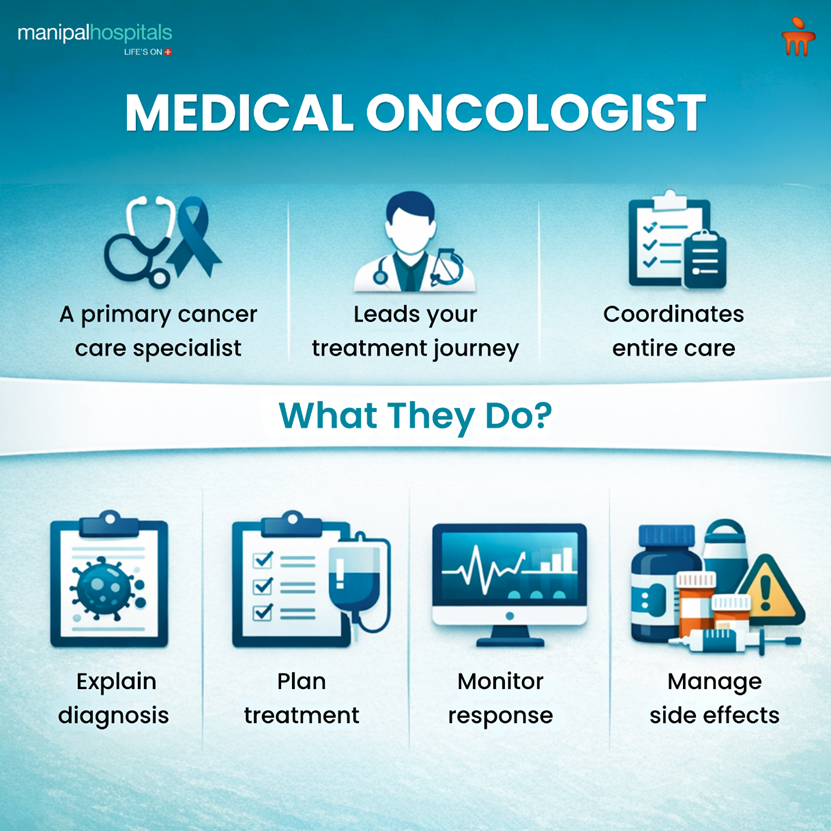
The role of a medical oncologist extends beyond just prescribing medication. They are responsible for:
-
Coordinating with other specialists to ensure all treatments work together.
-
Monitoring your physical response to treatment and managing any side effects.
-
Providing long-term follow-up care even after the primary treatment is finished.
By acting as a central point of contact, they ensure that your care is not fragmented. They look at your medical history, your current health status, and your personal goals to create a roadmap for the months ahead.
Key Milestones: When to See an Oncologist?
The timing of your first appointment is often determined by your primary physician or a surgeon, but being proactive can sometimes speed up the process. There are specific milestones in your health journey where a medical oncology consultation becomes essential for making informed decisions.
-
Immediately After a Biopsy: Once a biopsy confirms a cancer diagnosis, your next step should be meeting with the specialist who will manage your systemic health. They can help interpret the pathology report and explain what the findings mean for your future.
-
Before Starting Any Major Treatment: Even if surgery is the first recommended step, consulting a medical expert beforehand is often beneficial. In some cases, ‘neoadjuvant’ therapy, treatment given before surgery to shrink a tumour, might be the best course of action.
-
When Symptoms Persist Without an Explanation: Sometimes, a doctor may refer you even before a final diagnosis is made if they see specific markers in your blood work or imaging that suggest a need for specialised investigation.
-
Following an Emergency Finding: If a condition is discovered during an unrelated hospital visit or emergency room trip, a follow-up with this specialist is necessary to stabilise the situation and begin a structured plan.
Deciding when to see an oncologist is about ensuring that systemic treatment is considered as early as possible, which can often improve the overall success of the care strategy.
The Importance of the Cancer Care Team
No single doctor treats this condition in isolation. Modern medicine relies on a multidisciplinary approach, where a group of experts collaborates to provide comprehensive care. This group is known as the cancer care team, and each member brings a unique set of skills.
The following table explains the primary specialists you might encounter and how they interact with one another to support your health:
|
Specialist |
Primary Responsibility |
How They Help You |
|
Medical Oncologist |
Systemic treatment and coordination |
Manages chemotherapy, immunotherapy, and long-term care coordination. |
|
Surgical Oncologist |
Physical removal of tissue |
Performs biopsies and surgeries to remove tumours or affected lymph nodes. |
|
Radiation Oncologist |
Targeted energy therapy |
Uses radiation to destroy cells in a specific, localized area of the body. |
|
Pathologist |
Diagnostic analysis |
Examines tissue samples under a microscope to identify the exact type of cells. |
|
Oncology Nurse |
Clinical support and education |
Administers treatments and helps you manage day-to-day side effects. |
Having a well-rounded cancer care team ensures that every aspect of your health, from the physical removal of a tumour to the management of your immune system, is addressed by an expert in that specific field.
What to Expect During a Medical Oncology Consultation?
Your first medical oncology consultation is usually the longest and most detailed appointment you will have. It is a time for the doctor to get to know you as a person, not just as a patient with a specific condition. You should expect a thorough review of your medical history, including any previous illnesses, surgeries, and family health patterns.
During this visit, the doctor will likely perform a physical examination and may order additional blood tests or imaging, such as a CT scan or PET scan. The goal of this initial medical oncology consultation is to gather all the "pieces of the puzzle" so the doctor can determine the exact stage of the condition. They will then sit down with you to discuss the various treatment options available. This is the best time to ask questions about how the treatment will affect your daily life, your work, and your family.
Developing and Understanding Your Cancer Treatment Plan
Once all the diagnostic information is gathered, your doctor will present a cancer treatment plan. This is a personalized strategy that outlines which medications will be used, how often you will receive them, and what the goals of the treatment are. It is important to remember that this plan is not fixed; it is a living document that can be adjusted based on how your body responds.
A comprehensive cancer treatment plan might include:
-
Chemotherapy: Using powerful medications to kill fast-growing cells throughout the body.
-
Immunotherapy: Boosting your own immune system to help it recognize and attack unhealthy cells.
-
Targeted Therapy: Using drugs that target specific proteins or genes that help the condition grow.
-
Hormone Therapy: Blocking the body’s natural hormones if they are contributing to the growth of certain types of cells.
The role of a medical oncologist is to balance the effectiveness of these treatments with your quality of life, making sure the doses are effective but manageable.
Managing Life During and After Treatment
The journey doesn't end when the active treatment phase is over. One of the most important aspects of having a medical oncologist is the "survivorship" care they provide. After you finish chemotherapy or other therapies, you will still need regular check-ups to monitor your health and ensure the condition does not return.
During this phase, your doctor will help you manage any "late effects" of treatment, which are side effects that appear months or even years later. They will also provide guidance on nutrition, exercise, and mental health to help you regain your strength. This long-term relationship is a cornerstone of a successful cancer treatment plan, as it ensures you have professional medical support as you transition back into your normal routine.
When to Seek Immediate Attention?
Even while you are under the regular care of your cancer care team, there may be times when you need to contact your doctor between scheduled visits. Because systemic treatments can affect your immune system, you need to be vigilant about certain warning signs.
You should call your medical team immediately if you experience:
-
A fever of 100.4°F (38°C) or higher.
-
Sudden shortness of breath or a persistent cough.
-
Unexplained bruising or bleeding that doesn't stop.
-
Severe nausea or diarrhoea that prevents you from staying hydrated.
-
New or worsening pain that is not controlled by your prescribed medications.
Early intervention for these symptoms can prevent minor issues from becoming serious complications, allowing your treatment to stay on track.
Conclusion
Navigating a cancer diagnosis is a journey that requires both courage and a clear map. By understanding the specialized roles of your doctors and knowing exactly when to see a medical oncologist, you take back a sense of control over your health. Your medical expert is there to do more than just prescribe medicine; they are there to guide you, coordinate your care, and support you through every phase of the process. At Manipal Hospital Kanakapura Road, we are dedicated to providing the cancer treatment expertise and the comprehensive cancer care that patients need to face the future with confidence. With the right team, the right plan, and a focus on healing and well-being in cancer, you can focus on what truly matters, your recovery and your future.
FAQ's
Many doctors are trained in both fields. A medical oncologist primarily treats solid tumours, while a hematologist specializes in blood-related conditions like leukemia or lymphoma. Often, these roles overlap, and the same doctor will manage both aspects of your care if your condition involves blood or bone marrow.
It is helpful to bring a list of all current medications, a copy of your recent medical records, and a friend or family member to take notes. Having a written list of questions can also ensure that you don't forget to ask about the things that matter most to you during the consultation.
While some systemic treatments have side effects like fatigue or nausea, modern supportive care has improved significantly. Your doctor will prescribe "pre-medications" to prevent many of these side effects before they even start, aiming to keep you as comfortable as possible during the process.
The frequency of visits depends on the intensity of your treatment. During active therapy, you might see your team every week or every few weeks. Once treatment is complete, the visits usually move to every three to six months for monitoring.
Many patients are able to maintain a modified work schedule. Your doctor can help you understand the likely "low points" in your energy levels during the treatment cycle, allowing you to plan your work and rest periods accordingly.
Share this article on:


.webp "Precision in the OR: How Robotic Surgery is Changing Cancer Care")