7 Min Read
Most people do not think about their heart arteries until a problem develops. These blood vessels play an important role in carrying oxygen-rich blood to the heart muscle, helping it pump blood throughout the body. Over time, however, fatty deposits, cholesterol, and other substances can gradually build up inside the arteries. This slow buildup can lead to blocked heart arteries, reducing the amount of blood that reaches the heart and increasing the risk of serious heart-related complications.
Because this process progresses slowly, the body may show warning signs long before a serious event such as a heart attack occurs. However, while a heart artery blockage can be a serious diagnosis, advances in prevention, diagnosis, and treatment have significantly improved outcomes for many patients. This blog explores the causes, symptoms, diagnosis, and management of blocked coronary arteries to make you better equipped to deal with it in the case of emergencies.
Synopsis
Understanding Heart Blockages
A heart artery blockage happens when the blood vessels that take blood to the heart muscle get narrow. This narrowing is caused by a buildup of cholesterol, fat, and cell waste on the inside walls of these vessels, known as plaque.
As this plaque thickens and hardens over the years, there is less space inside the blood vessel for blood to pass through. This means the heart muscle receives less oxygen. The medical term for narrowing or blockage of the heart arteries is coronary artery disease (CAD), one of the most common cardiovascular conditions worldwide.
When the heart is at rest, it may manage perfectly well with limited blood flow. However, the moment you climb a flight of stairs, carry heavy groceries, or experience sudden emotional stress, your heart muscle demands a surge of oxygen-rich blood. If the narrowed arteries cannot deliver that supply, the muscle becomes starved of oxygen, a state known as ischemia. If a brittle piece of plaque ruptures or cracks open, your body treats it as an internal wound, rapidly forming a localised blood clot that can abruptly halt all blood flow, triggering a heart attack.
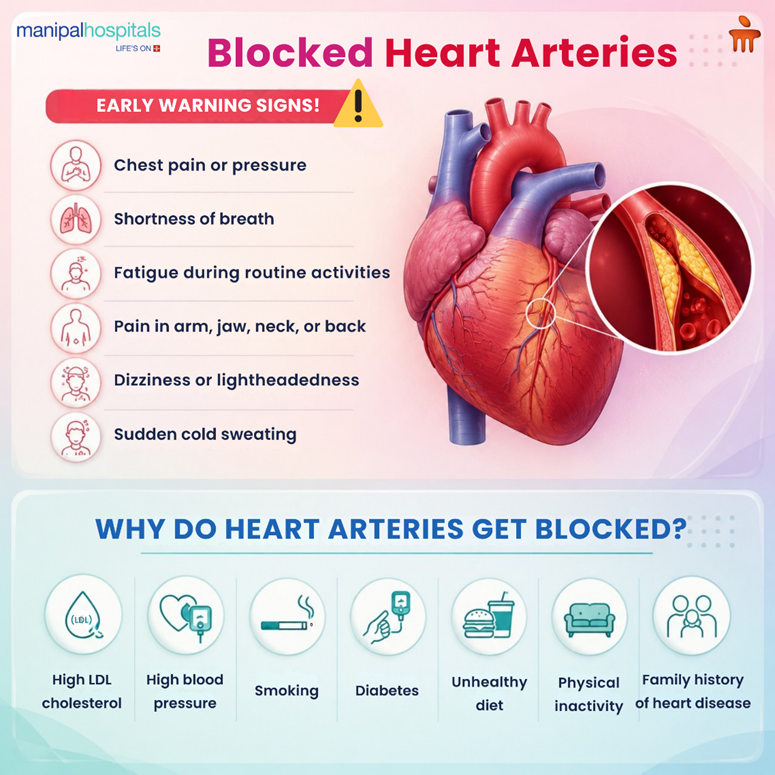
Why Do Heart Arteries Get Blocked?
The plaque accumulation that causes blocked heart arteries usually builds up because of a combination of daily habits, long-term health conditions, and family genetics.
-
High Cholesterol: High levels of LDL cholesterol (often called bad cholesterol) contribute significantly to plaque formation within the artery walls.
-
High Blood Pressure: Continuous high blood pressure strains the inner lining of the arteries. This constant pressure leaves rough areas on the walls where fat and cholesterol can stick easily.
-
Smoking: Chemicals in tobacco smoke damage the blood vessels directly. This damage makes the arteries become narrow and stiff much faster than they normally would.
-
Diet and Low Activity: Eating foods high in saturated fats and sugars, combined with sitting for long periods, alters how the body handles fat and speeds up the growth of plaque.
-
Family History: A genetic history of early heart disease in a family can make a person naturally more likely to experience artery inflammation or a rapid buildup of fat in the blood vessels.
Early Warning Signs of Heart Blockages
Paying attention to blocked arteries' symptoms early gives medical teams a chance to protect the heart muscle before lasting damage occurs.
-
Chest pain (angina): the most common symptom. It feels like pressure, squeezing, tightness, or an ache in the centre of the chest. It usually begins with physical exertion or stress and eases after a few minutes’ rest.
-
Shortness of breath: when the heart is not receiving enough blood, someone may become breathless during everyday activities, such as climbing stairs or walking up a small hill.
-
Pain in Other Areas: The discomfort from blocked heart arteries does not always stay inside the chest. The feeling can travel outward to the shoulders, arms, neck, jaw, or the upper part of the back.
-
Fatigue and Reduced Exercise Tolerance: When the heart muscle does not get an adequate supply of oxygen day after day, routine daily tasks can begin to feel completely exhausting.
-
Dizziness and Sudden Sweating: Feeling lightheaded, fainting, or breaking into a cold sweat without a clear reason can mean that the heart is working too hard to keep blood moving.
Diagnosis of Heart Blockage
Doctors use several physical examinations and imaging tests to find the exact location and size of a blockage:
|
Method |
What the Doctor Does |
What it Reveals |
|
Electrocardiogram (ECG) |
Records the heart’s electrical signals while the patient is at rest. |
Finds irregular heartbeats or signs of older muscle damage caused by a lack of blood. |
|
Echocardiogram |
Uses sound waves to take moving pictures of the heart. |
Shows the pumping strength of the heart walls and how well the valves open and close. |
|
Cardiac Stress Test |
Checks heart activity while the patient walks on a treadmill or takes medicine to raise the heart rate. |
Shows if the blood supply drops significantly when the heart is put under physical stress. |
|
Coronary Angiography |
Injects a safe liquid dye into the arteries so they can be seen clearly on an X-ray machine. |
Shows the exact location and percentage of any heart artery blockage. |
Modern Options for Heart Blockage Treatment
Medical care for the heart depends on each patient's specific situation. Doctors who plan a heart blockage treatment combine prescription medicines and changes in daily habits to keep blood moving safely through the body.
Medications and Lifestyle Changes
For smaller or early blockages, blocked artery treatment focuses on keeping the buildup of plaque stable so it does not break open and form a dangerous blood clot.
-
Routine medications: doctors prescribe statins to lower cholesterol, beta-blockers to reduce heart rate and the heart’s workload, and blood thinners to stop clots forming.
-
Diet changes: eating foods high in fibre, whole grains, and lean proteins helps control blood fat levels and stops cholesterol from rising further.
-
Safe Physical Activity: Regular, low-impact exercise makes the heart muscle stronger. Over time, it can also encourage the body to grow tiny new blood vessels around a narrow spot to help move blood.
Medical Procedures and Surgery
When a blockage severely cuts down the blood supply, causes regular chest pain, or increases the risk of a heart attack, doctors must open the artery directly.
-
Angioplasty and Stenting: A doctor guides a tiny, flexible tube with a small balloon on the tip into the narrow part of the artery. The balloon is inflated to press the plaque flat against the walls, and a small metal mesh tube called a stent is left inside to hold the blood vessel open.
-
Bypass Surgery (CABG): For severe or multiple blockages, a surgeon takes a healthy blood vessel from another part of the body, such as the leg, arm, or chest. They connect this healthy vessel above and below the blocked area, creating a new path for the blood to flow around the blockage.
Prevention
Protecting heart health is a long-term commitment that relies on keeping track of health numbers and maintaining effective daily routines.
-
Get checked: Go to the doctor to test your blood pressure, sugar, and cholesterol. If any of these are high, you want to catch it before it actually hurts your blood vessels.
-
Move more: Aim for at least 150 minutes of moderate physical activity each week. Even brisk walks help keep your arteries flexible and naturally lower your blood pressure.
-
Manage Stress: Being stressed all the time releases hormones that strain your heart. Prioritise adequate sleep, relaxation, and stress-management strategies to support heart health.
Conclusion
Dealing with blocked heart arteries requires careful medical attention, but you can manage the condition well with the right care. Spotting your symptoms early and working with doctors is the best way to stay active and protect your body over time.
If you notice constant breathlessness or unexplained chest pressure, waiting for a medical crisis to happen is not safe. Getting a clear diagnosis and a plan for heart blockage treatment in Kanakapura Road, Bangalore, at Manipal Hospitals, Kanakapura Road, is the safest way to protect your long-term health.
FAQ's
No, hardened plaque stays in the arteries and will not disappear naturally. But introducing changes, like diet changes and taking the right medications, can keep the blockages stable and drastically lower your risk of a heart attack.
Not at all. Many people never feel that classic chest pressure. Instead, they might get surprisingly winded during a short walk, feel tired all the time, or notice an ache that spreads into the jaw, neck, or back.
An angioplasty is a less invasive procedure where a doctor threads a tiny balloon inside the clogged vessel, inflates it to push the plaque away, and leaves a small mesh tube (a stent) to keep it open. In bypass surgery, the surgeon takes a healthy blood vessel from your leg, arm, or chest and uses it to reroute blood completely around the blocked area.
Yes. Some people experience no noticeable symptoms until the blockage becomes severe or a heart attack occurs. This is particularly common in people with diabetes, older adults, and those with longstanding high blood pressure.
The decision depends on a few practical facts: how many arteries are narrowed, where the blockages are located, and how severe your daily symptoms are. They also consider your overall health, especially if you live with other conditions like diabetes.
Yes, and it is usually highly recommended to keep your heart muscle strong. However, you should never guess your limits. Talk to your doctor first so they can help you set a safe heart rate range and map out a workout plan that will not put you in danger.
Share this article on: