7 Min Read
It is a common experience to feel physical exhaustion after a long day of activity. Usually, rest allows the body to recover its strength. However, for some individuals, muscle weakness does not follow this predictable pattern. They may find that their muscles function correctly in the morning, but as the day progresses, simple tasks, such as keeping their eyes open, speaking clearly, or lifting a light object, become increasingly difficult. This specific type of fluctuating muscle weakness is a hallmark of a chronic condition known as myasthenia gravis. Because the symptoms can be subtle or intermittent at first, they are often misidentified as general fatigue or stress. Learning about myasthenia gravis, recognising early myasthenia gravis symptoms, and seeking help on time can make a real difference. With proper treatment, many people continue to live active, independent lives.
This blog examines the underlying causes of myasthenia gravis, the specific symptoms that warrant medical attention, and the modern myasthenia gravis treatment protocols available to manage the condition effectively.
Synopsis
- What Is Myasthenia Gravis?
- Who is at Risk of Myasthenia Gravis?
- Myasthenia Gravis Symptoms
- What Causes Myasthenia Gravis?
- How Does Myasthenia Gravis Affect the Body?
- How is the disease diagnosed?
- When to Suspect Myasthenia Gravis?
- Treatment for Myasthenia Gravis
- Myasthenia Gravis: Some Interesting Facts
- Living with Myasthenia Gravis
- When to Get Medical Help Right Away?
- Conclusion
What Is Myasthenia Gravis?
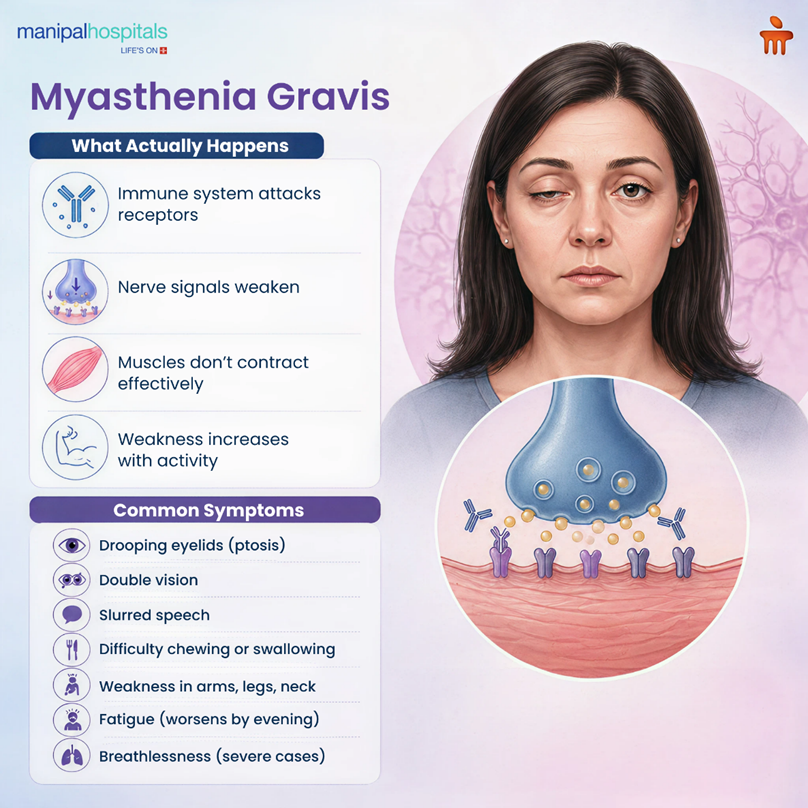
Myasthenia gravis is a long-term autoimmune condition that affects how nerves communicate with muscles. In simple terms, the immune system of the body attacks the receptors at the neuromuscular junction, which is where nerves tell muscles to contract. Muscles get weak and tired easily as a result.
This weakness usually:
-
Gets worse with activity
-
Improves temporarily with rest
That pattern is one of the most important signs that someone has myasthenia gravis.
Who is at Risk of Myasthenia Gravis?
Some people are more likely to develop this condition, although it can affect anyone.
-
More commonly seen in women under 40 and men over 60
-
People with other autoimmune conditions
-
Individuals with thymus gland problems
-
Those with a family history may have a slightly higher risk
While it is not directly inherited, certain factors can make a person more prone to developing it.
Myasthenia Gravis Symptoms
The symptoms can be different for each person, but they usually follow a pattern of muscle weakness that comes and goes. Common symptoms include:
-
Eyelids that droop (ptosis)
-
Shortness of breath (important for severity)
-
Double vision (diplopia)
-
Slurred or unclear speech
-
Having trouble chewing or swallowing
-
Weakness in the arms, legs, or neck
-
Fatigue that worsens with activity or towards the end of the day
These symptoms often worsen with repeated use of muscles, like when you talk for a long time or climb stairs.
What Causes Myasthenia Gravis?
In clinical practice, one of the most common complaints we hear is, “I feel fine in the morning, but by evening I’m exhausted. Understanding what causes myasthenia gravis helps explain why these symptoms appear.
The main reason is that the immune system is malfunctioning. The body’s antibodies can block or destroy acetylcholine receptors, which help muscles contract. As a result, even simple activities like brushing your hair or holding your phone may leave you feeling tired over time.
Some of the main causes of myasthenia gravis are:
-
Autoimmune response directed at neuromuscular junctions
-
Thymus gland abnormalities, including thymoma
-
Genetic susceptibility may play a role, but it is not a directly inherited disease
-
Some things that can set it off are infections or stress
Even though the exact cause isn't always clear, knowing what causes myasthenia gravis can help you decide how to treat it.
How Does Myasthenia Gravis Affect the Body?
Looking at how nerve signals usually work can help you understand the condition better.
|
What Happens Normally |
What Happens in Myasthenia Gravis |
|
Nerves send strong signals to muscles |
Signals become weak or interrupted |
|
Muscles respond consistently |
Muscles fatigue quickly |
|
Strength remains stable |
Strength reduces with repeated use |
This disruption is why myasthenia gravis symptoms get worse when you move around and better when you rest.
How is the disease diagnosed?
Diagnosis usually begins with discussing your symptoms and a physical examination. Because symptoms can vary, doctors often use a combination of tests to confirm it.
-
Blood tests to check for specific antibodies
-
Nerve conduction or repetitive nerve stimulation tests
-
Imaging tests like CT or MRI to look at the thymus gland
-
In some cases, special tests to assess muscle response
Early diagnosis helps start treatment sooner and prevents symptoms from getting worse.
When to Suspect Myasthenia Gravis?
It's easy to miss some signs. But some patterns are critical:
-
Weakness that gets worse as the day goes on
-
Eye problems like drooping eyelids or blurry vision
-
Difficulty speaking or swallowing after prolonged use
-
Better after resting
If you notice these signs, it’s best to get checked early. A timely diagnosis helps start treatment sooner and can lead to better outcomes. For expert evaluation and care, consult a neurologist near Kanakapura Road.
Treatment for Myasthenia Gravis
There is no permanent cure for myasthenia gravis, but treatment helps control symptoms and reduce the risk of complications. The approach is usually tailored to each individual.
1. Medications
-
Acetylcholinesterase inhibitors enhance communication between nerves and muscles.
-
Immunosuppressants help reduce the immune system’s attack on the neuromuscular junction
These form the foundation of treatment.
2. Thymus Gland Treatment
In some cases, removal of the thymus gland (thymectomy) is recommended, especially if there are abnormalities such as thymoma.
3. Advanced Treatments
-
Plasmapheresis helps remove harmful antibodies from the blood
-
Intravenous immunoglobulin (IVIG) helps modify the immune response
These are used in severe cases or during worsening symptoms.
4. Lifestyle Management
-
Enough time to rest between activities
-
How to deal with stress
-
Staying away from things that make symptoms worse
When you combine medical care with changes to your lifestyle, the treatment for myasthenia gravis works better overall.
Early and consistent myasthenia gravis treatment in Kanakapura Road can make a big difference in how well you live.
Myasthenia Gravis: Some Interesting Facts
-
Often starts with eye symptoms - Early detection is possible
-
Weakness improves with rest - Unique feature of the condition
-
Can affect breathing in severe cases - Needs urgent care
-
More common in women under 40 and men over 60 - Helps identify risk patterns
-
Symptoms can fluctuate daily - Diagnosis may be delayed
Living with Myasthenia Gravis
Living with this condition can feel unpredictable at first. However, many people with myasthenia gravis are able to lead full and active lives with the right treatment.
Here are some simple tips that can help:
-
Plan your day with regular rest breaks
-
Avoid overexertion
-
Take your medications as prescribed
-
Keep regular follow-up appointments
-
Understand your symptom patterns to manage activities better
When to Get Medical Help Right Away?
Myasthenia gravis can affect breathing in rare but serious cases. This is called myasthenic crisis.
If you notice any of the following, go to urgent care:
-
Severe difficulty breathing
-
Weakness that gets worse all of a sudden
-
Having trouble swallowing liquids
-
Not being able to speak clearly
These situations need medical help right away. For expert evaluation and timely neurological care, consult a skilled neurologist in Kanakapura Road.
Conclusion
Early diagnosis of myasthenia gravis will help patients achieve successful outcomes. Identifying the symptoms of myasthenia gravis, understanding the causes, and starting treatment can make a significant difference. Many people with myasthenia gravis can live active lives with the right care.
At Manipal Hospitals, expert myasthenia gravis treatment in Kanakapura Road, Bangalore, focuses on personalised care and long-term symptom management.
FAQ's
Early signs include drooping eyelids, double vision, and muscle weakness that tends to get worse with activity.
Anyone can develop myasthenia gravis, but it is more common in younger women and older men.
While most cases are not directly inherited, there is a rare form called Congenital Myasthenic Syndrome caused by genetic mutations. However, standard myasthenia gravis is an acquired autoimmune condition.
Modern myasthenia gravis treatment is highly effective. With the right combination of medication and, in some cases, surgery, most individuals can lead full, active lives with a near-normal life expectancy.
A crisis involves severe weakness of the breathing muscles. If you experience sudden, significant difficulty breathing or swallowing, seek emergency medical attention immediately at a specialised facility.
Share this article on: