5 Min Read
Changes in the body do not always feel serious at first. A mild backache or a slight change in urination is easy to brush off, especially when it comes and goes. But sometimes, these small signs can point to something more, like hydronephrosis, where the kidney becomes enlarged because urine is not draining properly. Knowing the hydronephrosis meaning helps connect these changes to what is happening inside the body.
When urine flow is disrupted, it begins to collect in the kidney instead of moving forward. Over time, the condition creates pressure that causes the inner parts of the kidney to stretch and enlarge. The change may be slow or sudden, depending on the cause. Noticing these signs of hydronephrosis early can make it easier to get the right care.
Synopsis
What is Hydronephrosis?
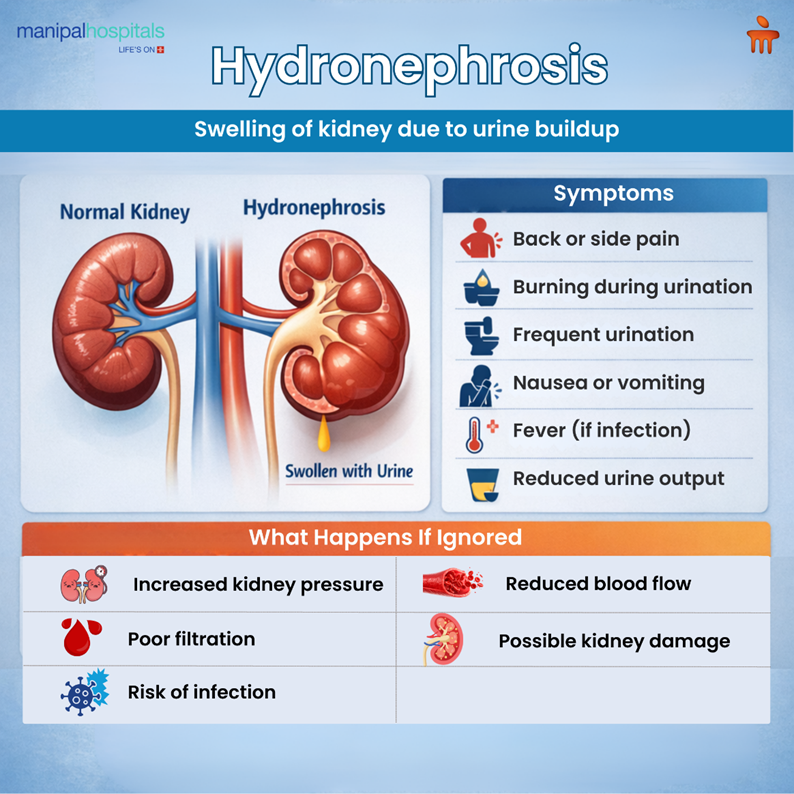
Hydronephrosis means the swelling of one or both kidneys when urine builds up in the renal collecting system. It is not a standalone disease but a clinical condition that typically results from an obstruction or functional impairment within the urinary tract.
Normally, urine flows from the kidneys to the bladder without any blockage through the ureters into the bladder in a continuous and unobstructed manner. When urine flow is blocked, it starts collecting above that point. This slowly raises pressure in the renal pelvis and calyces, causing them to stretch. Over time, the kidney looks enlarged on imaging.
Why Do Kidneys Become Enlarged?
Kidney enlargement in hydronephrosis happens when urine does not drain properly and starts collecting within the renal collecting system. As the process continues, pressure inside the kidney starts to rise, causing the renal pelvis and calyces to gradually stretch.
How does this process develop?
This usually builds up over time:
-
A blockage or functional issue develops somewhere in the urinary tract
-
Urine flow slows down or gets blocked
-
Urine starts collecting above that point
-
Pressure slowly starts building inside the kidney
-
Over time, this pressure stretches the inner parts, causing the kidney to enlarge
This process may take time in some cases, while in others it can develop more quickly, depending on the cause.
What effect does this procedure have on kidney function?
The pressure does not just cause swelling. It can start to affect how the kidney works:
-
The kidney tissue may get pressed
-
Blood flow inside the kidney may be reduce
-
The filtering process may not work as well
If the condition continues, it can raise the risk of infection and may affect kidney function over time.
Causes of Hydronephrosis
Looking at the hydronephrosis causes helps understand what might be blocking the flow. Also, remember that the causes may vary based on patient age, gender, and underlying health conditions.
|
Cause |
Explanation |
|
Obstruct the ureter, blocking urine flow |
|
|
Ureteral stricture |
Narrowing of the ureter restricts drainage |
|
Enlarged prostate |
Compresses the urethra and affects urine flow |
|
Tumours |
External or internal obstruction of urinary pathways |
|
Pregnancy |
Temporary compression of ureters |
|
Congenital abnormalities |
Structural defects affecting urine drainage |
Recognising Hydronephrosis Symptoms
Identifying hydronephrosis symptoms early can help prevent complications and guide timely medical care. The presentation can vary depending on the cause and severity of the condition.
The most common signs and symptoms of hydronephrosis include:
-
A dull ache or discomfort along the side of the lower back
-
Burning or pain while passing urine
-
Feeling the need to urinate more often or urgently
-
Nausea, sometimes with vomiting
-
Fever, especially if there is an infection
-
Passing less urine than usual in more severe cases
In some individuals, especially in the early stages, hydronephrosis symptoms may be mild or not clearly noticeable. This is why paying attention to subtle changes and seeking evaluation when symptoms persist is important.
How is Hydronephrosis Diagnosed?
Diagnosing hydronephrosis is not based on a single test. It usually involves combining clinical findings with imaging and lab results. This helps us understand the presence of kidney swelling and the reason behind it.
Clinical evaluation
Doctors begin by reviewing symptoms, their duration, and any history of kidney stones, infections, or urinary issues. A physical examination may also help identify areas of discomfort and guide further testing.
Imaging studies
Imaging helps confirm the diagnosis and assess severity:
-
Ultrasound is usually the first step and can show kidney enlargement and urine buildup
-
A CT scan provides more detailed information, especially for detecting stones or structural blockage
-
MRI may be used in selected cases when more detail is needed
Laboratory tests
Lab tests help understand how the kidneys are functioning and whether there is an associated infection.
-
Urine test to check for infection or abnormalities
-
Blood tests, including serum creatinine, to evaluate kidney function
A timely diagnosis helps guide appropriate hydronephrosis treatment and prevents further kidney damage.
Treatment Options for Hydronephrosis
Treatment is mainly about removing the blockage so urine can flow again. This helps ease the pressure on the kidney. The next step depends on what is causing it and how serious it is.
Common treatment options include:
-
Medications: Medicines may be given to treat an infection or ease discomfort.
-
Draining the urine: A small tube may be used to help urine drain and reduce pressure.
-
Stone management: If kidney stones are the cause, procedures may be done to break or remove them so that urine can flow normally again.
-
Surgical correction: Surgery may be required to resolve structural problems or remove any obstruction that is blocking the urinary tract.
The treatment for hydronephrosis depends on the cause of the blockage, its severity, and the person's overall health. Treating it early can help prevent additional issues.
When Should You Seek Medical Attention?
Some symptoms may seem mild at first, but it’s still better to get them checked. It is best to see a doctor if you notice:
-
Persistent or severe pain in the flank or lower back
-
Fever, especially when accompanied by chills
-
Difficulty or discomfort while passing urine
-
Presence of blood in the urine
-
A sudden decrease in urine output
Seeking timely care can help identify the underlying cause early and ensure appropriate hydronephrosis treatment, reducing the risk of complications.
Conclusion
Hydronephrosis is not something that should be ignored, especially when symptoms keep coming back or start to worsen. What may seem like a minor issue at first can sometimes point to an underlying blockage that needs attention.
Getting it checked early makes a real difference. With the right care and access to hydronephrosis treatment in Manipal Hospitals Jayanagar, the cause can be identified and managed before it affects kidney function further. Getting it checked early can help avoid complications and supports better recovery in the long run.
FAQ's
Kidney stones, urinary blockages, an enlarged prostate, or tumours are common causes of kidney swelling. These can slow or stop urine flow, leading to pressure buildup in the kidney and the need for medical attention.
You might notice a slight backache, need to go to the loo more often, or have a bit of discomfort when passing urine. Sometimes there are no obvious signs early on, so it’s worth getting it checked if something feels off.
Hydronephrosis is treated by clearing whatever is blocking the urine. That might mean using medicines, draining the urine, or doing a procedure if needed. Getting it treated early helps protect the kidney.
If hydronephrosis is not treated, the constant pressure can slowly damage the kidney. Prompt diagnosis and care can often lower this risk and maintain kidney function.
If you are looking for hydronephrosis treatment in Jayanagar, you can reach out to our experts at Manipal Hospital Jayanagar for accurate diagnosis and effective management tailored to your condition.
Share this article on: