7 Min Read
Cancer is the leading cause of death worldwide, accounting for nearly 10 million deaths in 2020.1 It can occur at any age; however, the risk rises with age. Any unusual symptoms or non-healing wounds may be a sign that you have cancer. Recognising early signs of cancer increases the chances of successful treatment by identifying cancer in its early stages. Although cancer warnings may be subtle at first, recognising them early is crucial for optimal outcomes.
In this blog post, we’ll discuss early signs of cancer that you should never ignore.
Synopsis
Early Signs and Symptoms of Cancer
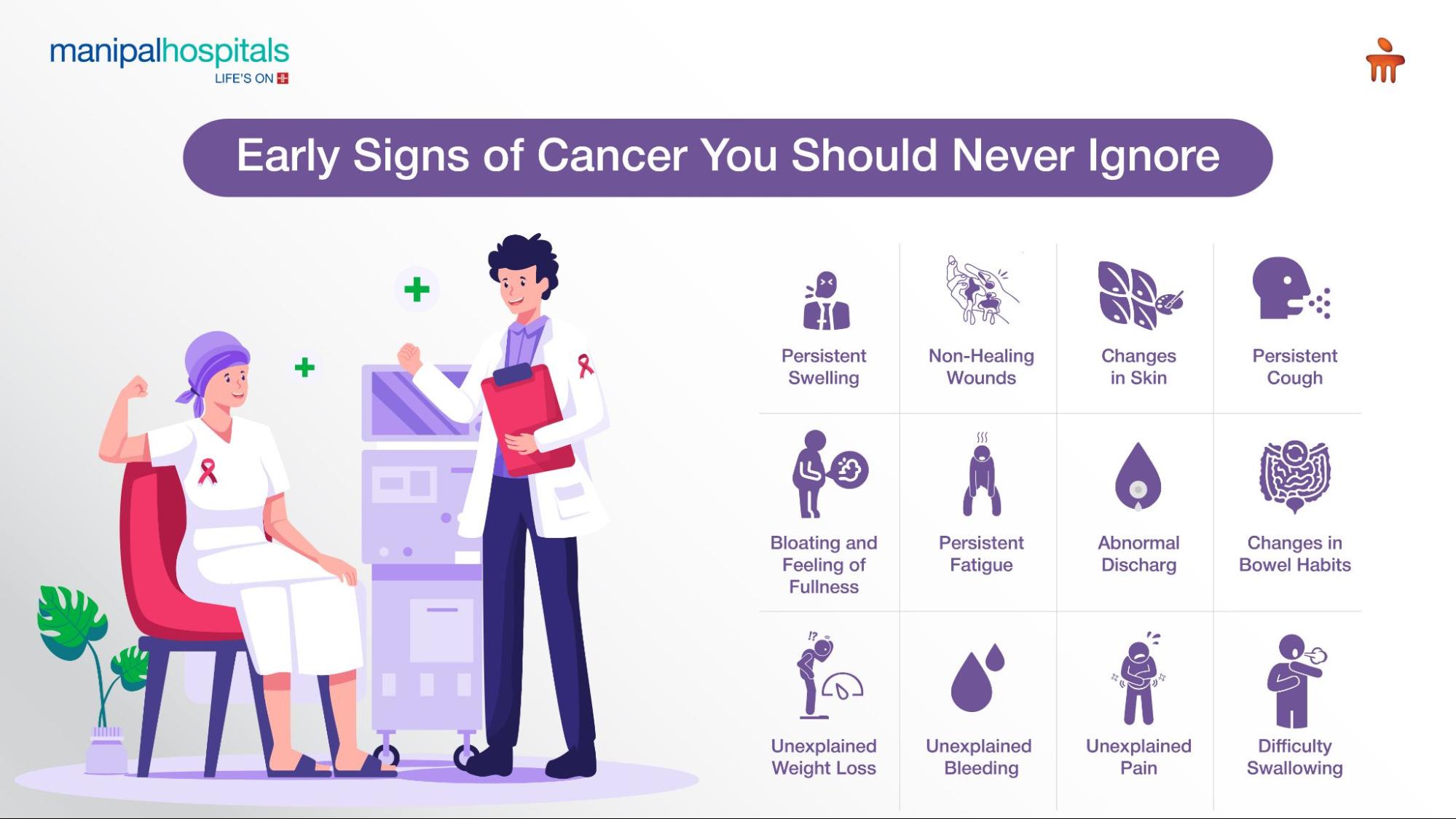
Common early warning signs of cancer include:
- Swelling that is increasing in size
A swelling, bump, or overgrowth in any part of the body, including the breast and testicles, which has been growing slowly, must not be taken lightly and should be examined by a healthcare professional.
- Non-healing wounds or ulcers
A wound or ulcer that does not heal within a reasonable time is a cause for concern. If the wound remains open, deteriorates, or shows no sign of improvement, it could be an early sign of cancer.
- Unexplained bleeding
Any bleeding without apparent cause, including coughing up blood, blood in stool or urine, or bleeding from any other part, must not be ignored.
These can be early signs of various cancers, including
-
Colorectal cancer
-
Lung cancer
-
Gastrointestinal cancer
-
Vaginal cancer
- Abnormal discharge or changes in the nipple
Changes in nipple position, inverted nipple, alteration in size, unusual discharge, or inflammation must not be taken lightly. Such changes are often an early sign of breast cancer, which prompts a visit to the doctor as soon as possible.
- Persistent cough or unexplained hoarseness
A cough that does not go away for more than three weeks or hoarseness of voice that sets in gradually needs to be investigated by the doctor. If there is no infection or underlying cause, these symptoms can be an indicator of lung cancer, throat cancer, cancer of the larynx, or other respiratory symptoms. Early discovery of these malignancies may result in improved treatment results.
- Changes in bowel habits
If you develop any sudden changes in bowel habits, such as prolonged constipation, diarrhoea, or changes in stool consistency, do not ignore them, especially if you are between the ages of 60 and 65 years. These could be early signs of colorectal cancers. Blood loss due to colorectal cancer is slow and not noticeable, which could lead to anaemia, fatigue, and other signs and symptoms. Similarly, changes in the urination pattern, such as frequency or blood in urine, may suggest bladder or prostate cancer. Early-stage cancer screening can help detect these symptoms early before they become severe.
- Bloating and a feeling of fullness
Persistent bloating or fullness must not be confused with weight gain. If the cause of bloating is not due to significant dietary or lifestyle changes, it could be a sign of ovarian cancer or another serious condition. These symptoms are particularly more concerning for individuals experiencing unexplained digestive symptoms or in postmenopausal women.
- Unexplained weight loss
Sudden or unexplained weight loss without significant changes to diet or exercise could be an indicator of various types of cancer, including
-
Lung cancer
-
Pancreatic cancer
-
Stomach cancer
-
Oesophageal cancer
- Persistent fatigue
Chronic fatigue that does not improve with rest could be an indicator of cancer; particularly, it can be an early sign of blood cancer, such as leukaemia, or cancer affecting the bone marrow. The exhaustion can make everyday activities harder.
- Changes in skin
Unusual moles or changes in existing moles, such as size, shape, or colour, could be early signs of skin cancer symptoms. Other concerning skin changes are
-
yellowing
-
darkening
Early cancer detection is particularly important for skin cancers, as they are often treatable if found early. Skin changes should be checked by a healthcare practitioner.
- Unexplained pain
Persistent pain without any clear cause that doesn’t improve over time is another early sign of cancer. If the symptoms develop particularly in the back, abdomen, or joints, it could be an early sign of
-
Prostate cancer
-
Ovarian cancer
-
Bone cancer
If unexplained pain lasts for weeks, it is important to consult your healthcare provider.
- Difficulty swallowing or indigestion
Ongoing difficulty in swallowing or ongoing indigestion that doesn’t resolve could be a sign of cancers affecting the throat, stomach, or oesophagus. These early warning signs could be mistaken for other conditions and must be evaluated by an oncologist if symptoms persist.
If you notice any of these symptoms, it is crucial to consult a medical expert and seek medical treatment without delay.
When should you see a doctor regarding cancer symptoms?
You should immediately see a doctor, if you experience:
-
Fever of 100.4°F (38°C) or higher: Low white blood cell counts make infections rapidly life-threatening (especially critical during chemotherapy).
-
Sudden weakness, numbness, or loss of bowel/bladder control: Signs of spinal cord compression from a tumour, which can cause permanent paralysis if not treated immediately.
-
Severe, sudden shortness of breath or chest pain: Can indicate a blood clot in the lungs or fluid building up rapidly around the heart or lungs.
-
Seizures, confusion, or severe headache: Sudden neurological changes that can indicate pressure on the brain or dangerous metabolic imbalances.
-
Uncontrolled or heavy bleeding: Vomiting blood, heavy rectal or vaginal bleeding, or severe nosebleeds caused by a ruptured vessel or low platelet count.
-
Sudden swelling of the face, neck, or arms: Indicates Superior Vena Cava Syndrome, where a tumour blocks the main vein draining blood from the upper body.
How are cancer symptoms diagnosed?
To diagnose the underlying cause of potential cancer symptoms, doctors use a combination of structured tests to locate, visualize, and analyse abnormal cells. Cancer symptoms are diagnosed through:
-
Clinical evaluation- A thorough review of your medical history, family history, and a physical exam to check for physical abnormalities like lumps, skin changes, or enlarged organs.
-
Imaging tests- Non-invasive scans- such as X-rays, Ultrasounds, CT scans, MRIs, and PET scans- that allow doctors to look inside the body and locate abnormal masses or tumours.
-
Laboratory tests- Blood, urine, or other bodily fluid tests that check for tumour markers (substances made by cancer cells) and evaluate overall organ function.
-
Biopsy (The Gold Standard)- Extracting a small sample of tissue or cells using a needle, endoscope, or surgery, which is then analysed under a microscope by a pathologist to confirm the presence of cancer.
-
Endoscopic exams- Inserting a thin, flexible tube with a camera (like a colonoscope or bronchoscope) into body openings to directly visualize internal linings and take tissue samples.
-
Genetic and Molecular testing- Analysing the DNA of biopsy samples to identify specific genetic mutations, helping doctors determine the exact subtype of cancer and guide targeted treatments.
Conclusion
Early diagnosis is essential for improving cancer treatment results. While many symptoms may seem minor or unrelated, paying close attention to unusual changes in your body, such as persistent pain, unexplained weight loss, or non-healing wounds, can lead to early diagnosis and more effective treatment.
At Manipal Hospitals, Dhakuria, we are committed to raising awareness about these warning signs and encourage individuals to seek timely medical advice.
FAQ's
Cancer occurs when normal cells divide and proliferate uncontrollably. These cells form masses called tumours that can interfere with normal body functions. These cells continue to grow even when the body does not require them.
Cancer can develop at any age, but the risk increases with age. Common risk factors include:
-
Dietary factors
-
Sedentary lifestyle
-
Smoking habits
-
Environmental exposures
-
Family history
Dietary choices can increase or reduce the risk of developing cancer. Consuming fruits and vegetables and whole grains, limiting red and processed meats, reducing sugary drinks, and maintaining a healthy weight can lower your cancer risk.
The effectiveness of cancer treatments can vary depending on the cancer type and stage. Some treatments available today can completely cure cancer, while others focus on controlling the disease and managing symptoms.
Not all cancers are preventable, but some lifestyle modifications can reduce their risk. Key preventive measures to follow are:
-
Avoiding tobacco
-
Regularly exercising
-
Following a healthy diet
-
Protecting skin from sun damage
-
Undergoing regular screening
Share this article on: