6 Min Read
Bladder cancer is a condition arising from the uncontrollable growth of inner lining cells of the urinary bladder. With an incidence rate of 5.6 per 100000 population worldwide, it is a significant global health concern. Only a combined team of expert urologists and oncologists can provide comprehensive, patient-centric care, leveraging cutting-edge technology and innovative therapies to combat this disease.
Globally, bladder cancer is the tenth most common cancer. However, with early detection and appropriate treatment strategies, the 5-year survival rate for localised bladder cancer can be as high as 96%.
Synopsis
Understanding bladder cancer
The urinary bladder is a hollow, muscular organ that stores urine. Bladder cancer typically begins in the cells lining the inside of the bladder. While it can affect anyone, certain risk factors increase the likelihood of developing it. Therefore, awareness towards the symptoms can help in early detection that plays a pivotal role in improving prognosis and quality of life.
Recognising bladder cancer symptoms
Being aware of potential bladder cancer symptoms and avoiding the certain risk factors are the initial steps towards timely intervention.
The most common risk factors for bladder cancer are,
-
Increasing age (>50 yrs)
-
Male sex
-
Tobacco use (smoking)
-
Exposure to industrial dyes, paints, rubber and leather industry chemicals etc
-
Neglected urinary bladder stones
-
Long term use of urinary catheter
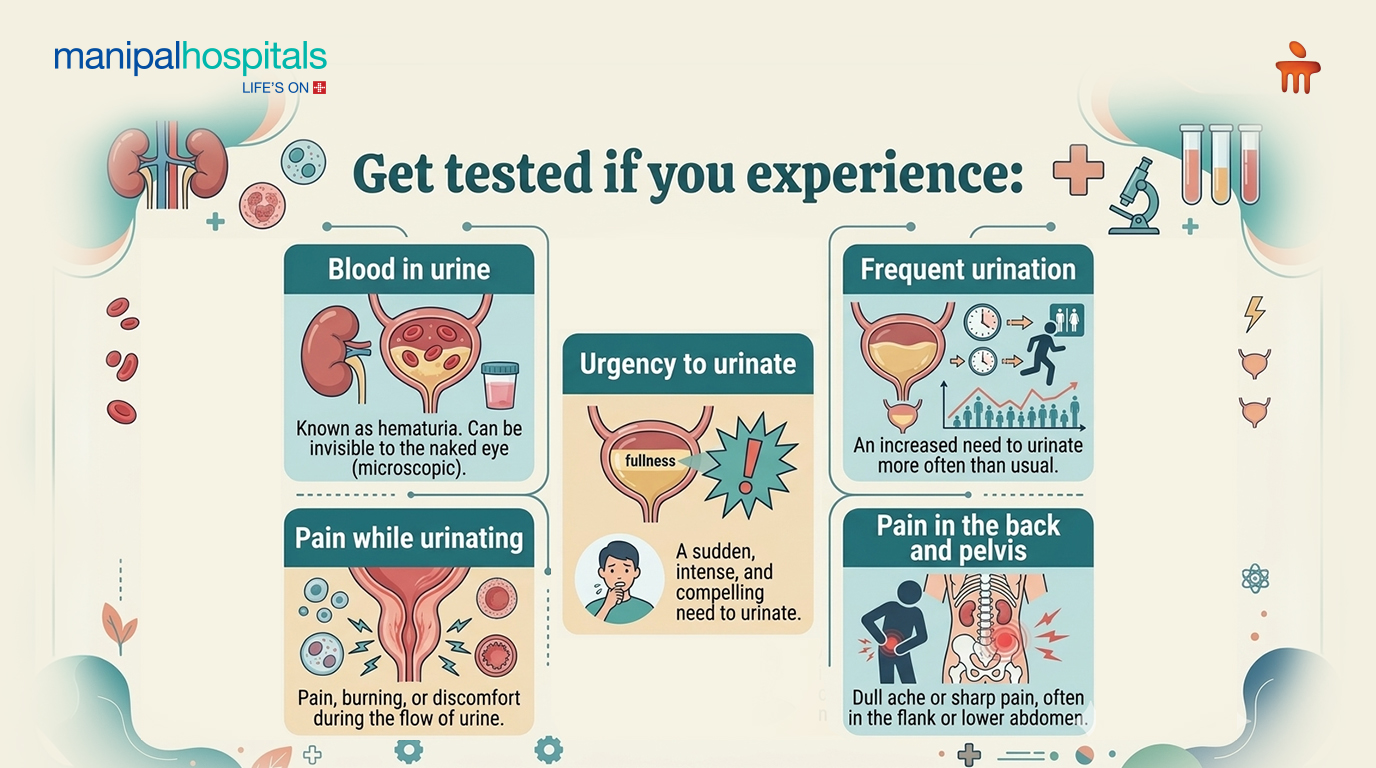
While certain symptoms can be indicative of other conditions, persistent changes warrant a consultation. Common urinary bladder cancer symptoms often include:
-
Haematuria- The most common symptom is the presence of blood in the urine which makes it appear rusty, brown, or bright red.
-
Frequent urination- The need to urinate more often than usual.
-
Painful urination- A burning sensation or discomfort during urination.
-
Urinary urgency- Feeling the need to urinate immediately.
-
Back or pelvic pain- Persistent pain around the pelvis and back, especially in the advanced stages.
Bladder cancer types and stages
Urinary bladder cancer is broadly classified based on the cell types involved, which dictates the aggressiveness and treatment approach. Staging helps determine the extent of the cancer and whether it has spread to other parts of the body, allowing doctors to choose the most appropriate bladder cancer treatment. The different types include:
1. Urothelial Carcinoma (Transitional Cell Carcinoma)
This is the most common type of bladder cancer, accounting for over 90% of cases. It begins in the urothelial cells that line the bladder. It is further classified as:
-
Non-Muscle Invasive Bladder Cancer (NMIBC)- Cancer cells are limited only to the inner lining, not grown into the deeper muscle. This represents about 75-80% of new diagnoses.
-
Muscle Invasive Bladder Cancer (MIBC): Cancer cells have grown into the muscle layer or beyond, posing a higher risk of spreading and requiring more intensive bladder cancer treatment.
2. Other types
The other less common types of urinary bladder cancer include:
-
Squamous Cell Carcinoma- Cancer cell growth starts in the flat cells and are often linked to chronic irritation. This accounts for 1-2% of all bladder cancers.
-
Adenocarcinoma- Accounting for just 1% of the new diagnoses, this cancer begins in the glandular, mucus-secreting cells.
Bladder Cancer Diagnosis
Accurate bladder cancer diagnosis is paramount for effective treatment. Effective diagnostic protocols utilise advanced technology, often involving:
-
Cystoscopy- A procedure using a thin tube with a camera to visualise the bladder lining.
-
Biopsy- Examination of the tissue samples taken during cystoscopy to confirm cancer.
-
Urine Cytology- A lab test to detect cancer cells in urine.
-
Imaging tests- CT, MRI, and ultrasound scans can help determine the extent of cancer spread.
Advanced treatment for bladder cancer
A range of bladder cancer treatment options are now available and are tailored to the type, stage, and extent of the disease, as well as the patient's overall health. A multidisciplinary approach helps ensure personalised care and the most effective treatment outcomes.
Treatment for Non-Muscle Invasive Bladder Cancer (NMIBC)
For NMIBC, treatments aim to remove the tumour and prevent recurrence, through:
-
Transurethral Resection of Bladder Tumour (TURBT)- This surgery is considered as the primary treatment to remove tumours from the bladder lining.
-
Intravesical Therapy- This includes medications (e.g., BCG immunotherapy or chemotherapy) that are instilled directly into the bladder to kill remaining cancer cells and prevent recurrence.
Treatment for Muscle Invasive Bladder Cancer (MIBC) & advanced bladder cancer
MIBC and advance-stage cancers require more aggressive approaches due to its higher risk of spread:
-
Radical Cystectomy- Major surgery to remove the entire bladder and nearby lymph nodes.
-
Chemotherapy- Used before or after surgery to shrink tumours or kill remaining cancer cells.
-
Radiation therapy- Uses high-energy rays to kill cancer cells, sometimes as an alternative to surgery.
-
Immunotherapy- Breakthrough treatments harnessing the body's immune system to fight cancer cells, showing remarkable results for many patients, including those with advanced disease.
-
Targeted therapy- Drugs designed to target specific weaknesses in cancer cells, particularly for advanced cases.
Care essentials
Managing bladder health and reducing recurrence risk involves conscious lifestyle choices and adherence to medical advice.
-
Drink plenty of water to stay hydrated.
-
Adhere to your surveillance schedule post-treatment and follow-up with your doctor diligently.
-
Do not ignore persistent urinary symptoms. Seek medical attention promptly.
-
Eat a balanced diet and engage in regular physical activity to maintain a healthy lifestyle.
-
Quit smoking as it is the single most impactful step to reduce recurrence risk.
-
Avoid delaying follow-up appointments. Post-treatment surveillance is crucial.
Conclusion
Urinary symptoms should never be ignored, as they may indicate an underlying bladder condition, including bladder cancer. Early diagnosis and timely treatment at Manipal Hospitals can significantly improve outcomes and quality of life. If you notice persistent signs of a urinary disorder or are suspicious of urinary bladder cancer symptoms, consult the Urology and Uro-oncology experts at Manipal Hospitals Dhakuria for comprehensive evaluation, advanced treatment options, and personalised care tailored to your needs.
FAQ's
Smoking is the biggest risk factor for bladder cancer. Exposure to certain industrial chemicals, chronic bladder inflammation, and a family history of the disease also increase risk.
Yes, especially when diagnosed at an early stage. Non-muscle invasive bladder cancer has a very high cure rate with appropriate treatment. Even advanced bladder cancer has seen significant improvements in survival rates with modern therapies.
Non-muscle invasive bladder cancer (NMIBC) is confined to the inner lining of the bladder, while muscle invasive bladder cancer (MIBC) has grown into the deeper muscle layers of the bladder wall, making it more aggressive and more likely to spread.
The frequency of follow-up appointments and tests (like cystoscopy) depends on the stage and type of your bladder cancer and your individual risk of recurrence. It's crucial to discuss a personalized surveillance plan with your Manipal Hospitals specialist.
While no specific diet cures bladder cancer, a healthy, balanced diet rich in fruits, vegetables, and whole grains can support overall health and may reduce cancer risk and recurrence. Limiting processed foods and red meat is generally recommended for good health.
Share this article on: