




 6 Min Read
Cancer—a word we all fear, but knowledge is its powerful rival. Whether you’re anxiously googling the early signs for peace of mind or supporting a loved one through their cancer journey, understanding the stages of cancer can be the difference between feeling helpless and feeling empowered. Today, we break down everything you need to know about cancer stages and give you plain, honest answers. And, if you’re looking for expert care at every step, head over to our skilled oncologists in Delhi—ones who treat bodies with compassion.
Synopsis
- What is Cancer?
- How Many Stages of Cancer Are There? The Number Matters
- What Are the Stages of Cancer? Your Cancer Map
- Which Stage of Cancer Is Dangerous? Understanding the Risks
- Early Stages of Cancer: Why They Matter Most
- How Are Stages of Cancer Determined? The Diagnostic Detective Work
- Different Stages, Different Treatments: What’s Next?
- Which Stage of Cancer Is Curable? The Honest Truth
- Why Expert Staging and Treatment Matters
What is Cancer?
Cancer is a disease that causes the body’s cells to grow and multiply unchecked, breaking the natural laws of life and death. Usually, cells die after they have done their work. These abnormal cells multiply inappropriately and may form lumps (tumours) or spread all over the body.
Cancer is not just one single disease; it is a group of more than 100 different types, each attacking a specific set of cells in the body; the one thing they all share, however, is this unchecked, detrimental growth.
How cancer begins is crucial to how it is diagnosed, treated, and, most importantly, fought back against.
How Many Stages of Cancer Are There? The Number Matters
Let’s start with what most people want to know right away: How many stages of cancer are there?
For almost all types of cancer, doctors use a number system with four main stages, sometimes written in Roman numerals as I, II, III, and IV. Some cancers might also have a stage 0, known as carcinoma in situ (where abnormal cells haven’t spread at all yet).
|
Stage |
What It Means |
|
0 |
Abnormal cells found, but not spread (considered pre-cancerous) |
|
1 |
Localised cancer, contained where it started |
|
2 |
Cancer grows, may reach nearby tissue/lymph nodes |
|
3 |
Larger tumour, more spread nearby |
|
4 |
Cancer has spread to distant organs, advanced stage |
The higher the number, the further the cancer has grown or spread.
What Are the Stages of Cancer? Your Cancer Map
Stage 0: Carcinoma in situ
This means abnormal cells are found, but they're still in the layer where they started. It’s often very treatable and sometimes even curable.
Stage 1: Early Stage
The cancer is small and has not spread beyond where it began. This stage is often curable, especially when caught early.
Stage 2: Local Growth
The tumour is bigger and may have started to move into nearby tissue or lymph nodes, but hasn’t made a run for other parts of the body yet.
Stage 3: Regional Spread
Cancer’s grown further, possibly invading nearby structures or more lymph nodes. Doctors may call this “locally advanced”.
Stage 4: Advanced or Metastatic
Cancer has travelled through the body (metastasised) to distant organs like the liver, lungs, or bones. Treatment is still possible; the aim may range from cure to control or symptom relief.
Which Stage of Cancer Is Dangerous? Understanding the Risks
Simply put, the danger level rises with the stage number. Stage 4 is the most dangerous type, as it means the cancer has spread elsewhere in the body. However, with advances in medicine and expert teams like ours, even advanced cancers have more treatment options and hope than ever before. Early-stage cancers (stage 1 and sometimes stage 2) are generally the most curable.
Early Stages of Cancer: Why They Matter Most
Catching cancer in stage 1 or 2 massively bumps up the odds of successful treatment, often a cure.
That’s why early diagnosis through screenings, listening to your body, and regular check-ups with our cancer care experts is so vital.
Early stages usually mean smaller cancers, fewer or no lymph nodes involved, and a clearer path to recovery.
How Are Stages of Cancer Determined? The Diagnostic Detective Work
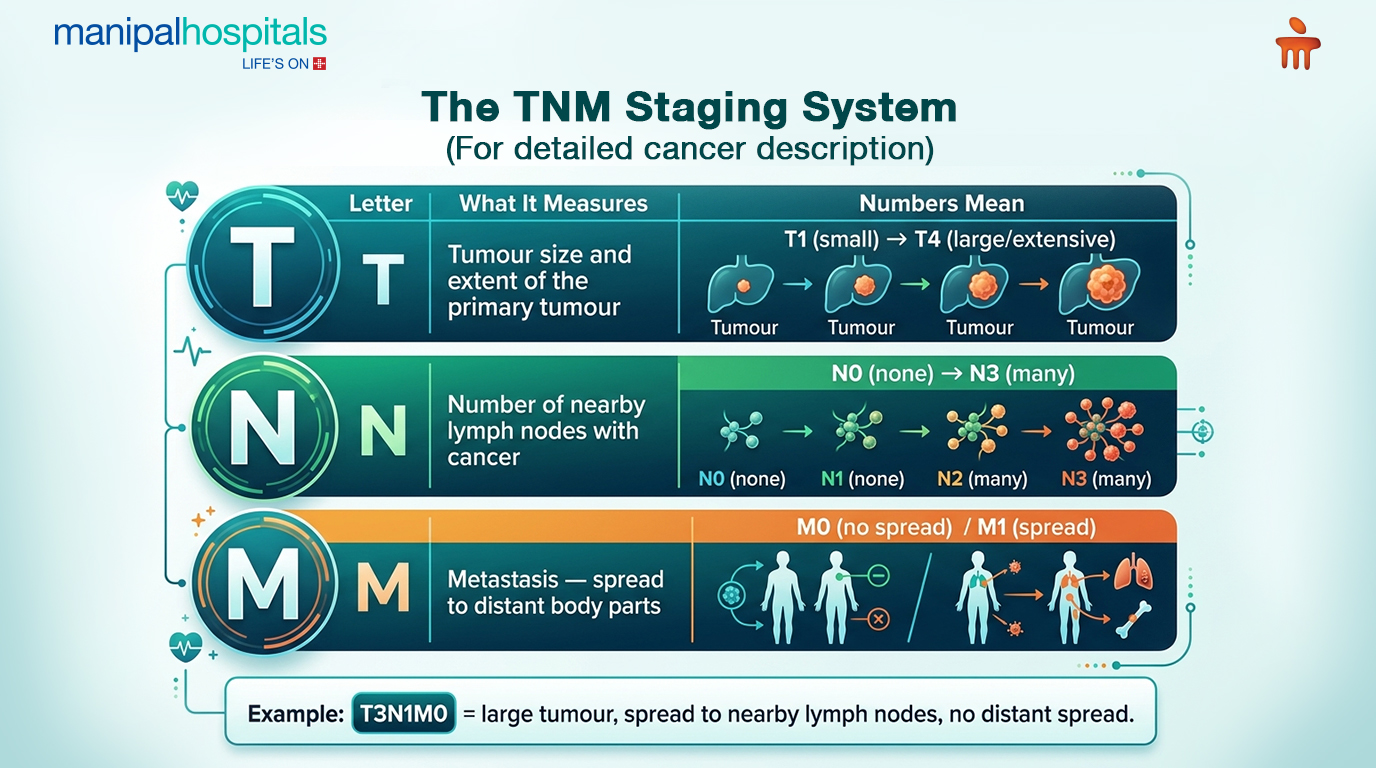
If you’re wondering how the stages of cancer are determined, it’s through careful detective work—no guesswork involved. Our experts use scans, biopsies, blood tests and sometimes surgery to explore:
-
Tumour size (T)
-
Whether lymph nodes are involved (N)
-
If the cancer has spread elsewhere (M)
This is called the TNM system (Tumour, Node, Metastasis). Once each piece of the puzzle is clear, doctors assign a stage number. Sometimes, specific cancers use slightly different staging systems.
Our cancer care experts in Delhi combine modern technology, know-how, and compassion to ensure your diagnosis is spot on the first time.
Different Stages, Different Treatments: What’s Next?
Stage 1 cancers
They can sometimes be removed with surgery alone. Caught this early, your chance of a cure is highest.
Stage 2 and 3 cancers
These often need a mix of treatments—surgery, chemotherapy, and/or radiotherapy. The aim could be to cure, long-term control, or make you feel better by shrinking the tumour.
Stage 4 cancer
They might need all the above and sometimes newer treatments, called targeted therapies or immunotherapy. Even here, our doctors can help control the disease, ease symptoms, and give you more good days.
Our oncologists in Delhi pride themselves on tailoring treatment to every unique person, not just the stage of their disease.
Which Stage of Cancer Is Curable? The Honest Truth
Most likely to be curable: stage 1, sometimes stage 2. Even some stage 3 cancers can be cured, especially with the right team and treatment plan. Stage 4 cancer is usually not curable, but many people live well for years with advanced cancer when they’re in expert hands. Our doctors in Delhi are here to provide expertise in providing comprehensive cancer care and treatment to every one of their patients.
Why Expert Staging and Treatment Matters
You can contact us to ensure your cancer is staged with the utmost care and accuracy, because getting it right from the start, with guidance from our top specialists, can shape your entire cancer journey. Accurate staging leads to personalised care, more effective outcomes, and renewed hope. At our facility, your story, your emotions, and your future always come first.
FAQ's
Most cancers have four stages (1–4). Some include a stage 0 for very early, non-invasive disease.
Stage 4 (also written as IV) is the last. It means cancer has spread to other parts of the body.
Stage 4 is generally the most dangerous because it means the cancer is advanced and has spread.
Stage 1 (and sometimes stage 2 and even stage 3) cancers are often curable, especially if caught early and treated by an expert team.
Through scans, biopsies, and special tests that show the tumour size, lymph node involvement, and whether it has spread, using the TNM system.
Share this article on:





