6 Min Read
The monsoon season brings refreshing showers, cooler temperatures, and a break from the summer heat. But this also comes with the increased risk of infections, especially among children. Sudden temperature changes, high humidity, and stagnant water allow bacteria, viruses, and mosquitoes to multiply. As a result, children often fall sick with the common cold, flu, diarrhoea, typhoid, dengue, and other seasonal infections.
Many parents wonder: How can I prevent my child from falling sick again and again during the rainy season? The answer lies in naturally strengthening your child’s immune system.
The immune system is the body’s defence against infections. In children, it is still developing, making them more prone to illnesses, especially when exposed to germs. During the monsoon, weak immunity can lead to recurrent fevers, coughs, sore throats, skin infections, stomach pain, and fatigue. While no supplements can replace a strong immune system, natural immunity boosters for kids play a crucial role in this regard. Balanced nutrition, proper sleep, good hygiene, and guidance from a paediatrician can help keep children healthy during the monsoon.
Let’s look at what weakens immunity during the monsoon, which foods and habits strengthen your child’s resistance, and how to choose the best immune boosters for their specific needs.
Synopsis
- Why Do Children Fall Sick More Often During Monsoon?
- How the Immune System Works in Kids
- Monsoon Immunity Boosters for Kids: What Really Helps?
- How Can Parents Prevent Monsoon Infections in Children?
- Choosing the Best Immune Booster for Kids
- When Should You See a Paediatrician During Monsoon?
- Conclusion
Why Do Children Fall Sick More Often During Monsoon?
The rainy season creates an environment that is favourable for the growth and spread of pathogens:
-
Humidity and dampness reduce the effectiveness of the skin as a barrier.
-
Fluctuating temperatures make the body more susceptible to cold and flu.
-
Contaminated water and food can easily cause stomach infections.
-
Mosquito breeding increases the risk of diseases like dengue and malaria.
-
Closed indoor spaces with poor ventilation allow viruses to spread more quickly.
How the Immune System Works in Kids
In children, the immune system is constantly developing. Early exposure to different germs helps build their natural defences, but during seasons with high infection rates, like the monsoon, they need extra support.
A strong immune system reduces the severity and frequency of infections and supports faster recovery. This is why focusing on natural immunity boosters for kids, especially during the monsoon, is so important.
Monsoon Immunity Boosters for Kids: What Really Helps?
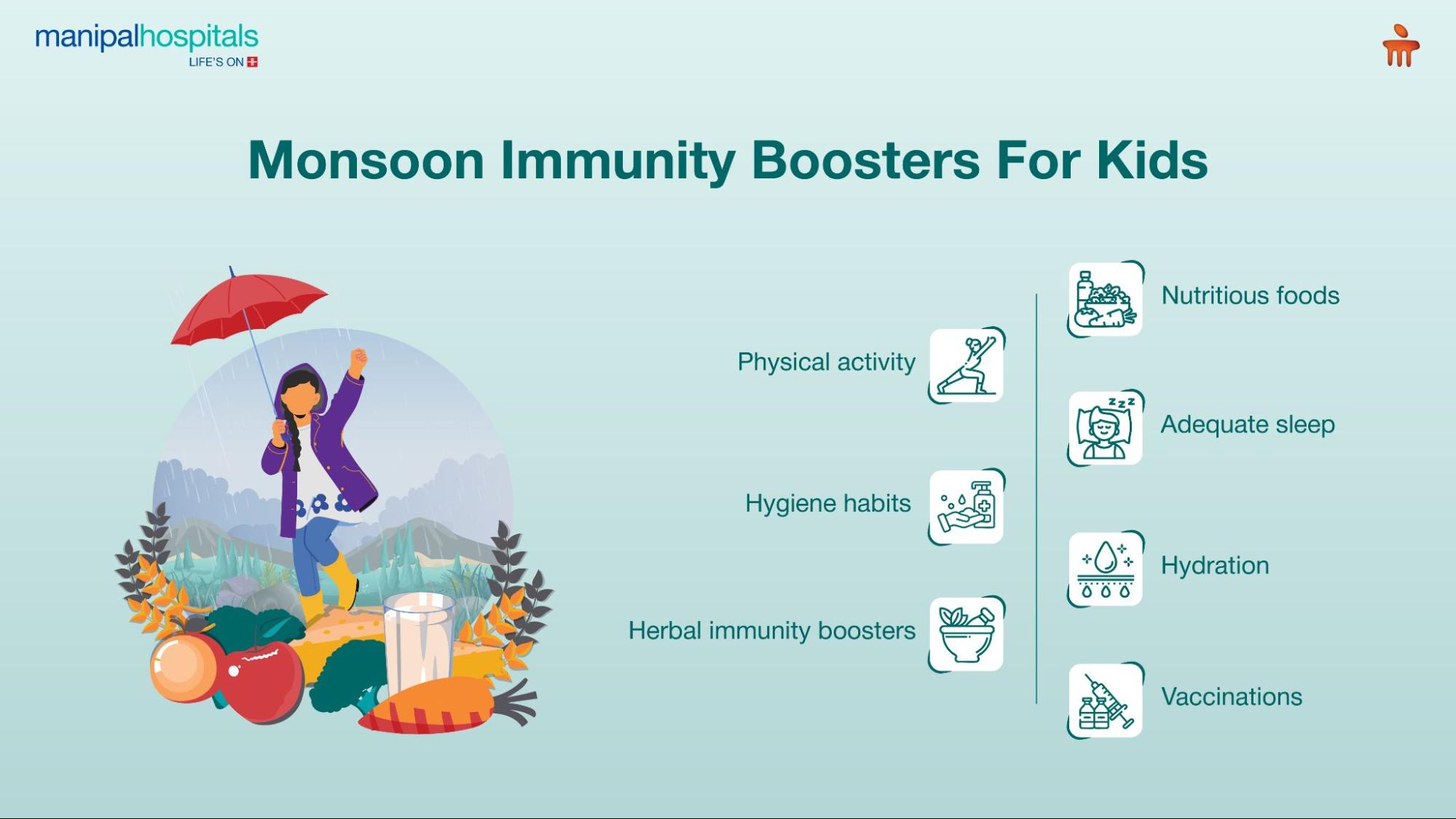
1. Nutritious Foods That Build Immunity
-
Citrus Fruits (oranges, lemons, amla): Rich in vitamin C, which boosts white blood cell production.
-
Turmeric: Contains powerful antioxidant and anti-inflammatory properties.
-
Ginger and Garlic: These are natural antivirals. They also support digestion and respiratory health.
-
Yoghurt: Contains probiotics that strengthen gut health.
-
Green Leafy Vegetables: Rich in vitamins, iron, and antioxidants.
-
Nuts and Seeds (almonds, walnuts, flaxseed): Contain healthy fats and vitamin E, which are important for immune function.
2. Herbal Immunity Boosters
-
Tulsi (Holy Basil): A natural adaptogen that helps the body cope with stress and infections.
-
Giloy: It helps reduce fever and enhances immunity.
-
Ashwagandha: It boosts stamina and supports immune response.
Always consult a paediatrician before giving herbal supplements to children.
3. Adequate Sleep and Physical Activity
-
Sleep is when the body recovers and repairs.
-
Children aged 3-12 years need 9-12 hours of sleep per night.
-
Encourage physical activity through indoor games, yoga, or dance to keep the immune system active and resilient.
4. Hydration and Clean Water
Provide filtered or boiled water to avoid waterborne diseases. Add soups, fresh juices, or coconut water to their diet to maintain hydration.
5. Vaccinations and Regular Health Check-ups
Make sure to follow the immunisation schedule according to the child's age. Doctors might suggest other optional vaccines, like flu shots, during regular health check-ups, based on the child's condition.
6. Hygiene Habits
-
Encourage children to wash their hands frequently with soap.
-
Keep nails trimmed and discourage putting hands in the mouth.
-
Use mosquito nets or repellents to prevent vector-borne diseases.
How Can Parents Prevent Monsoon Infections in Children?
Monsoon causes a massive spike in waterborne, mosquito-borne, and viral illnesses. Here are the most effective, actionable ways to protect your child’s health during the rainy season:
Ensure water and food safety
-
Boil drinking water- Ensure your child drinks only boiled or heavily purified water to completely eliminate the risk of waterborne diseases like typhoid, jaundice, and cholera.
-
Strictly avoid street food- Stick to freshly cooked, warm home meals. Completely avoid raw salads, pre-cut fruits, or outside juices that easily harbour harmful bacteria in high humidity.
-
Wash produce thoroughly- Soak all vegetables and fruits in warm water with a pinch of salt or baking soda before cooking or eating to remove persistent surface contaminants.
Protect against mosquitoes (Dengue & Malaria)
-
Eliminate stagnant water- Weekly, empty or cover plant pots, buckets, coolers, and old tires around your home to destroy breeding grounds for dengue-carrying mosquitoes.
-
Use age-appropriate repellents- Apply child-safe mosquito repellent creams, roll-ons, or patches when they go outdoors, and use mosquito nets over their beds at night.
-
Dress in full clothing- Have your child wear loose-fitting, light-coloured, long-sleeved shirts and full pants to physically block mosquito bites.
Boost daily hygiene and immunity
-
Enforce strict handwashing- Make it a non-negotiable rule that your child washes their hands with soap for 20 seconds immediately after returning home, using the bathroom, and before every meal.
-
Bathe immediately after rain exposure- If your child gets caught in the rain or jumps in puddles, give them a warm bath with an antibacterial soap right away to wash off toxic rainwater and fungal spores.
-
Serve immunity-boosting foods- Incorporate foods rich in Vitamin C (like citrus fruits and amla), ginger, garlic, and warm, clear broths to strengthen their natural immune response.
Choosing the Best Immune Booster for Kids
With many over-the-counter products and home remedies available, it can be difficult to know what is best for your child. Here are some tips:
-
Look for supplements with vitamin C, zinc, and vitamin D, key nutrients for immune health.
-
Prefer sugar-free and preservative-free formulations.
-
Avoid self-prescribing. Always seek advice from a paediatrician.
-
Consider age-appropriate formulations; what suits a toddler may not be right for an older child.
When Should You See a Paediatrician During Monsoon?
Take your child to the nearest emergency clinic or paediatrician right away if you observe any of the following emergency symptoms:
-
Infant Fever- Any fever (even mild) in a baby under 3 months of age
-
Difficulty breathing- Rapid, shallow breathing, flaring nostrils, or chest "grunting" and retracting heavily as they breathe
-
Severe lethargy- Your child is unusually drowsy, extremely difficult to wake up, or completely unresponsive
-
Seizures or fits- Any sudden convulsions or shaking, which can be triggered by rapidly spiking fevers (febrile seizures)
-
Signs of internal bleeding- Bleeding from the gums or nose, or seeing blood in their vomit, urine, or stool (highly indicative of severe Dengue Haemorrhagic Fever)
-
Severe dehydration- No urination or wet diapers for 6+ hours, crying without tears, a dry/sticky mouth, or sunken eyes
-
Persistent vomiting- Inability to keep any fluids, water, or Oral Rehydration Solutions (ORS) down for several hours
-
Extremely high fever- Any temperature reaching or exceeding 104°F (40°C), or a fever that does not temporarily drop even after giving paracetamol
-
Cold, clammy skin- Especially if the child has cold hands and feet despite running a high body temperature (a sign of potential circulatory shock)
Conclusion
Monsoon is a season of joy, but also a time when your child’s immune system needs extra attention. Incorporating immunity boosters for kids, such as nutritious food, sleep, hygiene, and natural supplements, can improve the body's ability to fight back illness. By understanding the child's needs and consulting the healthcare experts, you can choose the best immune booster for kids.
At Manipal Hospitals, Broadway, our team of paediatricians provides individualised advice to support your child’s immune health during the rainy season.
FAQ's
Foods rich in zinc and vitamin C, such as nuts, seeds, citrus fruits like oranges and amla, and leafy vegetables like spinach, help in boosting a child’s immunity. Fermented foods like curd also support the immune system by increasing the healthy gut bacteria.
Some proven herbal immunity boosters, like tulsi or giloy, can be given to children. But it is important to consult a paediatrician before introducing them to the child, because not all herbs are suitable for all age groups.
Children need 9-12 hours of sleep every night, depending on their age. Good sleep helps strengthen the immune system and supports overall development and learning.
Supplements may not always be necessary, especially if the child is having a balanced diet. In some cases, vitamins like C, D, and zinc are needed to develop immunity. However, it is best to consult a doctor before starting any supplements.
You can book an appointment by visiting the Manipal Hospital's official website or by calling the hospital directly.
Share this article on:


--Symptoms,-Stroke-Risk-and-Modern-Treatment-Options.webp "Atrial Fibrillation (AFib): Symptoms, Stroke Risk and Modern Treatment Options")