5 Min Read
What Is a Kidney Transplant and Why Is It Needed?
A kidney transplant is a surgical procedure in which a healthy kidney from a living or deceased donor is placed into a patient whose kidneys are no longer functioning properly. It is recommended that when chronic kidney disease progresses to end-stage renal failure, other treatments such as medications or dialysis are no longer sufficient.
The main purpose of a kidney transplant is to:
-
Restore normal kidney function
-
Improve energy levels and appetite
-
Reduce long-term health complications
-
Enhance overall quality of life
Compared to lifelong dialysis, most patients experience greater independence and improved physical and emotional well-being after transplantation.
Synopsis
- Understanding the Kidney Transplant Process
- Kidney Transplant Procedure: Step-by-Step
- Immediate Recovery After Kidney Transplant
- Kidney Transplant After Care: Long-Term Recovery
- Lifestyle Adjustments
- Do’s and Don’ts After a Kidney Transplant
- Possible Risks and Complications
- Choosing the Best Kidney Transplant Hospital in Pune
- A Patient’s Story: A New Beginning After Kidney Transplant
- Conclusion
Understanding the Kidney Transplant Process
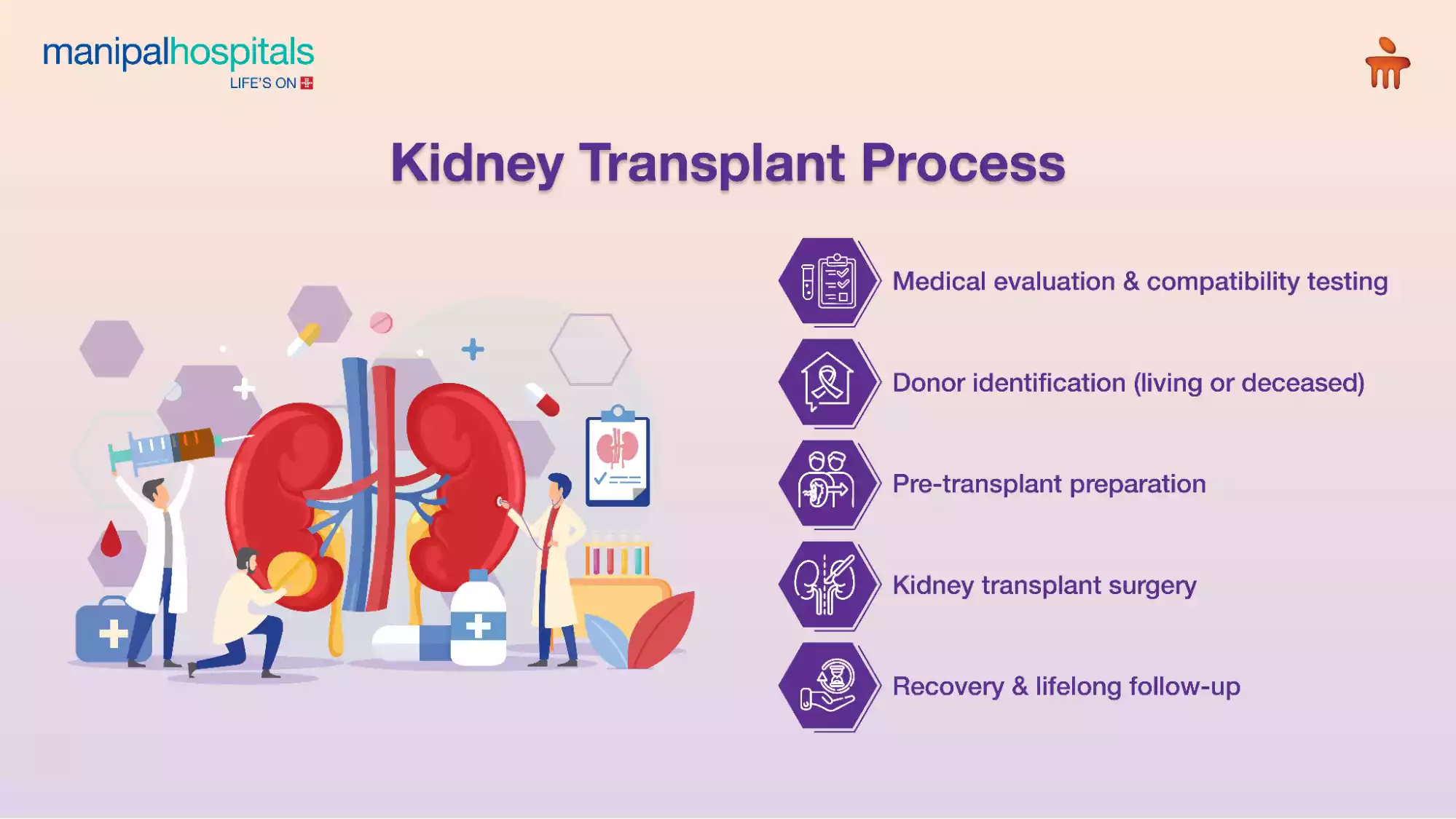
The kidney transplant process begins long before the actual surgery. It includes evaluation, preparation, surgery, and long-term follow-up.
1. Pre-Transplant Evaluation
Patients undergo detailed medical tests to assess heart health, infections, blood type compatibility, and overall fitness for surgery. Psychological counselling and lifestyle assessments are also part of this stage.
2. Finding a Suitable Donor
A kidney can come from:
-
Living donors (family members or compatible donors)
-
Deceased donors (through organ donation programmes)
Matching blood group and tissue compatibility is essential for transplant success.
3. Waiting Period
For deceased donor transplants, patients may remain on a waiting list until a suitable kidney becomes available.
Kidney Transplant Procedure: Step-by-Step
Understanding each kidney transplant procedure step helps reduce anxiety and sets realistic expectations.
Step 1: Pre-Surgery Preparation
Before surgery, the patient is admitted, and final tests are conducted. Immunosuppressive medicines are started to prevent rejection.
Step 2: Anaesthesia
The procedure is performed under general anaesthesia, ensuring the patient is completely asleep and pain-free.
Step 3: Placement of the Donor Kidney
The surgeon makes an incision in the lower abdomen. The new kidney is placed in the pelvic area, and its blood vessels are connected to the patient’s blood supply.
Step 4: Connection to the Bladder
The ureter (tube carrying urine) from the donor kidney is connected to the patient’s bladder to allow urine flow.
Step 5: Completion of Surgery
In most cases, the patient’s own damaged kidneys are left in place unless they cause complications. The surgery usually lasts 3–4 hours.
Immediate Recovery After Kidney Transplant
After surgery, patients are shifted to the intensive care or transplant unit for close monitoring. Most transplanted kidneys begin functioning immediately, while some may take a few days to do so.
A hospital stay typically ranges from 7 to 10 days, depending on the individual's recovery speed and overall health.
Kidney Transplant After Care: Long-Term Recovery
Proper kidney transplant after care is crucial for the success and longevity of the transplanted kidney.
Medications
Patients must take immunosuppressive medicines for life to prevent the body from rejecting the new kidney. Missing doses can be dangerous.
Regular Follow-Ups
Frequent blood tests and check-ups help monitor kidney function and medication levels, especially in the first few months.
Lifestyle Adjustments
-
Maintain a balanced, low-salt diet
-
Stay well hydrated
-
Avoid smoking and alcohol
-
Engage in light physical activity as advised
Do’s and Don’ts After a Kidney Transplant
Do’s
-
Take all prescribed medicines on time
-
Attend regular follow-up appointments
-
Maintain good hygiene to prevent infections
-
Eat fresh, home-cooked meals
-
Stay physically active with doctor-approved exercises
Don’ts
-
Do not skip or alter medications without medical advice
-
Avoid crowded places during early recovery
-
Do not consume raw or undercooked food
-
Avoid self-medication or herbal supplements
Do not ignore warning signs such as fever or reduced urine output
Possible Risks and Complications
While outcomes are highly positive, some risks include:
-
Infection due to reduced immunity
-
Organ rejection
-
Side effects of long-term medications
-
High blood pressure or diabetes
Early detection and timely medical care significantly reduce complications.
Choosing the Best Kidney Transplant Hospital in Pune
Selecting the best kidney transplant hospital in Pune involves evaluating expertise, infrastructure, transplant success rates, and post-transplant care facilities. Advanced transplant programmes with experienced nephrologists, urologists, transplant surgeons, and dedicated support teams play a critical role in long-term success.
Manipal Hospital Baner is recognised for its comprehensive transplant care, advanced surgical facilities, and patient-focused recovery programmes, making it a trusted centre for kidney transplantation in Pune.
A Patient’s Story: A New Beginning After Kidney Transplant
When 42-year-old Rajesh (name changed) was diagnosed with end-stage kidney disease, life revolved around dialysis sessions, fatigue, and constant uncertainty. Three days a week were spent at dialysis centres, leaving little energy for family or work.
After months of evaluation, Rajesh was advised to undergo a kidney transplant. A compatible donor was identified within the family, and the kidney transplant procedure was planned with careful counselling and preparation.
“The fear was real,” he recalls, “but understanding the kidney transplant process step by step gave me confidence.”
Post-surgery, recovery required patience—strict medication schedules, regular follow-ups, and lifestyle changes. Within three months, Rajesh noticed a dramatic improvement. His energy returned, appetite improved, and he resumed daily walks with his family.
Today, he describes the transplant as “a second life,” reminding others that with proper kidney transplant after care, long-term success is absolutely achievable.
Conclusion
Life After a Kidney Transplant
Most patients return to work, travel, and enjoy daily activities within a few months. With proper care, a transplanted kidney can function well for many years, offering a healthier and more fulfilling life. Book an appointment with an expert today.
FAQ's
The success rate of a kidney transplant is high when performed at experienced centres. Most transplanted kidneys function well for many years with proper medication and follow-up care.
The surgery typically lasts 3 to 4 hours, depending on individual medical factors and surgical complexity.
In most cases, dialysis is no longer required after a successful transplant. However, temporary dialysis may be needed if the new kidney takes time to function.
Patients need to follow a balanced diet, avoid infections, take medicines on time, attend regular follow-ups, and maintain a healthy routine with light exercise.
Most patients can return to work and routine activities within 6–12 weeks, depending on recovery and medical advice.
Share this article on:


.webp "Early Signs of Acute Renal Failure")