4 Min Read
Every year, the second Monday of February is observed as International Epilepsy Day—a global initiative dedicated to raising awareness, dispelling myths, and advocating for better care for people living with epilepsy. At Manipal Hospitals Baner, Pune, we proudly stand with this mission, recognising the profound physical, emotional, and social impact epilepsy has on individuals and families.
While epilepsy is one of the most common neurological conditions worldwide, it continues to be surrounded by fear, misinformation, and stigma. International Epilepsy Day serves as a powerful reminder that with timely diagnosis, personalised treatment, and community support, people with epilepsy can lead full, active, and meaningful lives.
Synopsis
- Why International Epilepsy Day Matters
- Understanding Epilepsy: A Simple Overview
- Types of Seizures
- Diagnosis and Advanced Epilepsy Care at Manipal Hospitals Baner
- Personalised Treatment Options
- Seizure First Aid: Do’s and Don’ts Everyone Should Know
- Breaking Stigma Through Awareness
- When to Seek Help
- Conclusion
Why International Epilepsy Day Matters
Epilepsy affects over 50 million people globally, cutting across age, gender, and socioeconomic backgrounds. Despite this, awareness remains low, and many individuals delay seeking treatment due to myths or social stigma.
International Epilepsy Day was established by the International Bureau for Epilepsy (IBE) and the International League Against Epilepsy (ILAE) to create a unified global platform for education, advocacy, and inclusion. Today, the initiative is observed in more than 140 countries, bringing together healthcare professionals, patients, caregivers, and communities.
The key objectives of International Epilepsy Day include:
-
Increasing public awareness about epilepsy and its causes
-
Challenging misconceptions that lead to discrimination
-
Promoting patient rights and social inclusion
-
Encouraging early diagnosis and access to quality care
-
Supporting research and innovation in epilepsy treatment
At Manipal Hospitals Baner, awareness is not limited to one day—it is part of our ongoing commitment to neurological health.
Understanding Epilepsy: A Simple Overview
Epilepsy is a chronic, non-communicable neurological disorder characterised by recurrent, unprovoked seizures. Seizures occur due to sudden disturbances in the brain’s electrical activity and can vary widely in appearance and severity.
Common Causes of Epilepsy
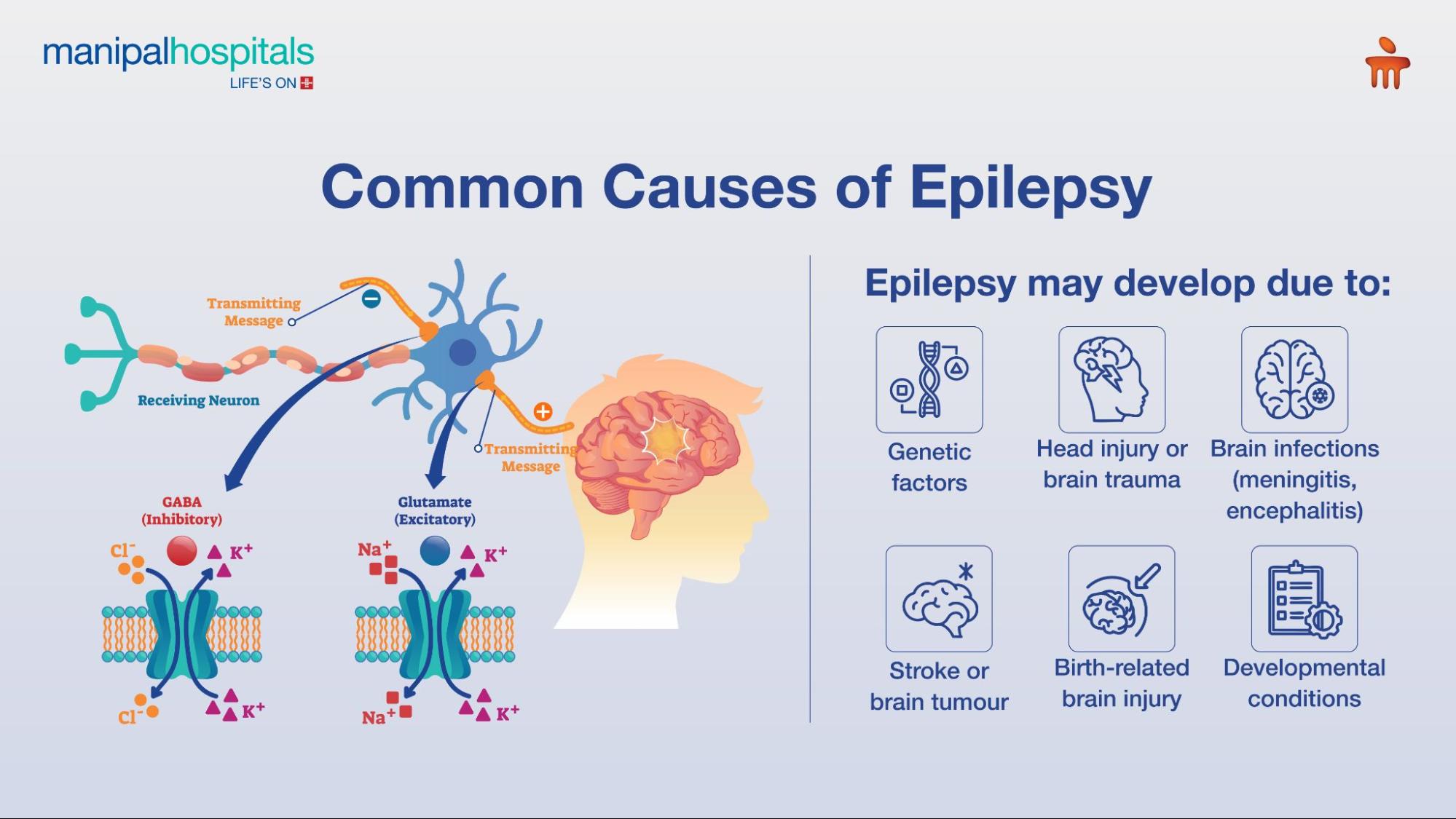
In nearly 50% of cases, the exact cause is unknown. However, known contributing factors include:
-
Genetic predisposition
-
Head injuries or brain trauma
-
Stroke, brain tumours, or infections
-
Developmental and congenital conditions
-
Birth-related brain injury
-
Structural abnormalities in the brain
Types of Seizures
Seizures are broadly classified into two main categories:
1. Focal (Partial) Seizures
These begin in one area of the brain and may cause:
-
Jerking of one limb
-
Sensory disturbances (smell, taste, vision)
-
Altered awareness or confusion
2. Generalised Seizures
These affect both sides of the brain simultaneously and include:
-
Tonic-clonic seizures (loss of consciousness and convulsions)
-
Absence seizures (brief staring spells)
-
Myoclonic seizures (sudden muscle jerks)
-
Atonic seizures (sudden loss of muscle tone)
Diagnosis and Advanced Epilepsy Care at Manipal Hospitals Baner
Accurate diagnosis is the foundation of effective epilepsy management. At Manipal Hospitals, our experienced neurologists in Baner, Pune and epileptologists use advanced diagnostic tools to identify the type and source of seizures, including:
-
Detailed neurological evaluations
-
Electroencephalogram (EEG) monitoring
-
MRI and CT brain imaging
Personalised Treatment Options
Epilepsy treatment is not one-size-fits-all. Our multidisciplinary team designs individualised care plans, which may include:
-
Medication Management: Nearly 70% of newly diagnosed patients achieve seizure control with the right anti-seizure medication
-
Dietary Therapies: Specialised diets such as the ketogenic diet, particularly effective in selected paediatric cases
-
Vagus Nerve Stimulation (VNS): Helps reduce seizure frequency and severity
-
Epilepsy Surgery: For drug-resistant epilepsy, surgery offers 60–70% chances of complete seizure freedom in carefully selected patients
-
Responsive Neurostimulation (RNS): A cutting-edge therapy that detects and disrupts abnormal brain activity before a seizure occurs
Beyond clinical treatment, we focus on improving overall quality of life through counselling, education, and long-term follow-up care.
Seizure First Aid: Do’s and Don’ts Everyone Should Know
Knowing how to respond during a seizure can prevent serious injury and save lives.
Do’s
-
Stay calm and ensure safety
-
Gently place the person on their side
-
Cushion the head and clear nearby objects
-
Time the seizure
-
Stay until full recovery
Don’ts
-
Do not restrain the person
-
Do not put anything in their mouth
-
Do not give food or water immediately
-
Do not panic
Call emergency services if the seizure lasts longer than 5 minutes, occurs repeatedly, or is the person’s first seizure.
Breaking Stigma Through Awareness
Stigma remains one of the biggest challenges faced by people with epilepsy. Increased awareness has led to earlier diagnosis in nearly 30% more cases over the last decade, improving outcomes significantly.
By talking openly about epilepsy, we create a society where individuals feel safe to seek care, pursue education, maintain employment, and live without fear or discrimination.
When to Seek Help
If you or a loved one experiences:
-
Recurrent seizures
-
Unexplained blackouts or loss of awareness
-
Sudden jerking movements
-
Prolonged confusion
Early evaluation by a neurologist is essential. Timely intervention can dramatically improve seizure control and long-term health outcomes.
Conclusion
Book a consultation with our expert neurologists at Manipal Hospital Baner, Pune, and take the first step towards comprehensive epilepsy care.
Disclaimer: This article is for informational purposes only and does not replace professional medical advice. Please consult a qualified healthcare provider for personalised care.
FAQ's
No. Epilepsy is a neurological disorder, not a mental illness.
Many people become seizure-free with treatment. In selected cases, surgery can offer permanent seizure control.
Some forms are genetic, but many cases occur without a family history.
Driving is possible after a seizure-free period, depending on local regulations and medical advice.
Yes. Adequate sleep, stress management, and avoiding triggers can support seizure control.
Share this article on: