4 Min Read
A sudden high fever, an intense headache, or unexplained confusion can be frightening. While these symptoms may sometimes point to a common viral infection, in rare cases, they could signal a serious neurological condition known as viral encephalitis. This condition involves inflammation of the brain and requires immediate medical attention.
At Manipal Hospitals Pune, our experienced neurologists and critical care specialists are trained to identify and manage complex neurological emergencies like viral encephalitis with speed, precision, and compassion. Recognising the early warning signs can make a life-saving difference.
Synopsis
What Is Viral Encephalitis?
Viral encephalitis is a condition in which the brain tissue becomes inflamed due to a viral infection. This inflammation may occur when a virus directly invades the brain or when the body’s immune response mistakenly attacks brain cells while fighting the infection.
The resulting swelling interferes with normal brain function, affecting memory, behaviour, movement, and consciousness. Although viral encephalitis is a serious condition, early diagnosis and prompt treatment significantly improve outcomes. Many patients recover well when medical care is started without delay.
What Causes Viral Encephalitis?
Several viruses can lead to encephalitis. These are broadly classified into two main groups:
1. Common Viral Causes
Some viruses that usually cause mild infections can, in rare cases, affect the brain:
-
Herpes Simplex Virus (HSV-1) – the most common cause of severe viral encephalitis
-
Varicella-Zoster Virus – responsible for chickenpox and shingles
-
Epstein–Barr Virus – causes infectious mononucleosis
Measles, Mumps, and Rubella (in unvaccinated individuals)
2. Mosquito-Borne (Arboviruses)
These viruses are transmitted through insect bites:
-
Japanese Encephalitis Virus
-
West Nile Virus
-
St. Louis Encephalitis Virus
Such infections are more common in specific regions and during monsoon or warmer seasons.
Early Symptoms of Viral Encephalitis You Shouldn’t Ignore
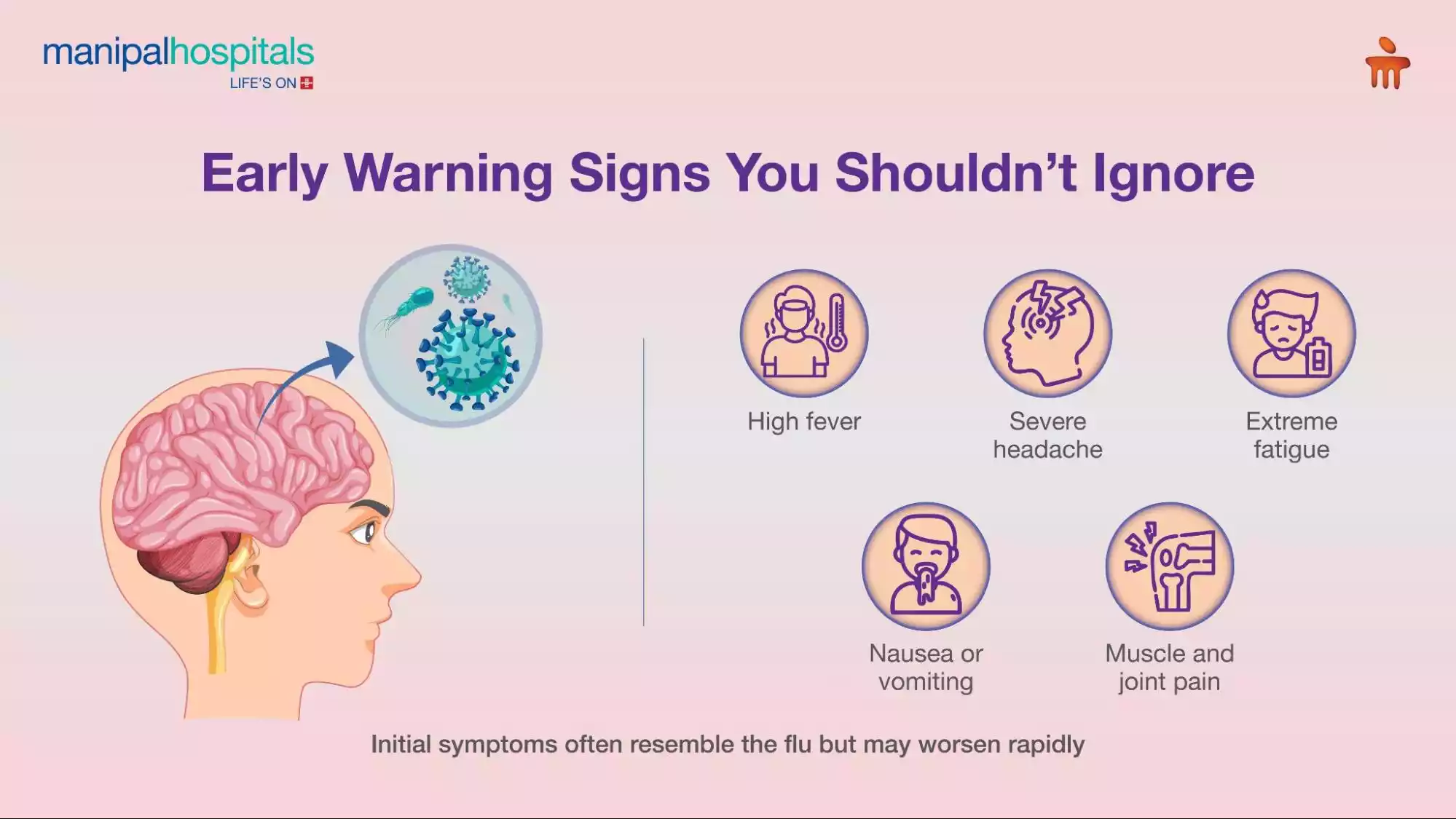
Viral encephalitis often begins with flu-like symptoms and can progress rapidly to severe neurological complications. Recognising this progression early is critical.
Initial Flu-Like Symptoms
These symptoms may appear suddenly and worsen over hours or days:
-
High fever
-
Persistent or severe headache
-
Muscle and joint pain
-
Fatigue or unusual weakness
-
Nausea and vomiting
While these signs may resemble a viral fever, their severity or sudden onset should raise concern, especially when combined with neurological changes.
Critical Neurological Symptoms (Medical Emergency)
If any of the following symptoms develop, seek immediate emergency care:
-
Confusion or altered mental state
-
Personality or behavioural changes
-
Seizures or convulsions
-
Difficulty speaking or understanding speech
-
Weakness or paralysis of the face, arms, or legs
-
Loss of sensation or coordination
-
Drowsiness progressing to loss of consciousness or coma
In cases like HSV encephalitis, initiating antiviral treatment within 48 hours can drastically reduce mortality and prevent long-term brain damage.
How Is Viral Encephalitis Diagnosed?
At Manipal Hospitals Baner, diagnosis is fast, thorough, and evidence-based. Our neurologists use advanced diagnostic tools to confirm the condition and begin treatment without delay.
Diagnostic Tests Include:
-
Neurological Examination
Evaluates reflexes, motor strength, coordination, memory, and alertness.
-
MRI or CT Scan of the Brain
MRI is especially sensitive and can detect brain inflammation in over 90% of HSV encephalitis cases.
-
Lumbar Puncture (Spinal Tap)
Cerebrospinal fluid (CSF) is tested for infection markers and viral DNA using PCR technology.
-
Electroencephalogram (EEG)
Detects abnormal brain electrical activity and seizure patterns.
Early and accurate diagnosis plays a crucial role in improving survival and recovery rates.
Viral Encephalitis Treatment at Manipal Hospitals Baner
Patients with suspected viral encephalitis are usually hospitalised for close monitoring and intensive care.
Key Treatment Approaches
-
Antiviral Therapy
Intravenous antivirals are started immediately if HSV or similar viruses are suspected, even before test results are confirmed.
- Supportive Care
Includes hydration, fever control, pain management, and nutritional support.
-
Management of Complications
-
Anti-seizure medications
-
Medications to reduce brain swelling
-
Respiratory support if required
-
- Rehabilitation Services
Recovery may take weeks or months. Our multidisciplinary rehabilitation team provides:
-
Physiotherapy
-
Speech therapy
-
Occupational therapy
Up to 70% of survivors regain significant independence with structured rehabilitation.
Care Essentials: Do’s and Don’ts
Do’s
-
Seek urgent medical help for fever with confusion or seizures
-
Stay up to date with vaccinations
-
Protect against mosquito bites
-
Follow your neurologist’s treatment and rehabilitation plan
Don’ts
-
Don’t ignore worsening headache or mental changes
-
Don’t delay hospital evaluation
-
Don’t stop prescribed medications without medical advice
Conclusion
If you or a loved one experiences fever with confusion, seizures, or sudden behavioural changes, do not wait. Early intervention can be life-saving.
Consult expert neurologists at Manipal Hospital Baner for advanced diagnosis, emergency care, and comprehensive neurological rehabilitation.
FAQ's
The inflammation itself is not contagious. However, the viruses that cause it may spread through contact or insect bites.
The inflammation itself is not contagious. However, the viruses that cause it may spread through contact or insect bites.
Encephalitis affects brain tissue, while meningitis affects the protective membranes around the brain and spinal cord.
Yes. Early diagnosis, timely treatment, and rehabilitation significantly improve recovery chances.
Vaccinations, mosquito protection, and good hygiene reduce risk.
Some patients may experience memory issues, fatigue, or weakness, but early treatment greatly reduces the severity.
Share this article on: