5 Min Read
A varicocele is a common yet often overlooked condition affecting the scrotum. Many men live with it for years without realising its impact on testicular health and fertility. At Manipal Hospitals Pune, our specialists frequently encounter men who seek help only when discomfort or fertility concerns arise. This guide explains what a varicocele is, why it occurs, how it affects male health, and the advanced treatment options available today.
Synopsis
What Is a Varicocele?
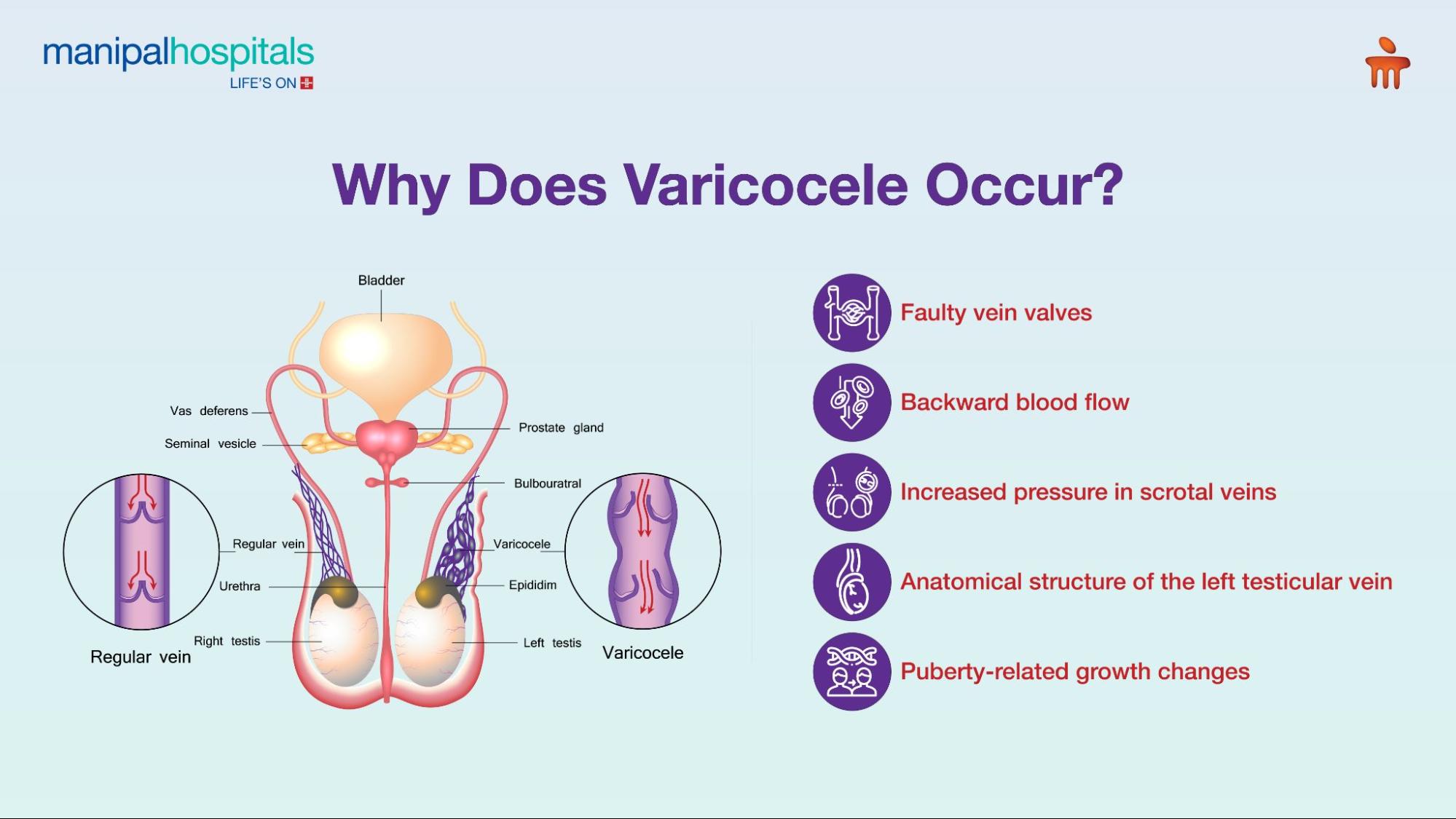
A varicocele refers to the abnormal enlargement of veins within the pampiniform plexus, a network of veins that drains blood from the testicles. It is similar to varicose veins seen in the legs and develops when blood pools due to faulty vein valves.
-
Affects about 15% of adult men
-
Found in 35–40% of men with primary infertility
-
Most commonly occurs on the left side of the scrotum
While many varicoceles are harmless, some can cause pain, testicular shrinkage, low sperm quality, and hormonal imbalance if left untreated.
What Causes Varicocele?
Varicoceles form when the valves in the scrotal veins fail to regulate blood flow properly. This causes blood to flow backward and collect in the veins, leading to enlargement.
Key Causes & Risk Factors
-
Anatomical factors: The left testicular vein drains differently, making left-sided varicoceles more common
-
Puberty-related changes: Rapid testicular growth increases blood flow
-
Genetic predisposition: Family history of varicose veins
-
Prolonged standing or physical strain
Common Symptoms of Varicocele
Many men have no noticeable symptoms. However, when symptoms do appear, they may include:
-
A visible or palpable lump resembling a “bag of worms”
-
Dull, aching pain or heaviness in the scrotum
-
Pain worsening with standing, exercise, or at day’s end
-
Testicular shrinkage (atrophy) on the affected side
-
Difficulty conceiving due to poor sperm quality
Early evaluation is important to prevent long-term complications.
How Is Varicocele Diagnosed at Manipal Hospitals Pune?
1. Physical Examination
A urologist examines the scrotum while standing and may ask you to perform the Valsalva manoeuvre, which makes enlarged veins more visible.
2. Scrotal Doppler Ultrasound
-
Gold standard diagnostic test
-
Confirms vein dilation
-
Assesses blood flow abnormalities
At Manipal Hospital Pune, advanced imaging ensures accurate grading and treatment planning.
When Does Varicocele Require Treatment?
Treatment is recommended when a varicocele causes:
-
Persistent pain
-
Testicular atrophy
-
Infertility or abnormal semen analysis
-
Hormonal imbalance
Post-treatment studies show improvement in sperm parameters in 60–80% of men.
Advanced Varicocele Treatment Options
1. Microsurgical Varicocelectomy (Gold Standard)
This is the most precise and effective surgical approach offered at Manipal Hospitals.
Key benefits:
-
Over 90% success rate
-
Recurrence rate <5%
-
Minimal complications
-
Faster recovery
A surgical microscope helps preserve arteries, lymphatics, and surrounding structures.
2. Laparoscopic Varicocelectomy
-
Minimally invasive
-
Small abdominal incisions
-
Suitable for select cases
3. Percutaneous Embolisation (Non-Surgical Option)
Performed by an interventional radiologist using a catheter to block affected veins.
Best suited for specific clinical scenarios.
Do’s and Don’ts for Varicocele Management
Do’s
-
Consult a urologist if you notice scrotal pain or swelling
-
Wear supportive underwear
-
Follow post-surgery care instructions carefully
-
Discuss fertility goals with your doctor
Don’ts
-
Ignore persistent discomfort
-
Resume heavy exercise too soon after surgery
-
Assume infertility is inevitable
-
Delay treatment if symptoms worsen
Why Choose Manipal Hospitals Pune Baner?
-
Experienced urologists and andrologists
-
Advanced microsurgical techniques
-
Comprehensive fertility evaluation
-
Personalised care from diagnosis to recovery
A varicocele may seem minor, but its impact on comfort, fertility, and hormonal health can be significant. With early diagnosis and modern treatment, outcomes are excellent. If you’re experiencing testicular pain or fertility concerns, timely medical consultation can make a life-changing difference.
Book an appointment with expert urologists at Manipal Hospital Baner, Pune, today.
Disclaimer
This article is for informational purposes only and does not replace professional medical advice. Always consult a qualified healthcare provider for diagnosis and treatment.
FAQ's
No. Varicoceles do not disappear naturally, though some remain symptom-free.
The procedure is done under anaesthesia. Post-operative pain is usually mild and short-lived.
Most patients return to desk work in 2–3 days and resume exercise after 2–4 weeks.
Yes, in some men. Treatment may improve testosterone production.
Not always. Many men conceive naturally, but evaluation is advised if pregnancy is delayed.
Share this article on: